Learn how three of Virginia’s seven delegates who signed the Declaration of Independence — Benjamin Harrison V, Francis Lightfoot Lee and Carter Braxton — helped shape America.
Source: www.war.gov
Learn how three of Virginia’s seven delegates who signed the Declaration of Independence — Benjamin Harrison V, Francis Lightfoot Lee and Carter Braxton — helped shape America.
Source: www.war.gov
Airmen walked in the 108th International Four Days Marches in Nijmegen, Netherlands, a long-standing, 100-mile event that brought together 47,000 participants, including 6,455 military members from 38 nations.
Source: www.war.gov
Army Tech. Sgt. Ted Takayuki Tanouye posthumously received the Medal of Honor for his heroic actions in western Italy during World War II.
Source: www.war.gov
Virginia’s Thomas Jefferson was a Founding Father who drafted the Declaration of Independence and who doubled the size of the country with the Louisiana Purchase while serving as the third president.
Source: www.war.gov
Crew chiefs assigned to the Air National Guard’s 171st Air Refueling Wing, based near Pittsburgh, keep two aerial refueling flying squadrons of KC-135 Stratotanker refueling tanker aircraft mission ready.
Source: www.war.gov
Use the Moon to find Antares and the Teapot, spot brilliant Venus, welcome the equinox, and see the Harvest Moon near Saturn and Neptune.
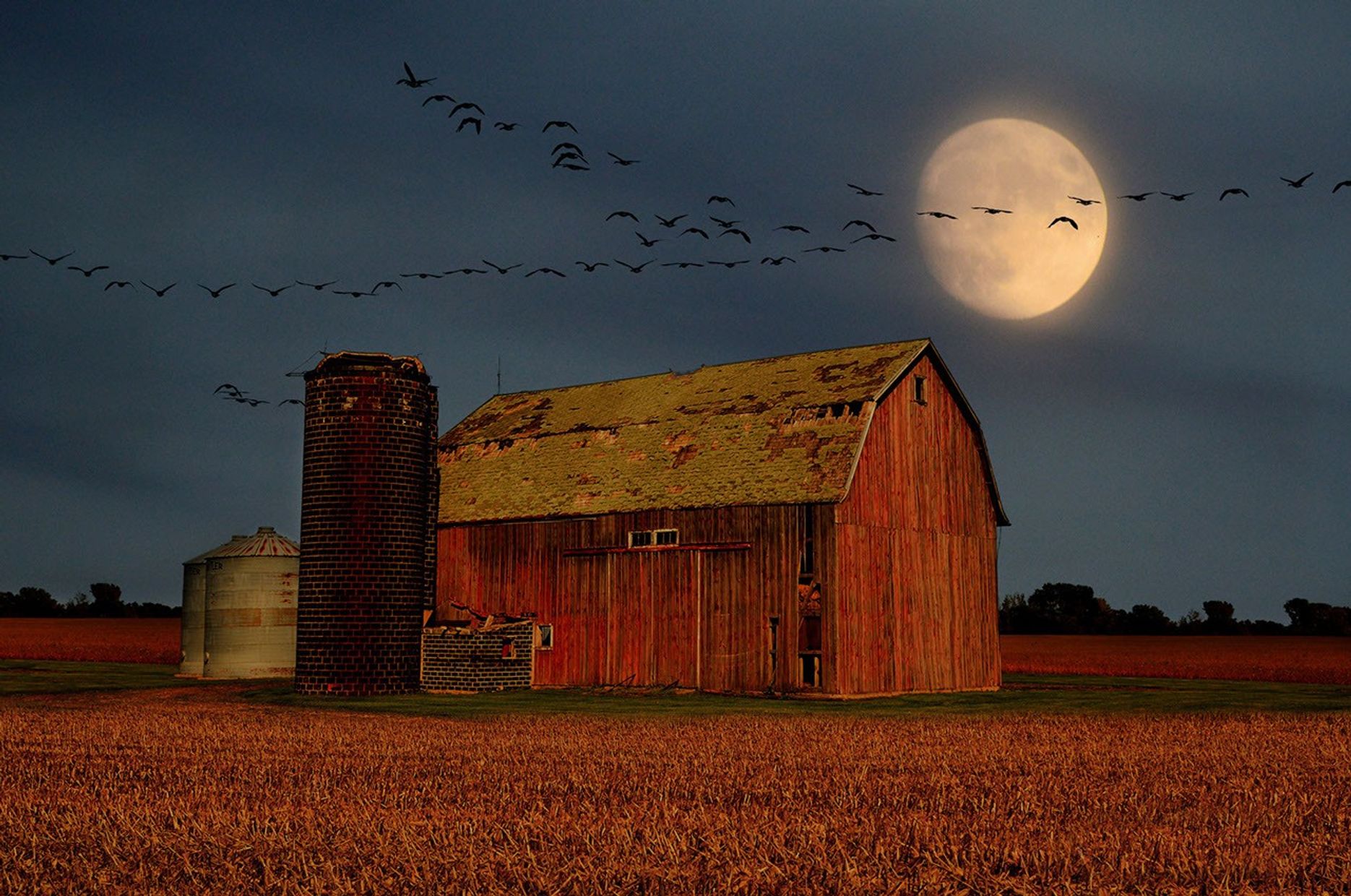
The Moon joins a tea party… Venus cranks up the brightness… the seasons officially change… and the Harvest Moon meets up with some planetary neighbors.
That’s What’s Up for September.
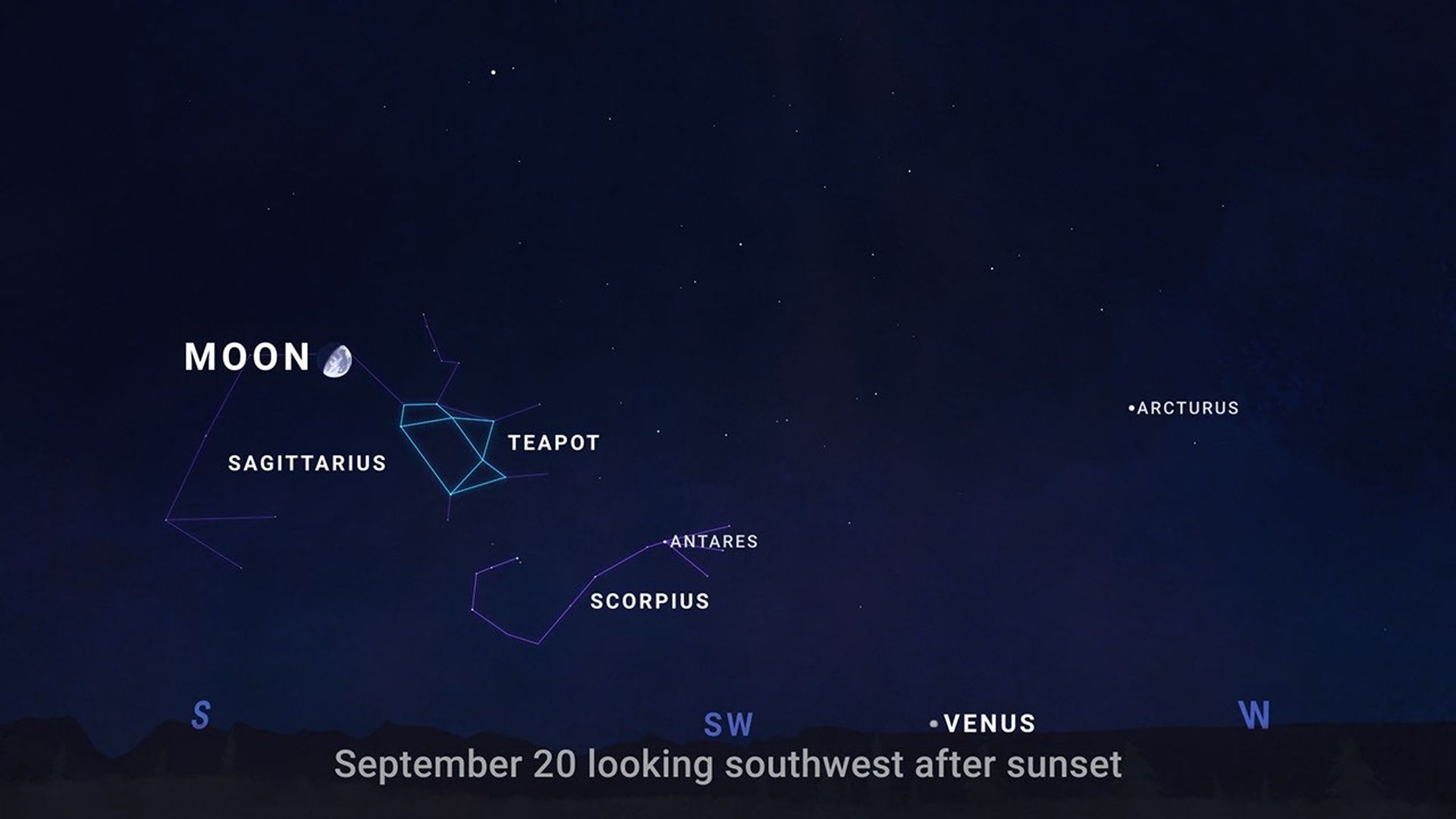
From September 14 through 20, let the Moon guide you to a few celestial landmarks. About an hour after sunset, look south to find the Moon in the evening sky.
Night by night, the Moon shifts position against the background stars, passing near Antares.
This bright, reddish star marks the heart of the constellation Scorpius.
Next you’ll see the Teapot, a group of stars in neighboring Sagittarius that really does resemble a teapot, complete with a handle, lid, and spout.
If you are under an especially dark sky… you may see hazy steam rising from the Teapot’s spout.
Follow that steam to its thickest part, and you’ll be looking toward the center of our Milky Way galaxy.
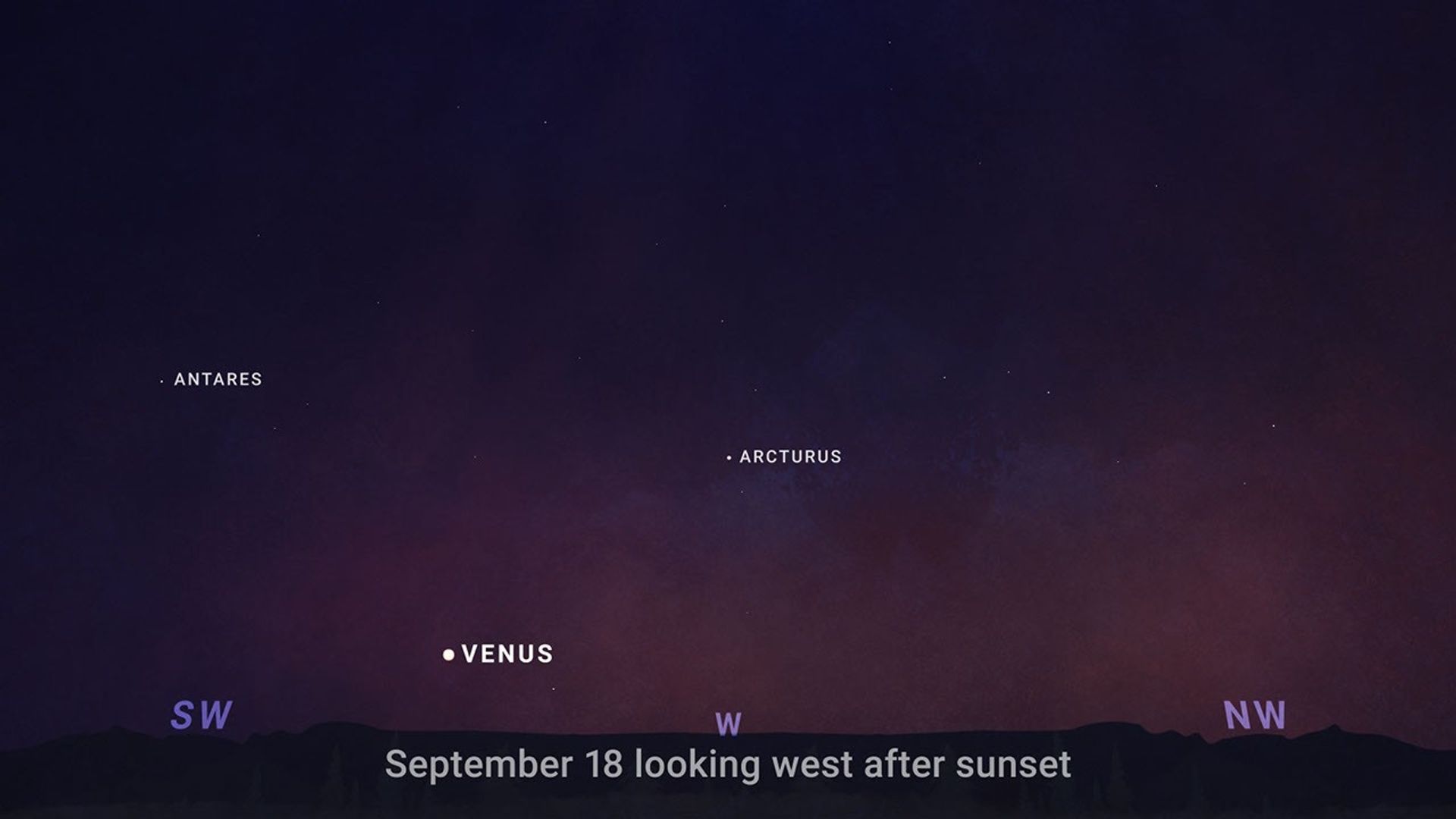
Look west on September 18 as Venus hits peak brilliance, shining at its brightest of this evening appearance..
You won’t have to search hard to find it. Shortly after sunset, Venus will stand out as a brilliant point of light low above the western horizon, outshining every star around it. A clear view of the horizon will give you the best chance to catch it before it sets.
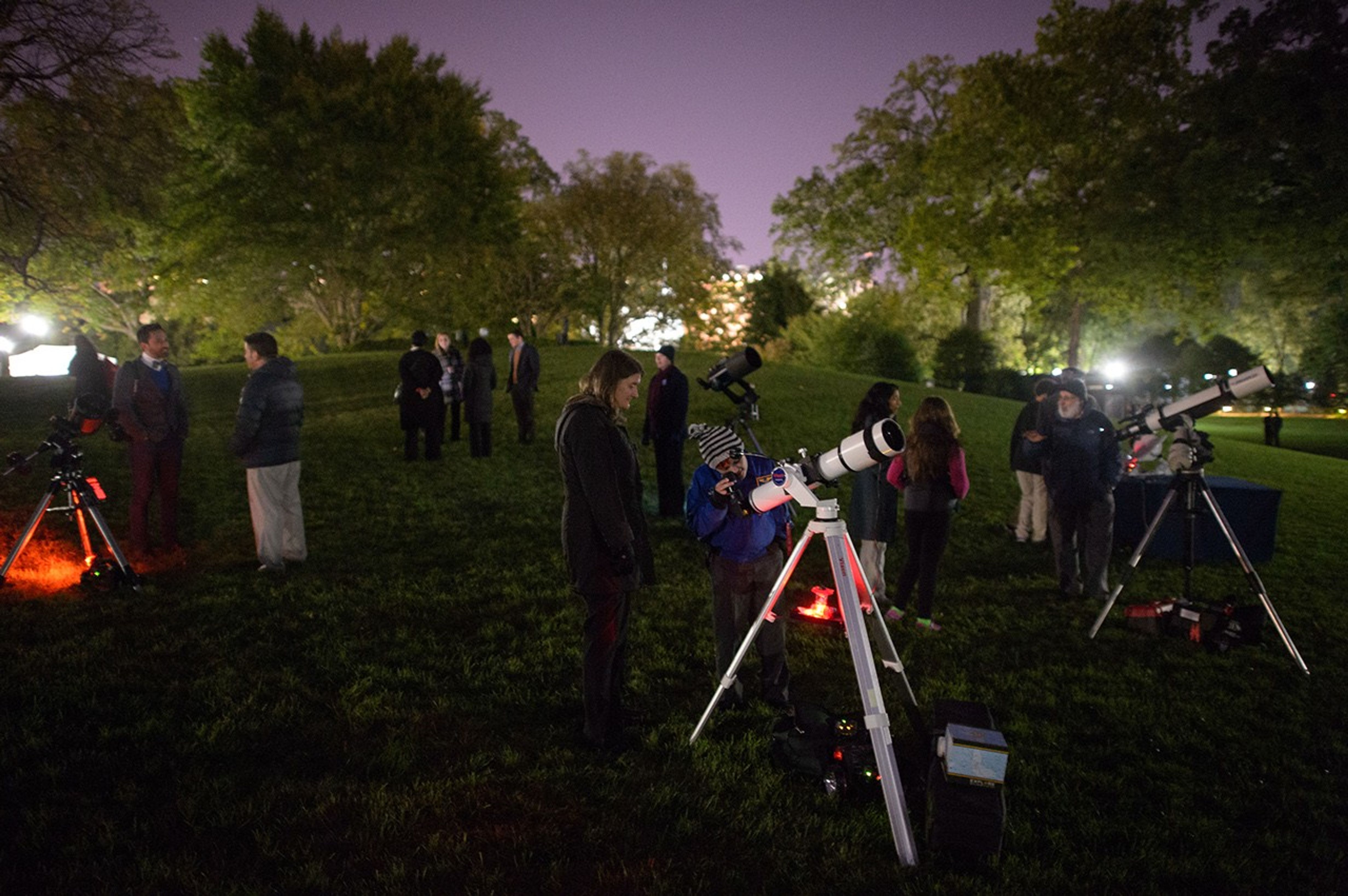
On September 19, celebrate International Observe the Moon Night!
People around the world are invited to look up and connect with our nearest celestial neighbor while learning more about lunar science, exploration, and the many ways the Moon has shaped cultures around the world. Find an event near you — or learn how to participate from wherever you are — at go.nasa.gov/ObserveTheMoon.
Then on September 22, it’s officially fall in the Northern Hemisphere …while spring begins in the Southern Hemisphere.
That’s the September equinox, when the Sun is directly above Earth’s equator and day and night are close to equal in length around the world.
From there, daylight keeps getting shorter in the Northern Hemisphere and longer in the Southern Hemisphere.
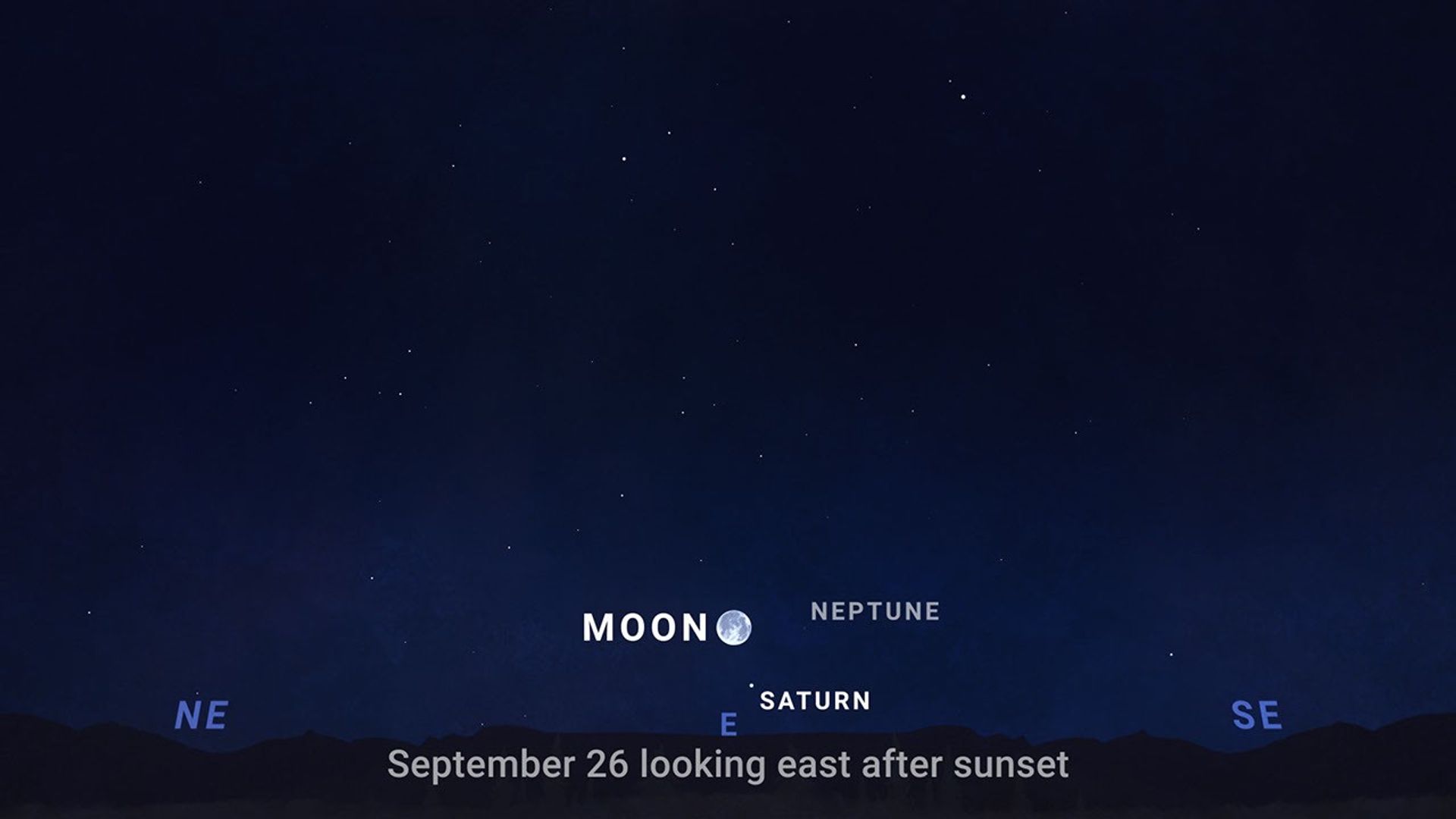
And on September 26, the Harvest Moon takes center stage, rising in the east shortly after sunset.
It won’t be alone. Saturn appears nearby, with faint Neptune completing a wide triangle in the sky.
Saturn is the easy one-you can see it with just your eyes. Neptune is a bit more challenging. At around magnitude 8, it’s too faint to see with the unaided eye …so you’ll need binoculars or a telescope to spot it. Darker skies and good observing conditions can help bring it into view.
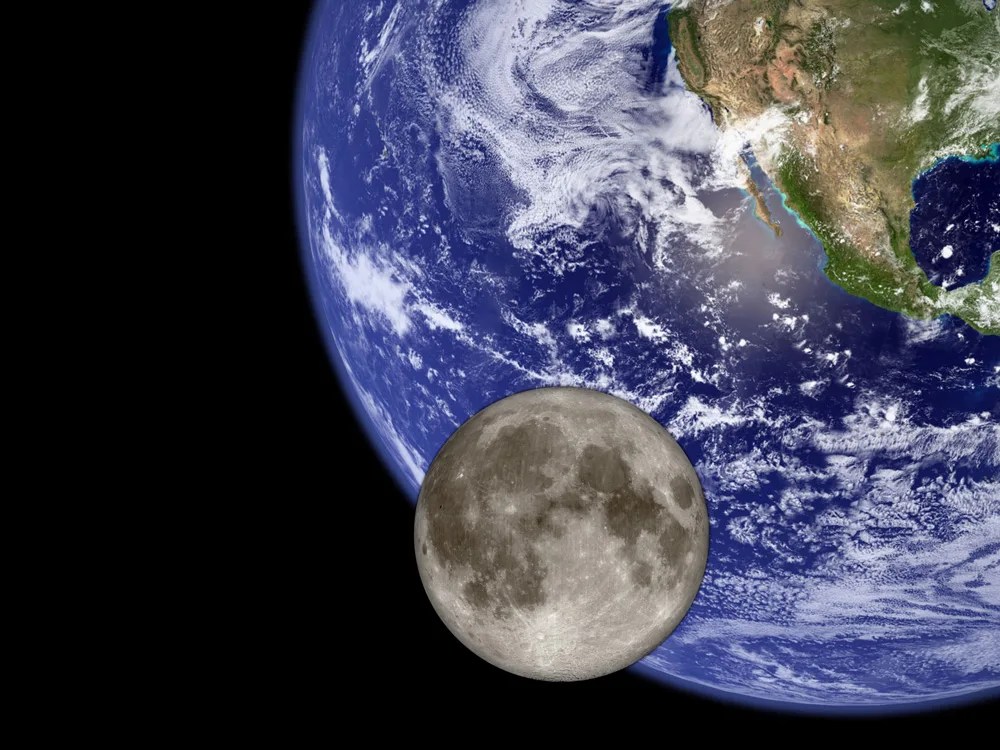
Here are the phases of the Moon for September.
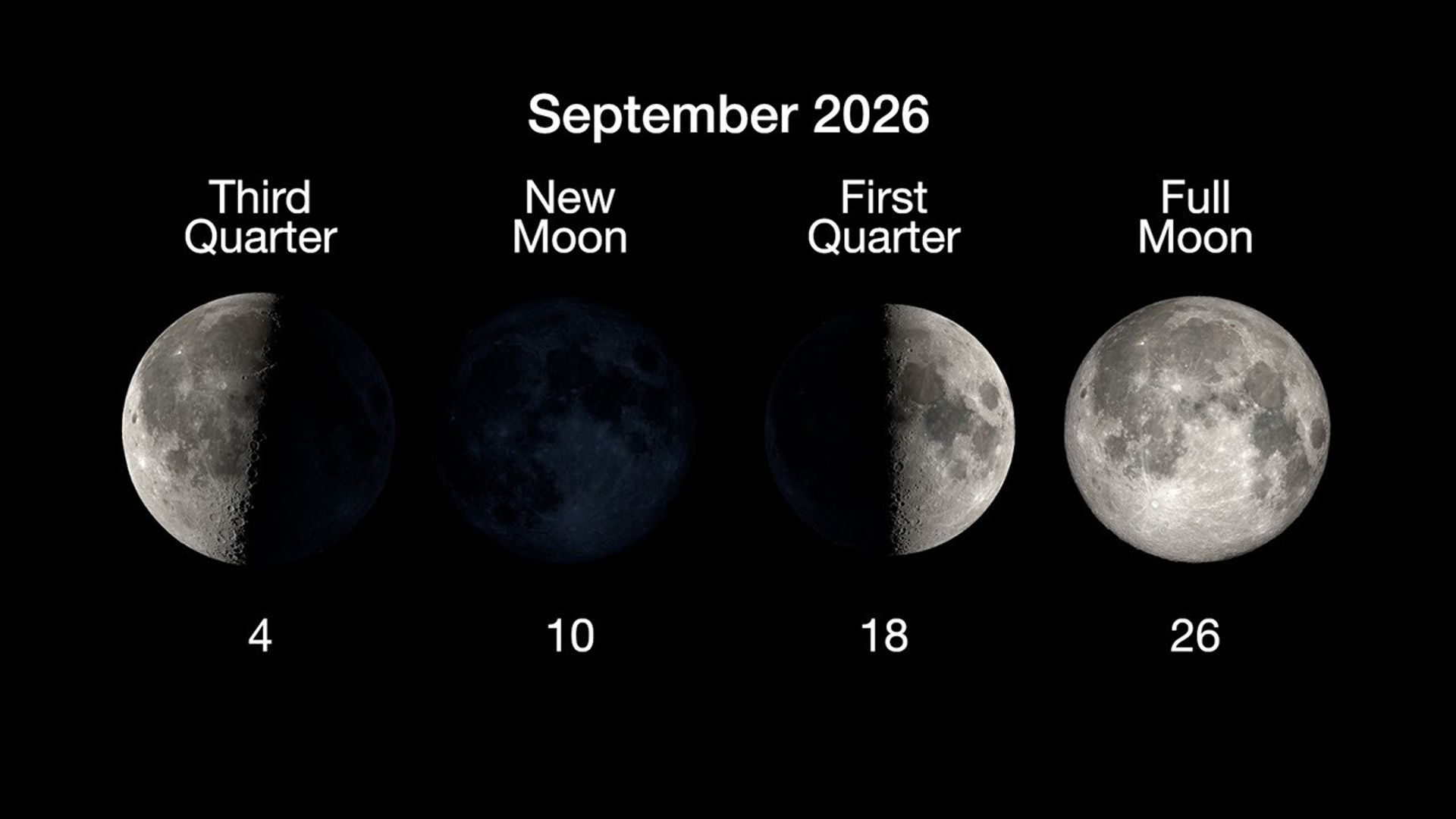
You can stay up to date on all of NASA’s missions exploring the solar system and beyond at NASA Science. I’m Raquel Villanueva from NASA’s Jet Propulsion Laboratory, and that’s What’s Up this month.
Source: science.nasa.gov
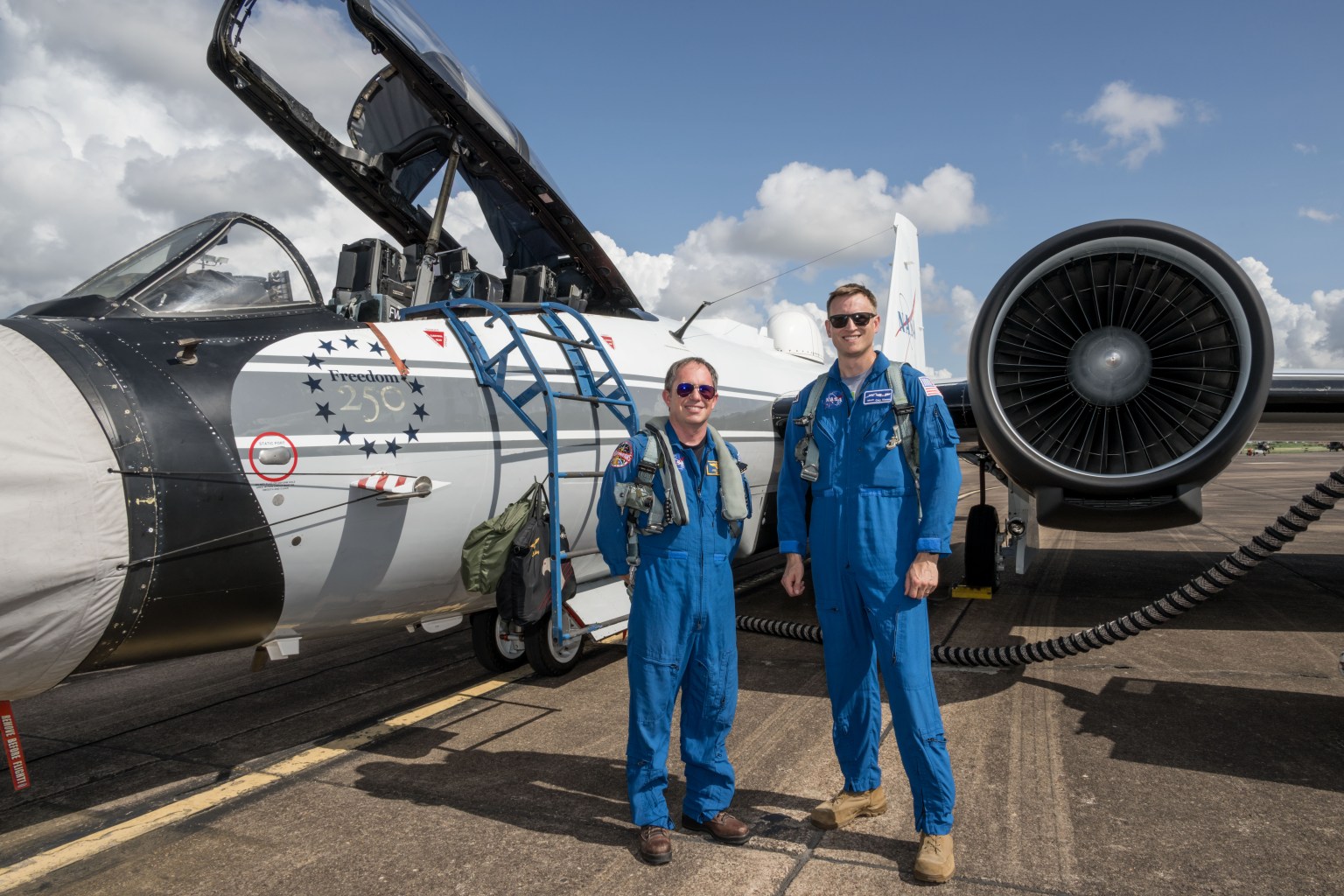
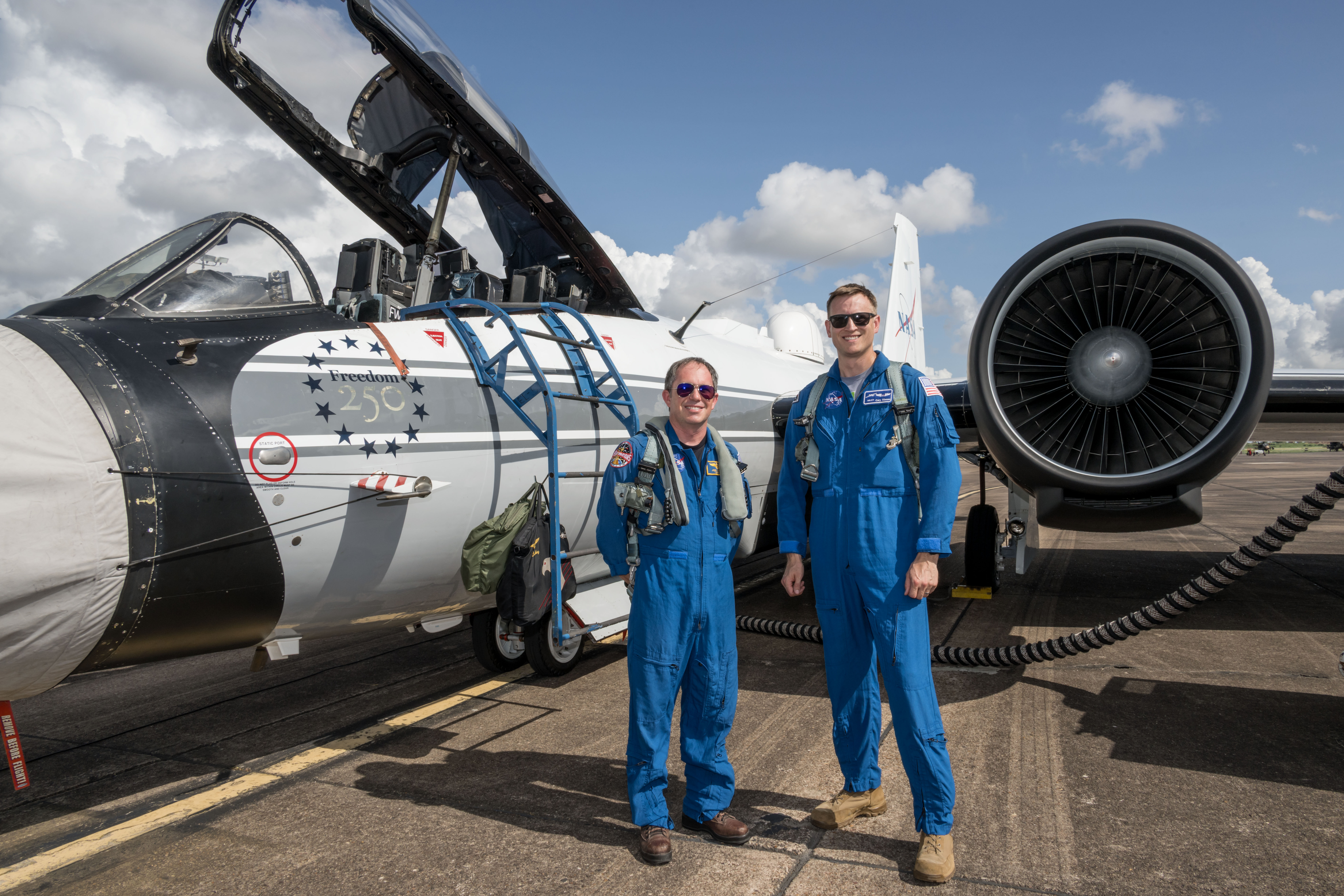
During the Aug. 12 total solar eclipse over Europe, scientists aimed to study a long-standing mystery: why the Sun’s outer atmosphere, the corona, is far hotter than its visible surface. Capturing the data they needed meant being in exactly the right place at the right time.
Pilots from NASA’s Johnson Space Center flew the WB-57F high altitude research aircraft from Ellington Field in Houston to Iceland, their base for flying through the path of totality to give scientists a clearer view of the Sun’s corona.
A total solar eclipse provides a unique opportunity to examine the corona because the Moon temporarily blocks the Sun’s bright surface, revealing its fainter outer atmosphere. Observations collected during this brief window can help scientists better understand how energy and material move through the corona and away from the Sun, improving our understanding of space weather.
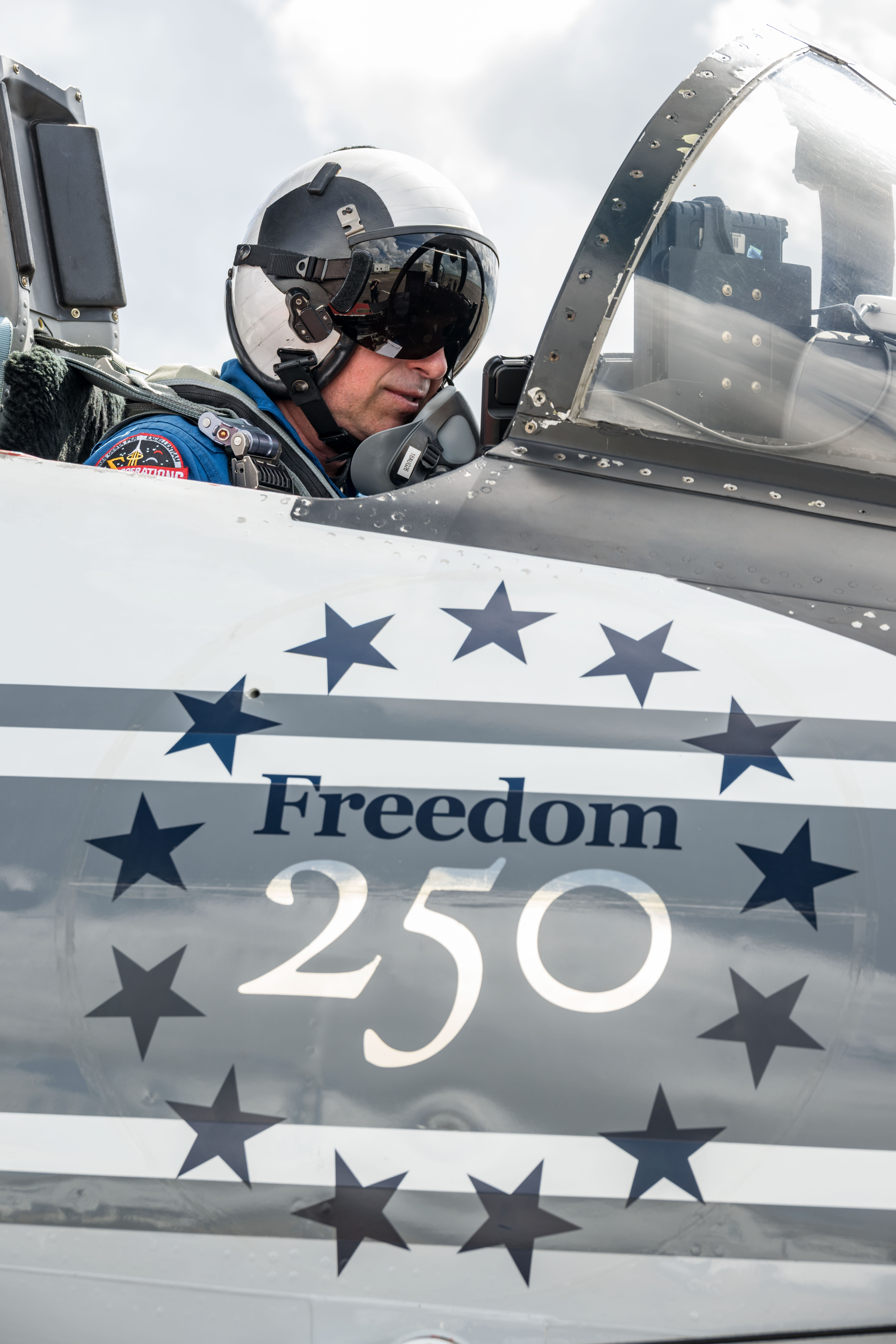
At about 50,000 feet, the WB-57F flew above most clouds, dust, and water vapor that can interfere with observations from the ground. The altitude reduced atmospheric interference while also allowing the science instruments to observe infrared wavelengths that are largely absorbed lower in Earth’s atmosphere.
Capturing those observations required careful coordination between scientists and the flight crew. Before the mission, teams calculated where the aircraft needed to be as the Moon’s shadow moved across the North Atlantic.
“Going into a mission like this takes a huge team. It starts with the science team establishing the requirements, and then we work closely with them for months leading up to the mission,” said Tom Parent, NASA WB-57F pilot. “We rely heavily on our maintenance team to get the instruments serviced, prepared, loaded onto the aircraft, and flight tested. It’s a huge team effort to get an aircraft like this up there to image and achieve these objectives.”
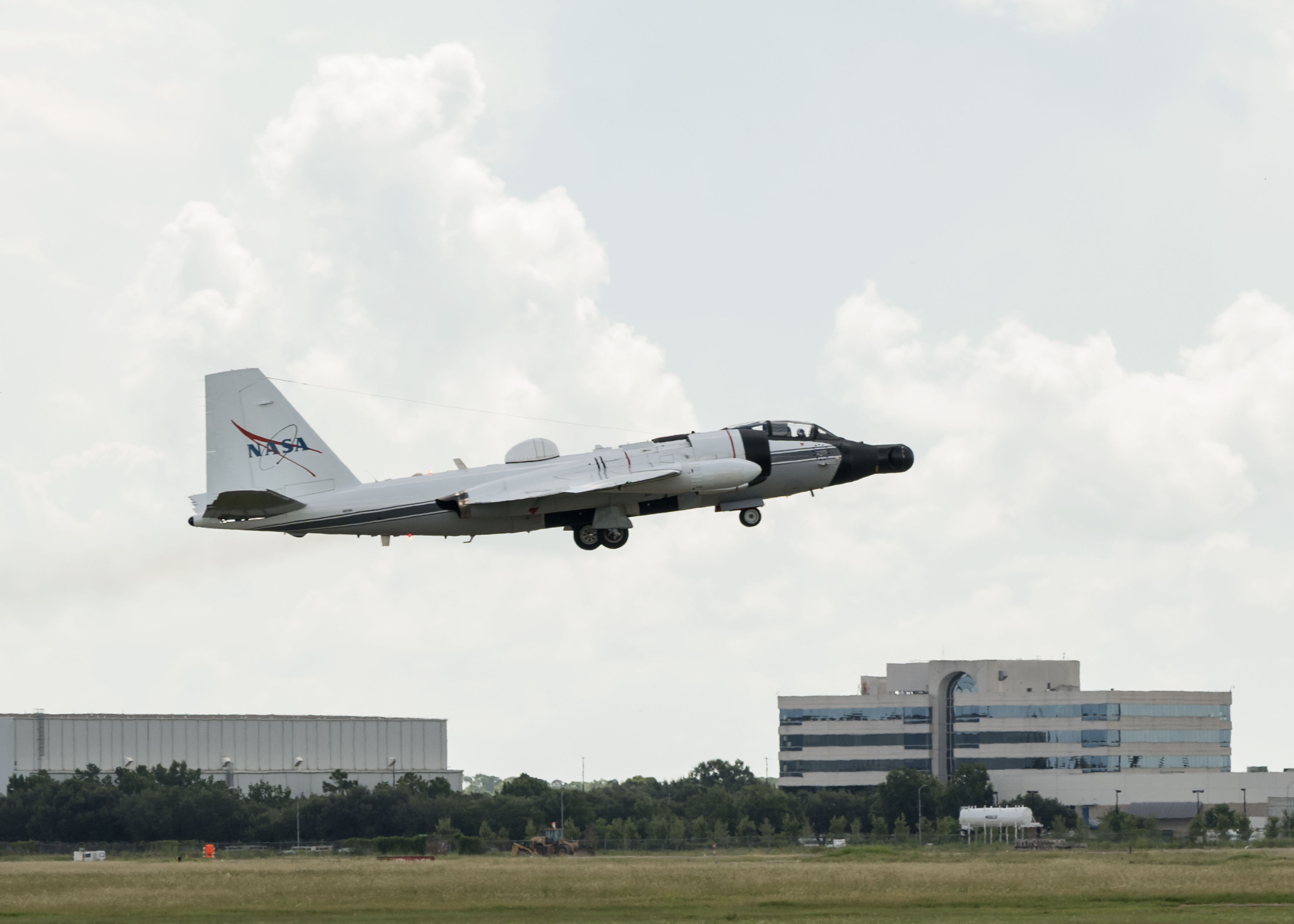
During totality, NASA WB-57F pilot John Gustine positioned the aircraft along the eclipse path to maximize time in the Moon’s shadow and give scientists as much opportunity as possible to collect data.
From the back seat, Cary Klemm, sensor equipment operator for NASA’s WB-57F, controlled the camera systems, adjusting focus and exposure times while tracking features of interest throughout totality.
With the cameras capturing observations throughout the brief window, every second mattered.
“Every image is another piece of data that could reveal something new about the Sun,” Klemm said.
What scientists can learn from those observations reaches far beyond the eclipse itself. The Sun’s corona is made of plasma shaped by magnetic fields, and many of the same physical processes occur elsewhere in the universe.
“The NASA WB-57F’s unique capabilities of high-altitude flight were truly crucial in providing access to these valuable wavelengths during an eclipse whose path crossed mostly over the ocean in an area where clouds are common,” said Amir Caspi, principal investigator for the study at Southwest Research Institute in Boulder, Colorado. “We could not have achieved this success without this platform, and all of the efforts of the many intrepid ground, air, and science crew members.”
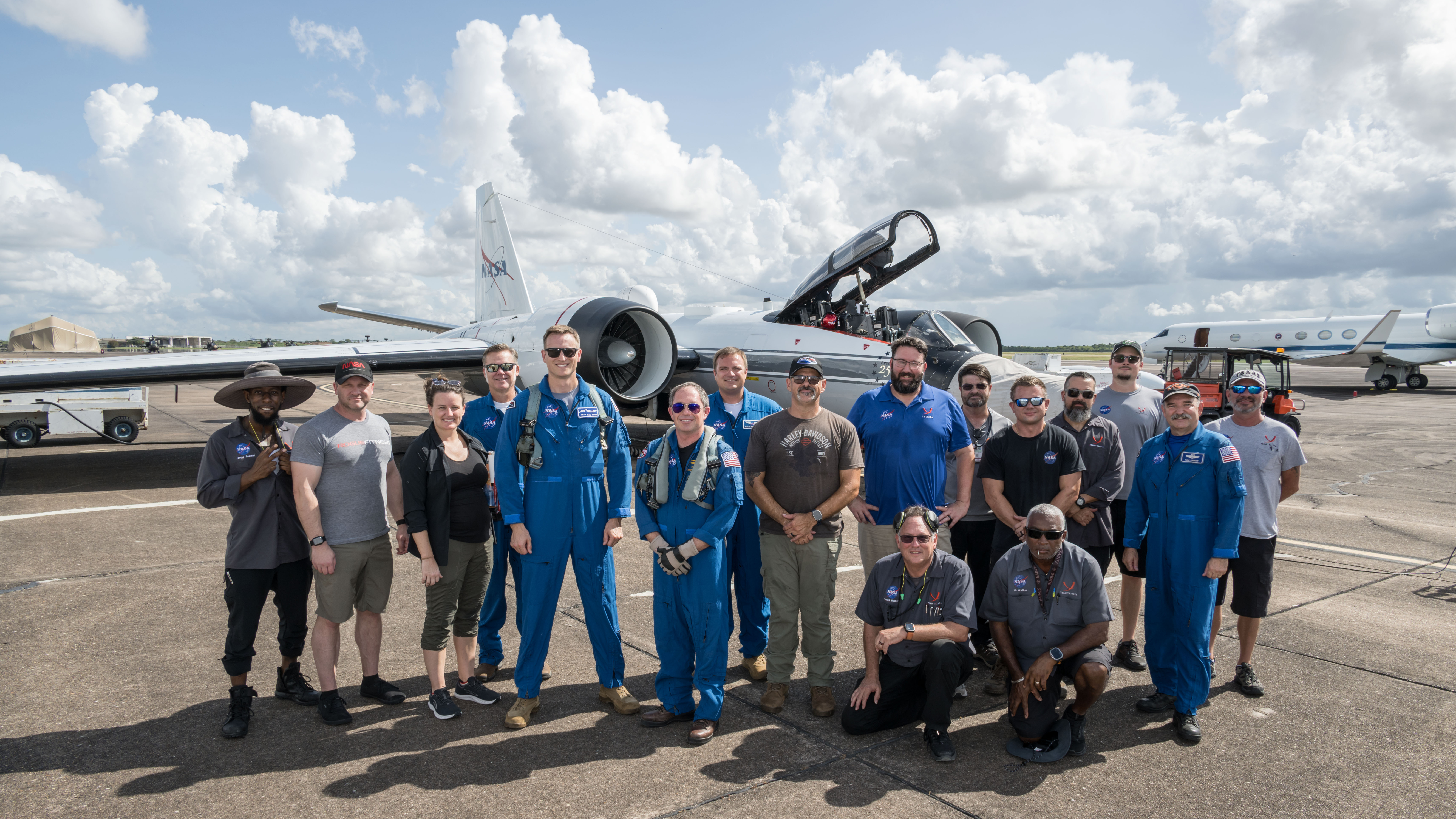
The data gathered during the flight will give scientists another opportunity to investigate the Sun and the processes that influence the space environment around Earth.
View images and videos from NASA’s eclipse mission.

Source: www.nasa.gov
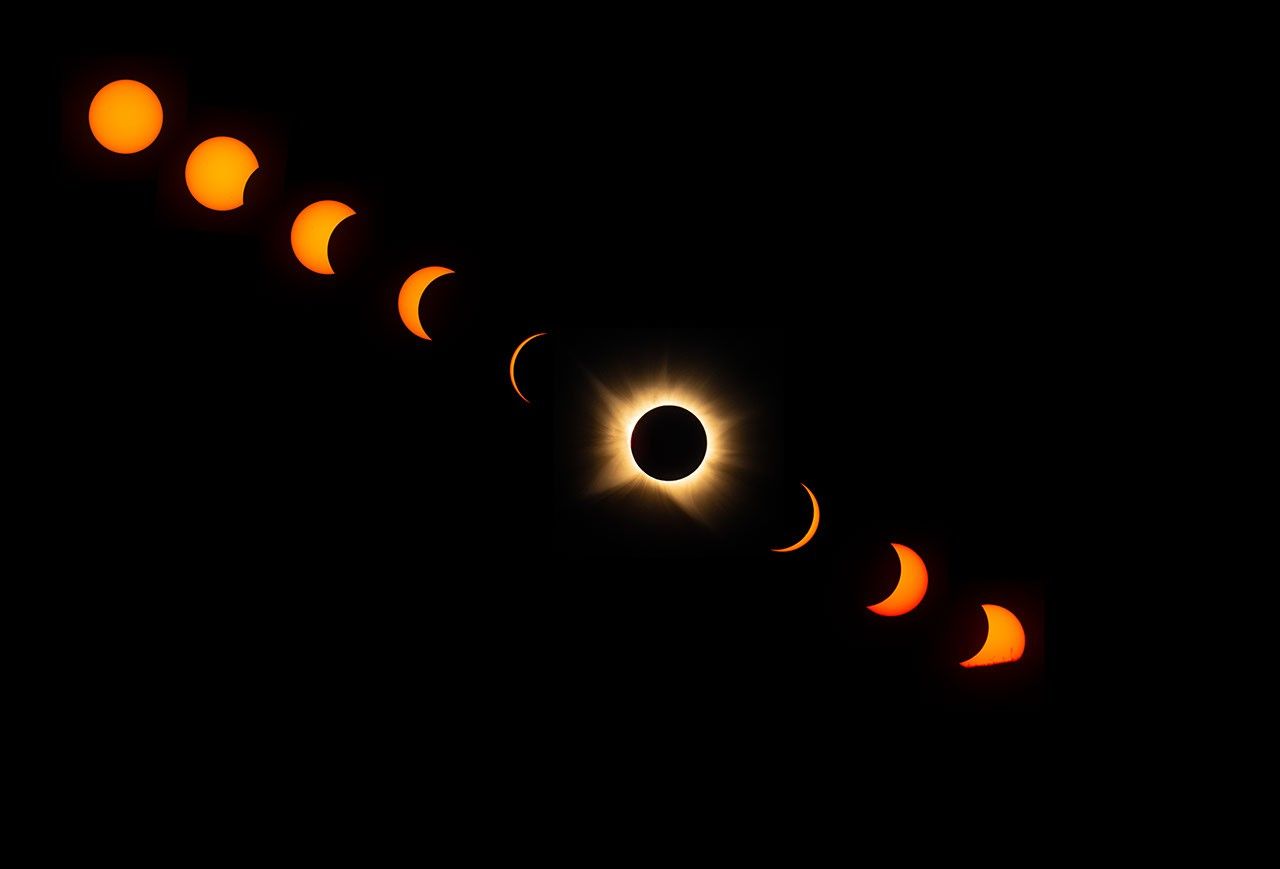
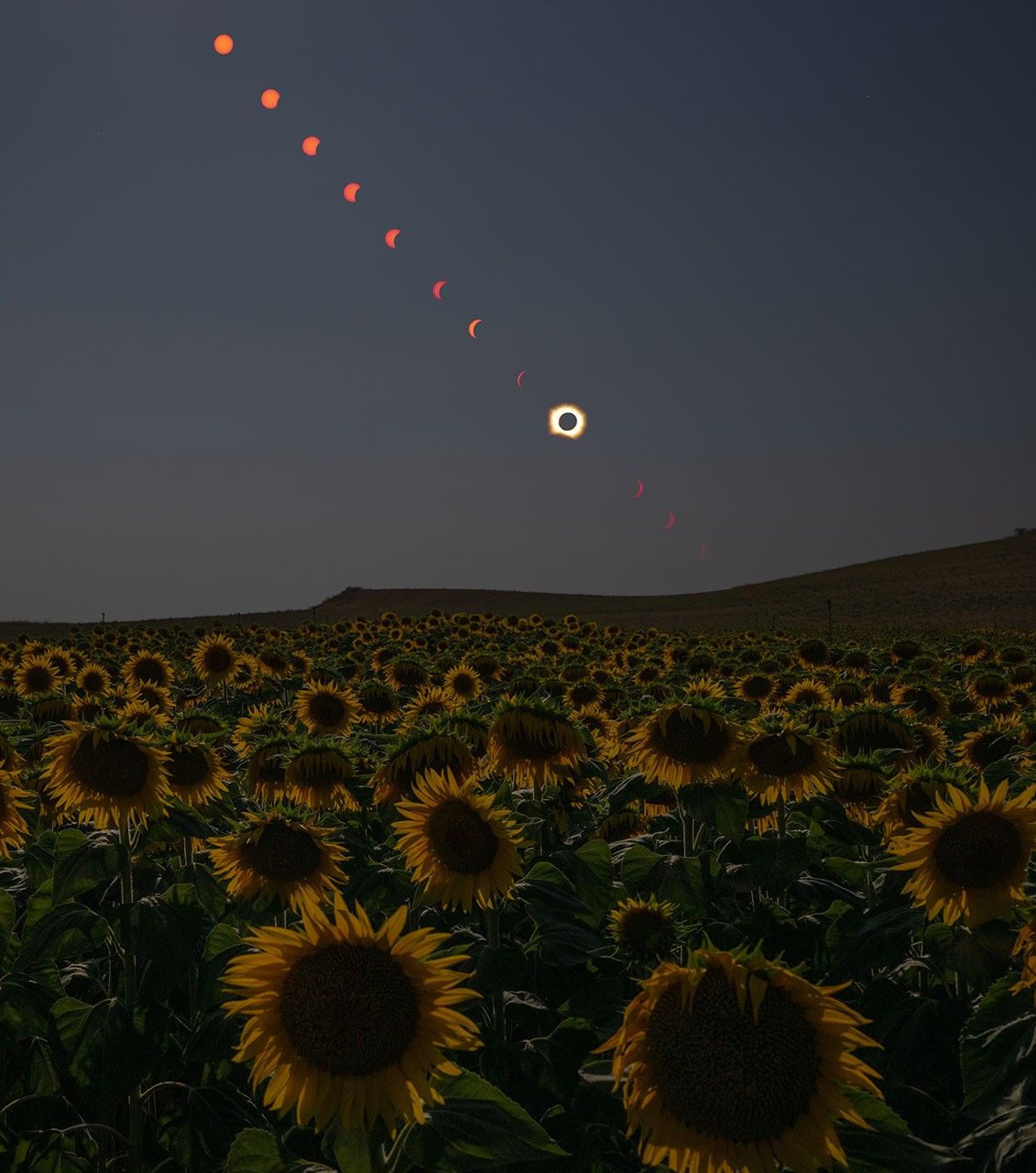
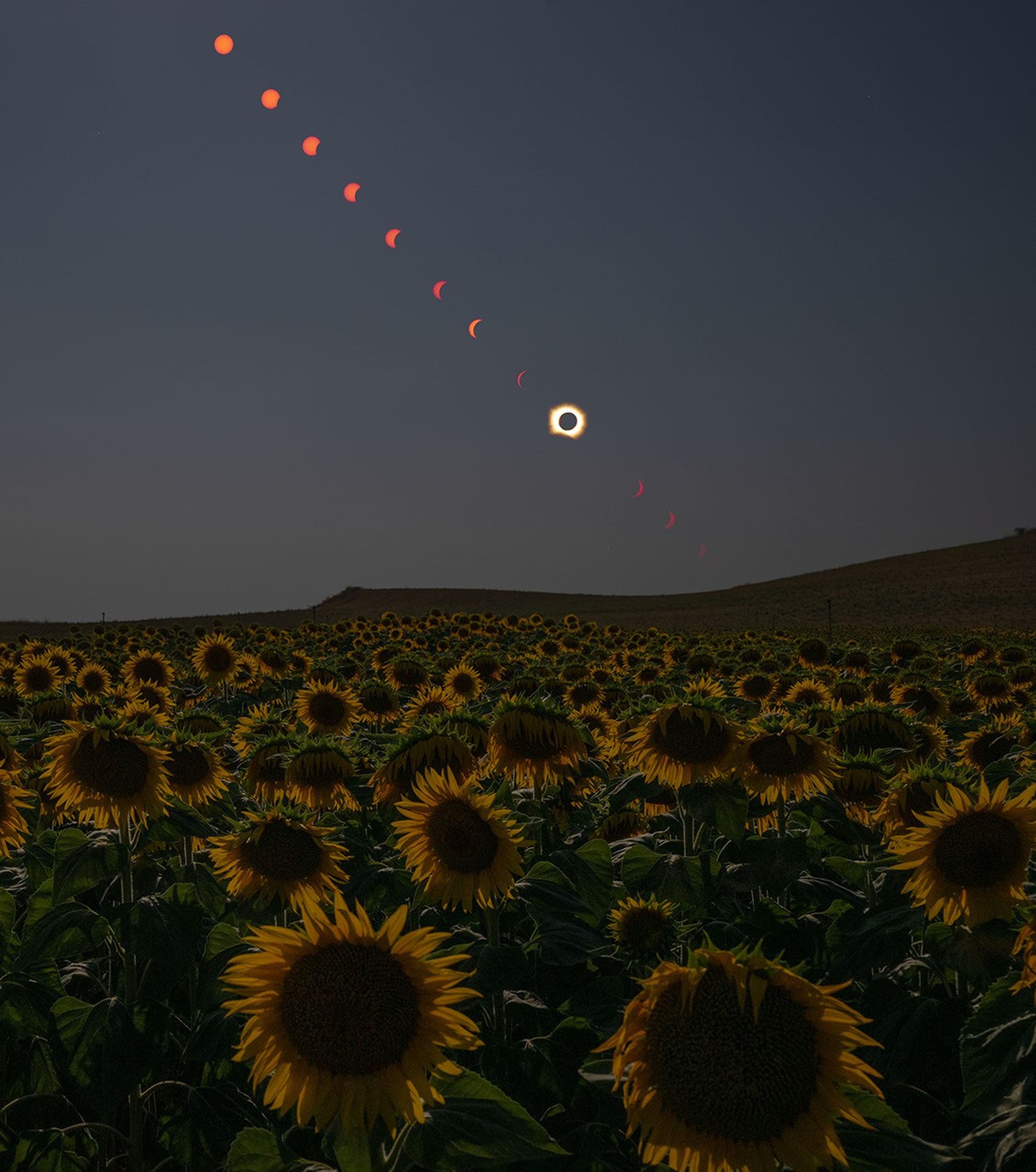
On Aug. 12, a total solar eclipse darkened skies over Greenland, Iceland, and Spain. As the Moon covered the Sun, it briefly revealed the Sun’s wispy outer atmosphere — the corona — to those in the path of totality who were lucky enough to have clear skies. NASA researchers and photographers were along the eclipse path to study the corona, capture the phenomenon, and observe how the eclipse affected our planet.
One NASA photographer in Spain captured the total solar eclipse as well as the partial phases before and after, until the Sun set below the horizon.
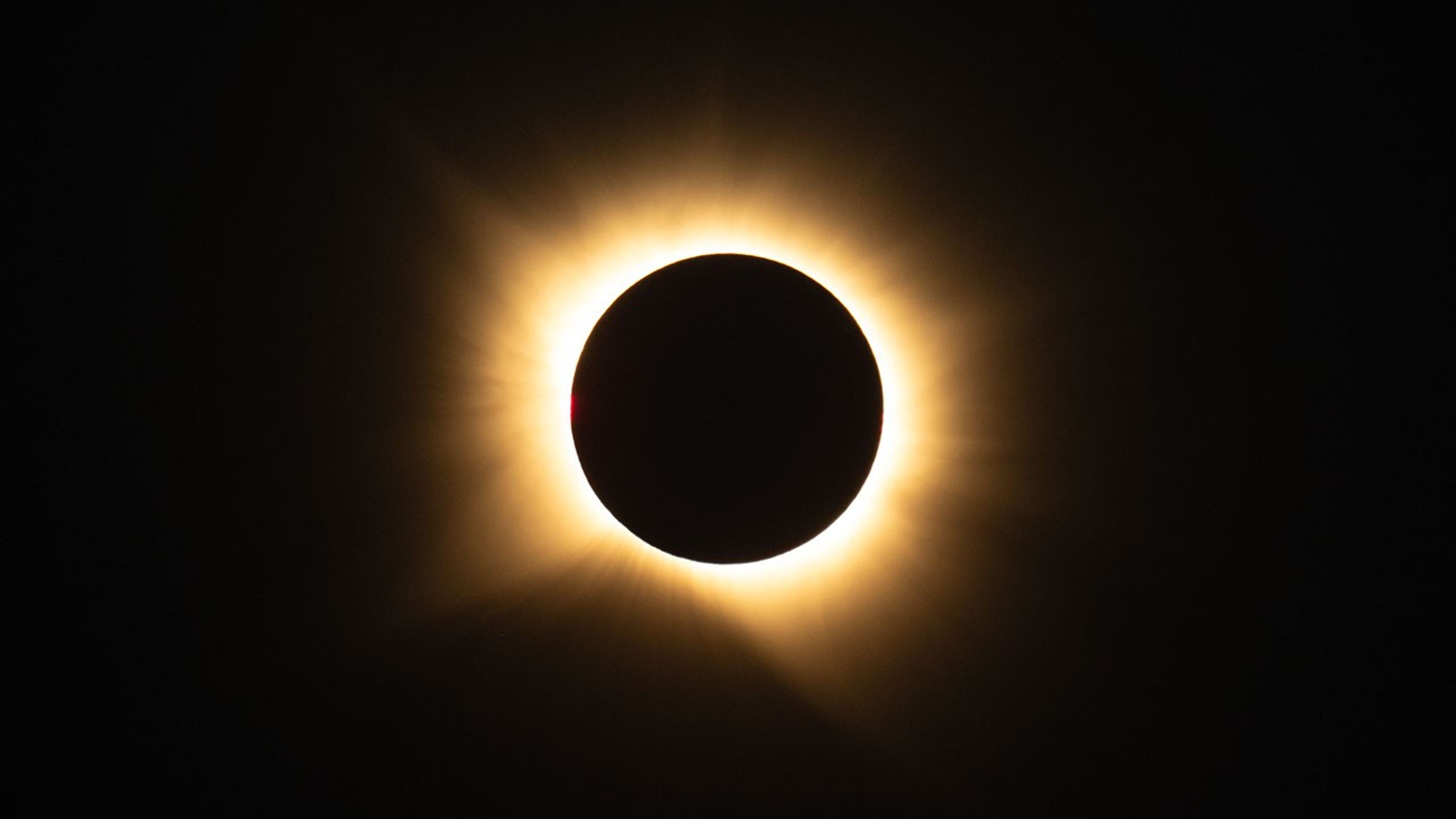
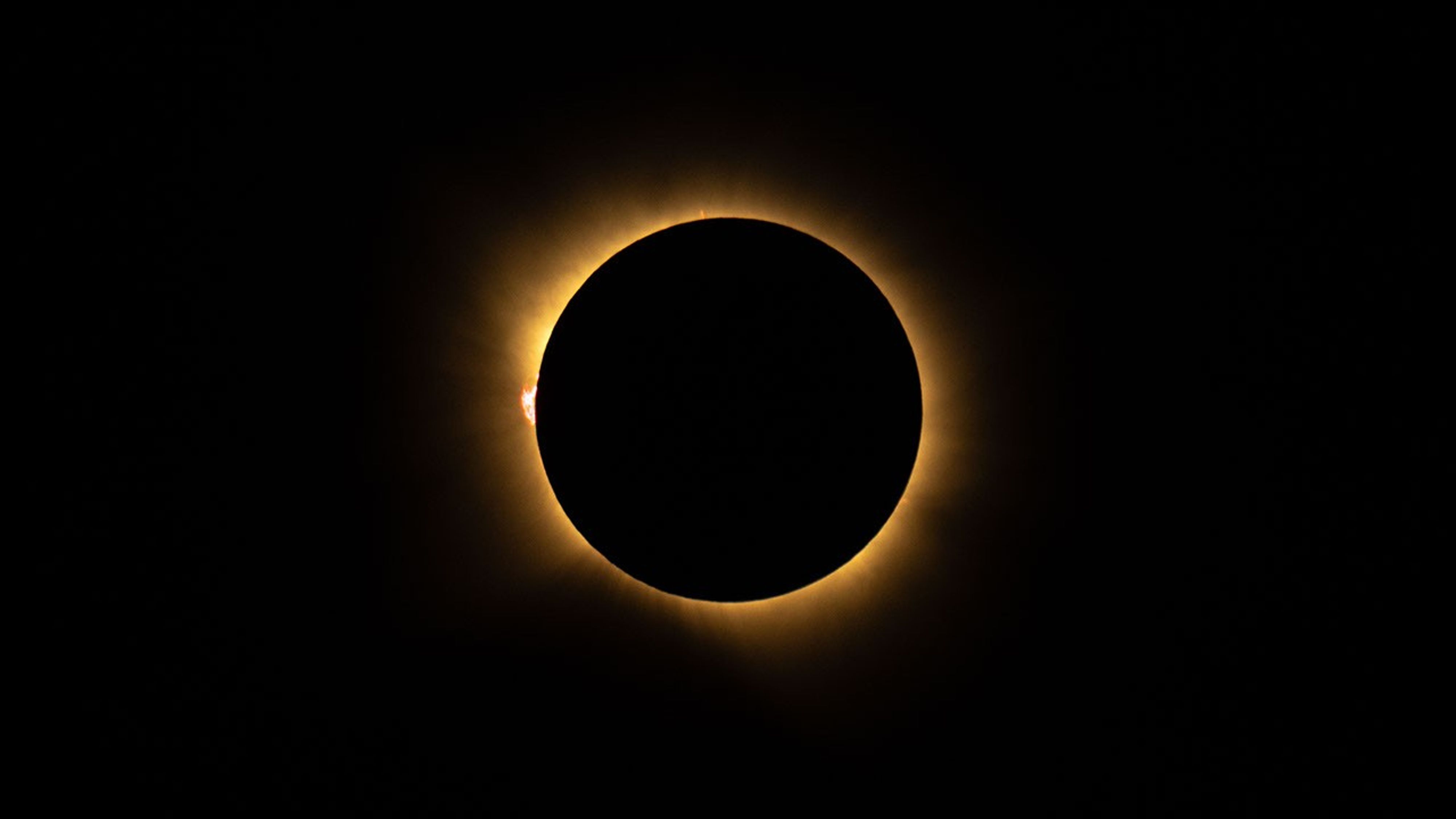
In northern Maine, where only a partial eclipse was visible, another NASA photographer captured the International Space Station, with its crew of seven aboard, speeding past the partially eclipsed Sun.
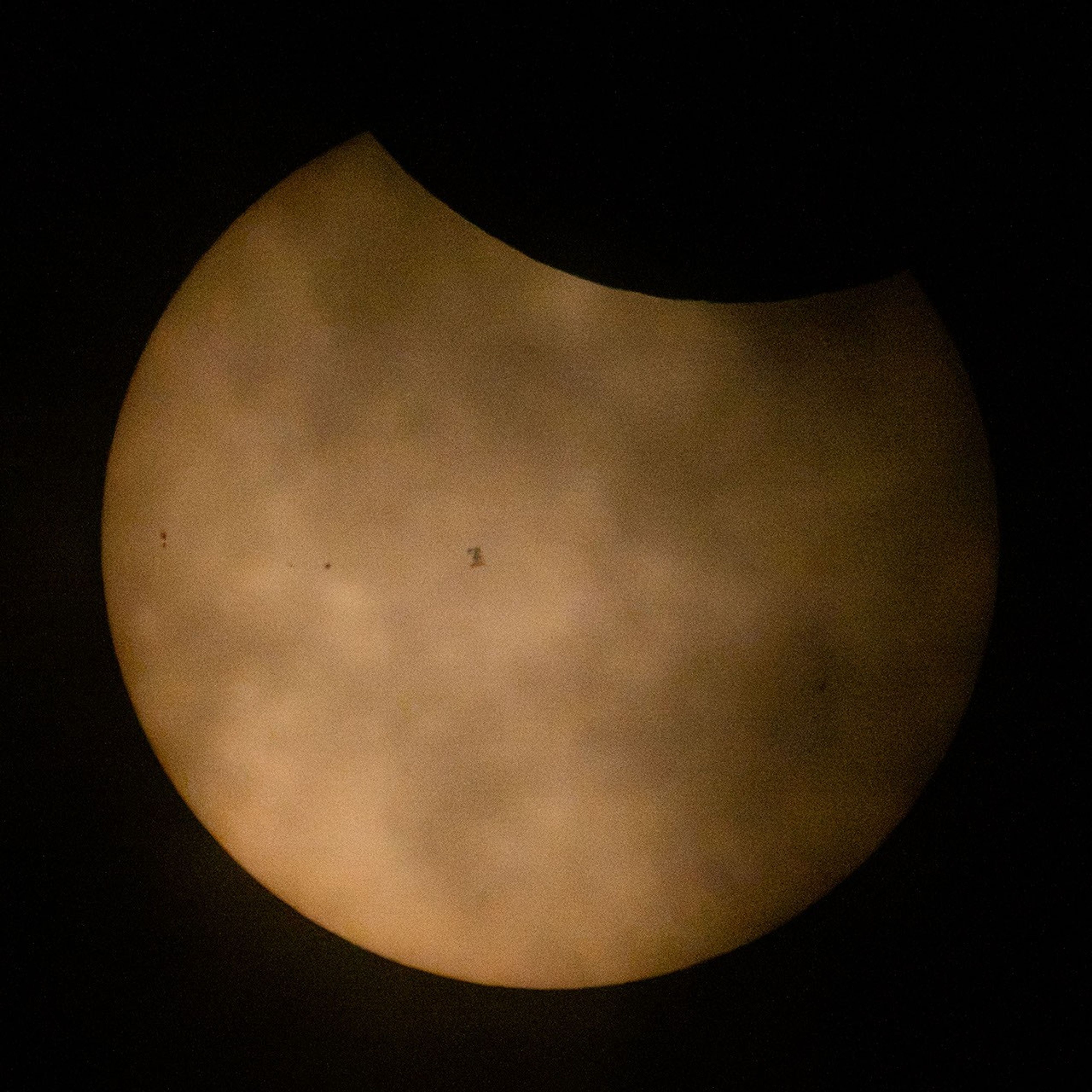
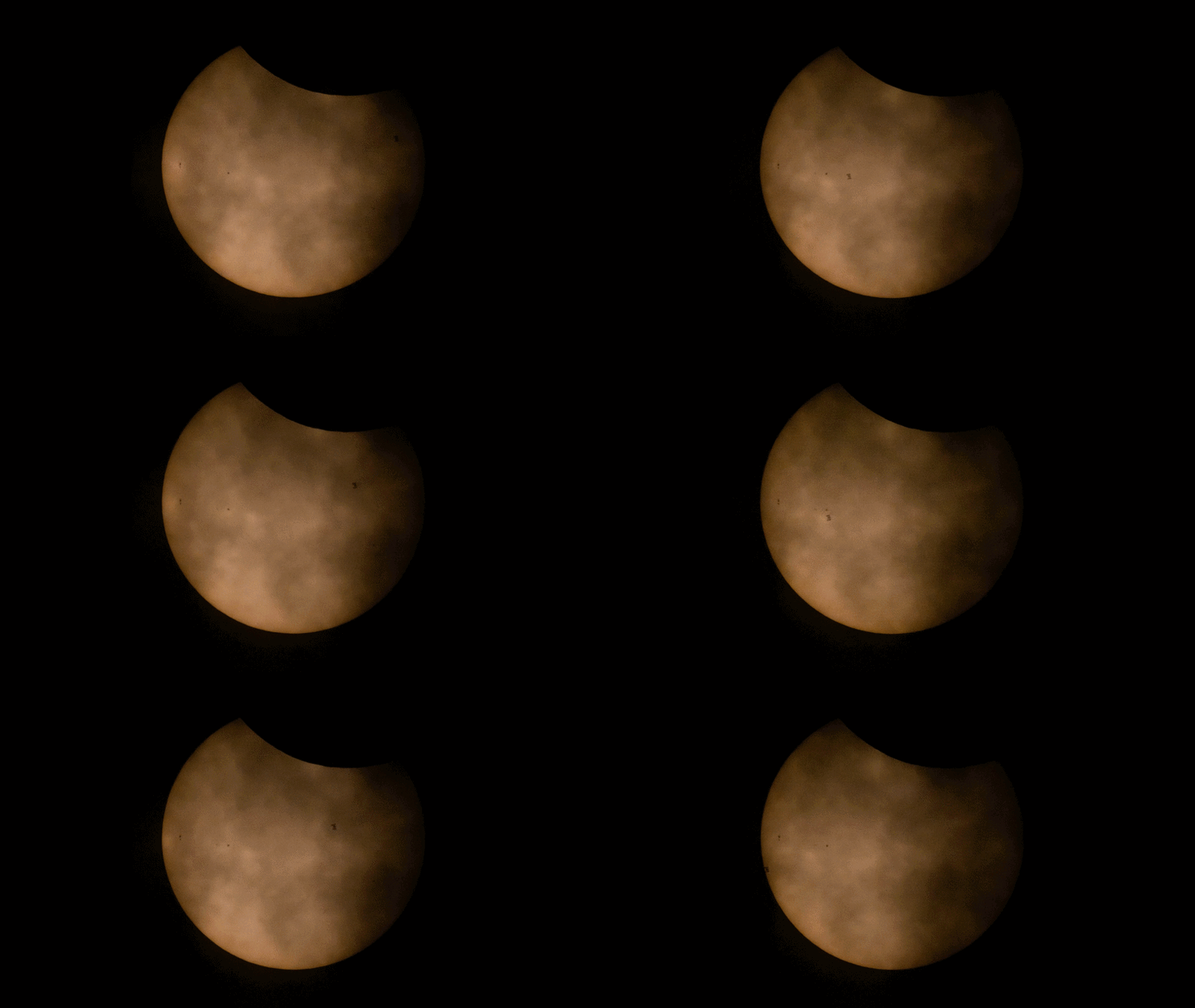
Meanwhile, from about 250 miles above the ground, a NASA astronaut aboard the International Space Station snapped a few photos of the partial eclipse from their perspective as well.
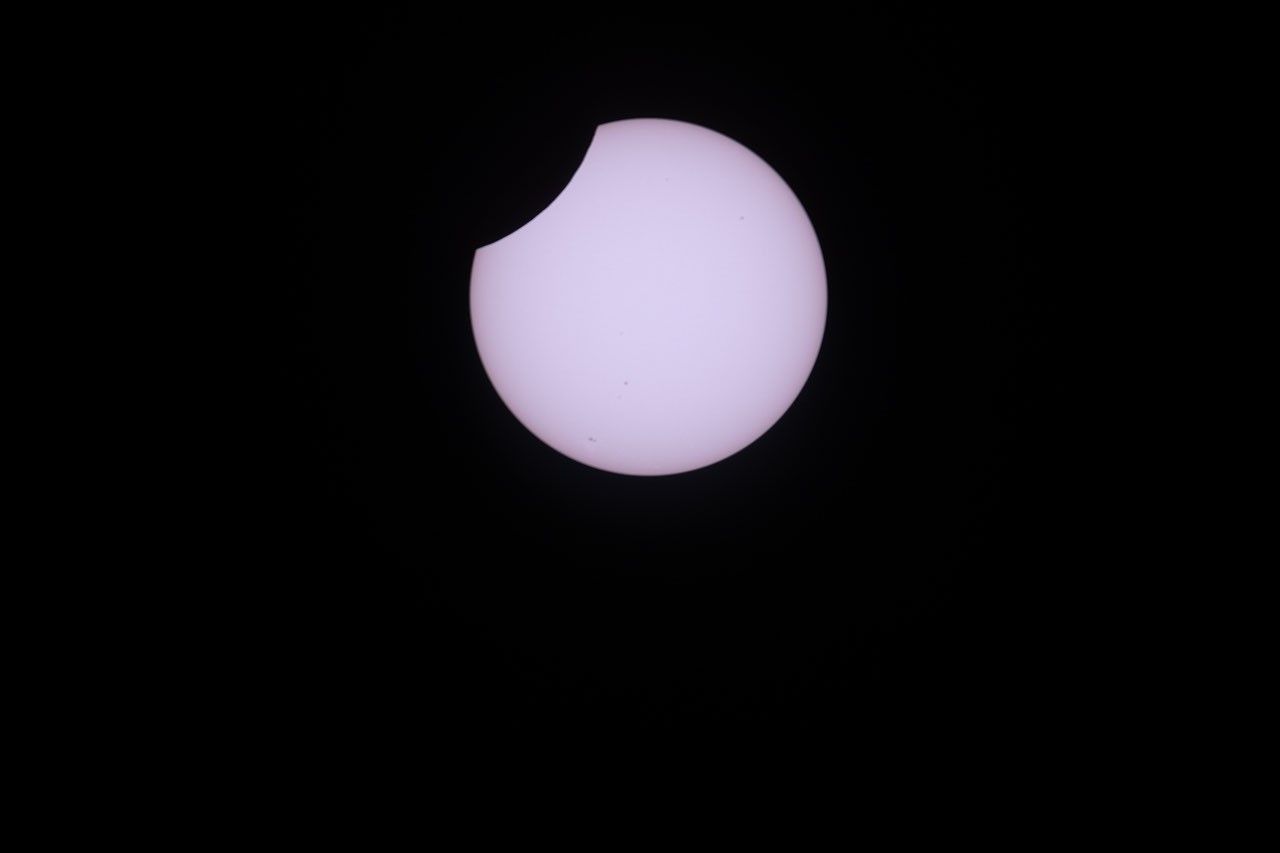
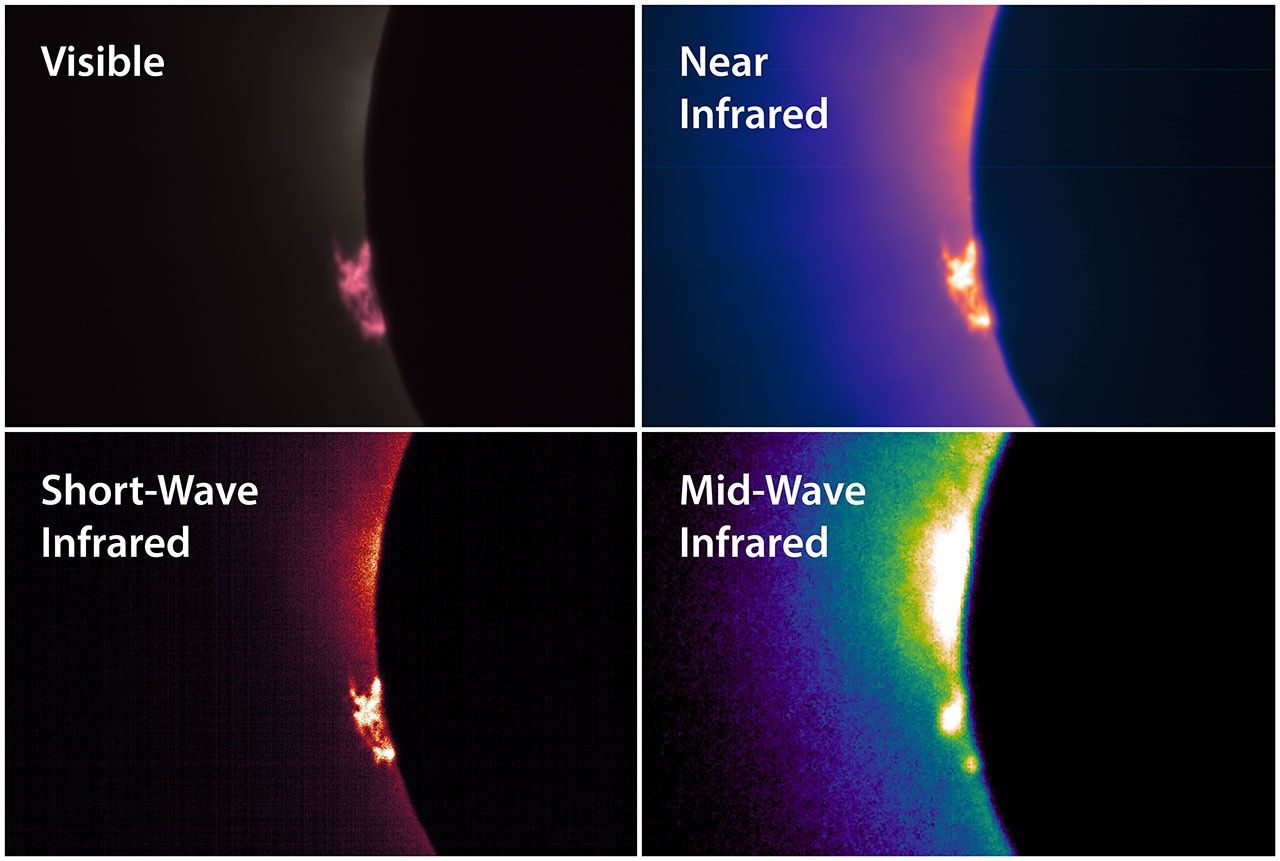
Between the ground and the space station, NASA pilots flew NASA’s WB-57F research jet at an altitude of 50,000 feet, passing through the eclipse’s shadow to lengthen their time in the eclipse. The jet carried a suite of cameras that captured high-resolution images of the corona and prominences, plumes of electrically charged gas rising off the Sun, in several different wavelengths of light.
In both Iceland and Spain, teams of students participating in the NASA-funded Nationwide Eclipse Ballooning Project launched scientific balloons that carried instruments to capture images of the eclipse’s shadow and study the eclipse’s effects on our atmosphere. Even though clouds obscured the view of the eclipse from the ground in Iceland, the weather did not interfere with the balloon-borne instruments’ ability to gather information about how the brief loss of light and heat affected the lower atmosphere.

Before the eclipse, scientists at Predictive Science Inc., with support from NASA grants and supercomputers, used observations of the Sun from NASA spacecraft and ground-based telescopes to predict what the corona would look like during the eclipse. Below, their corona prediction is compared to a composite image of the corona, which combines multiple images captured by the NASA-supported DEB Initiative project during the total eclipse near León, Spain.
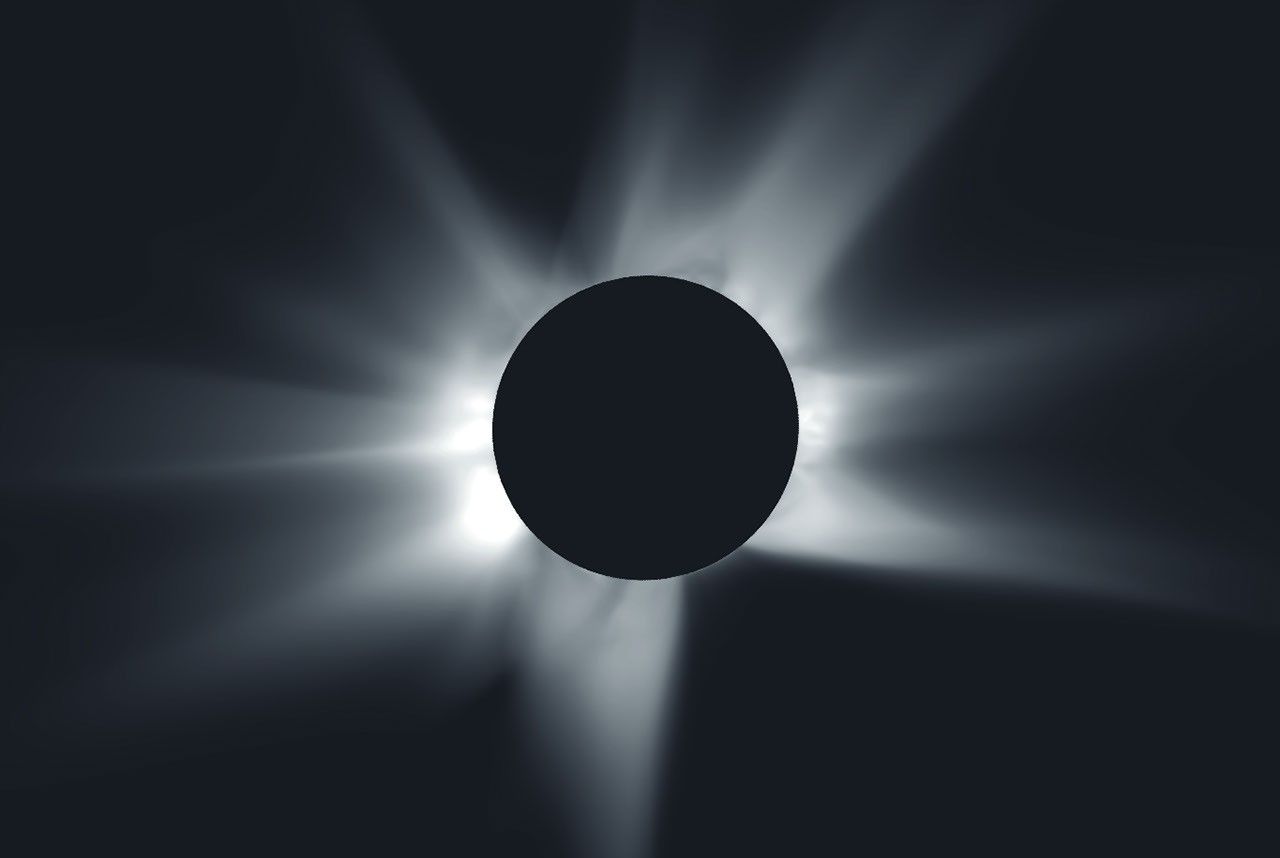
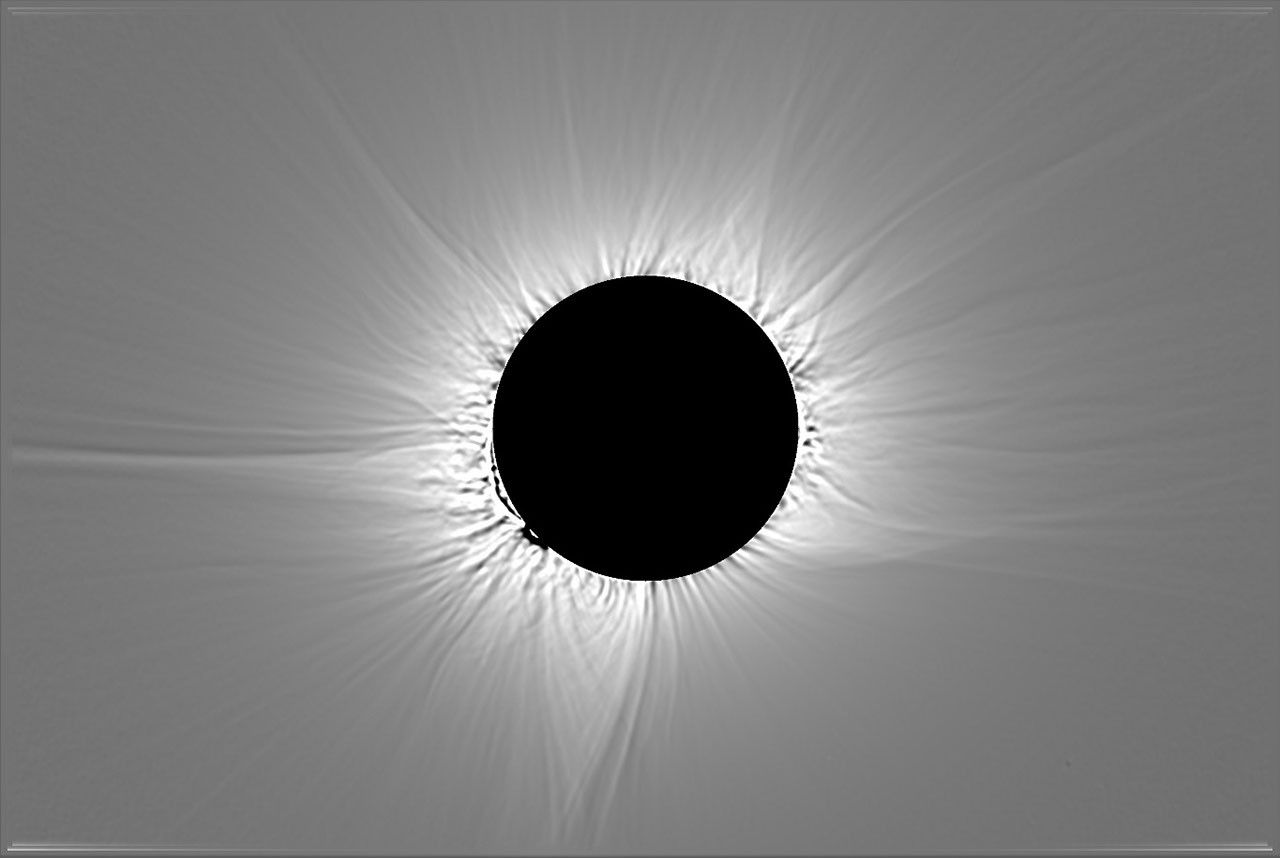
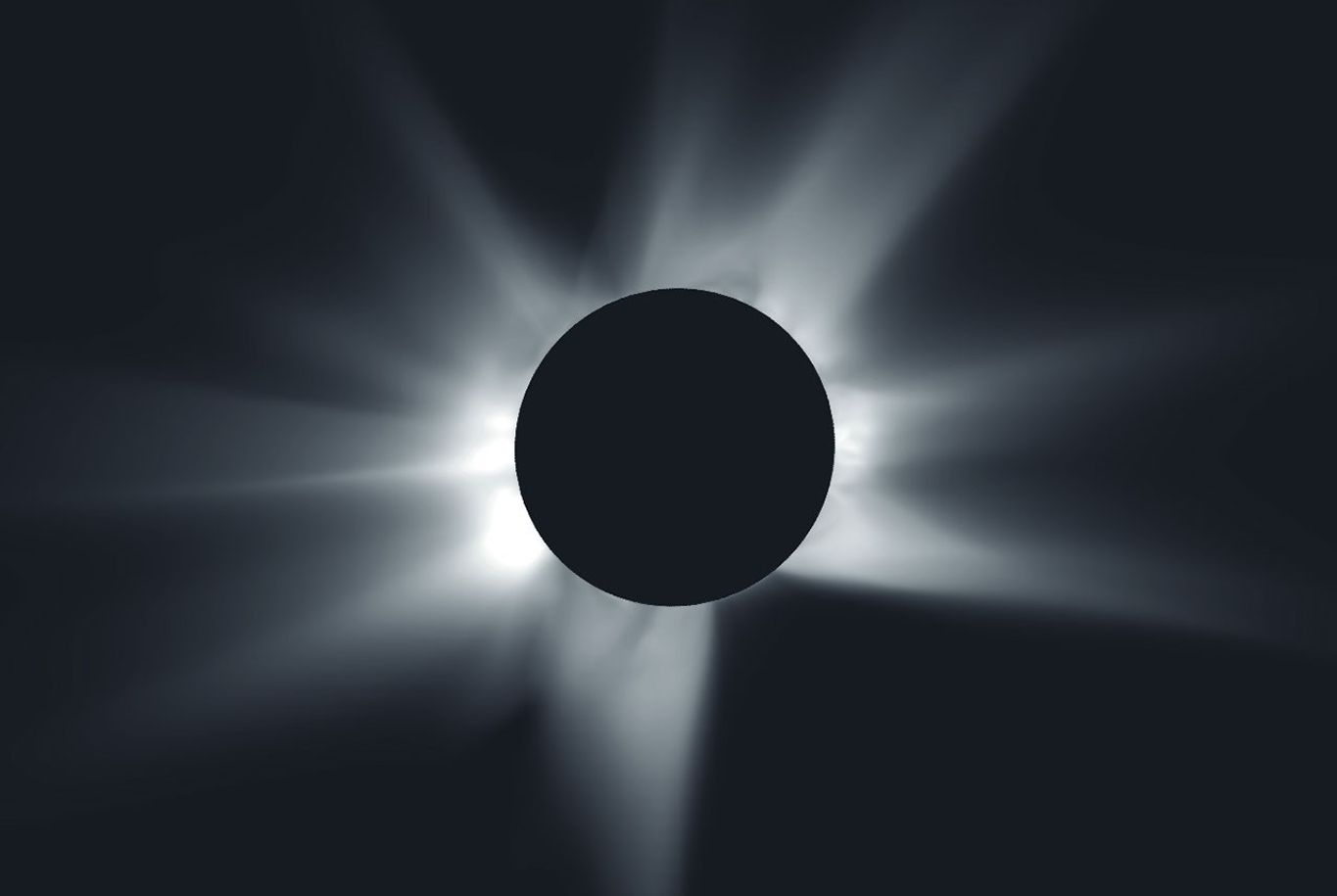
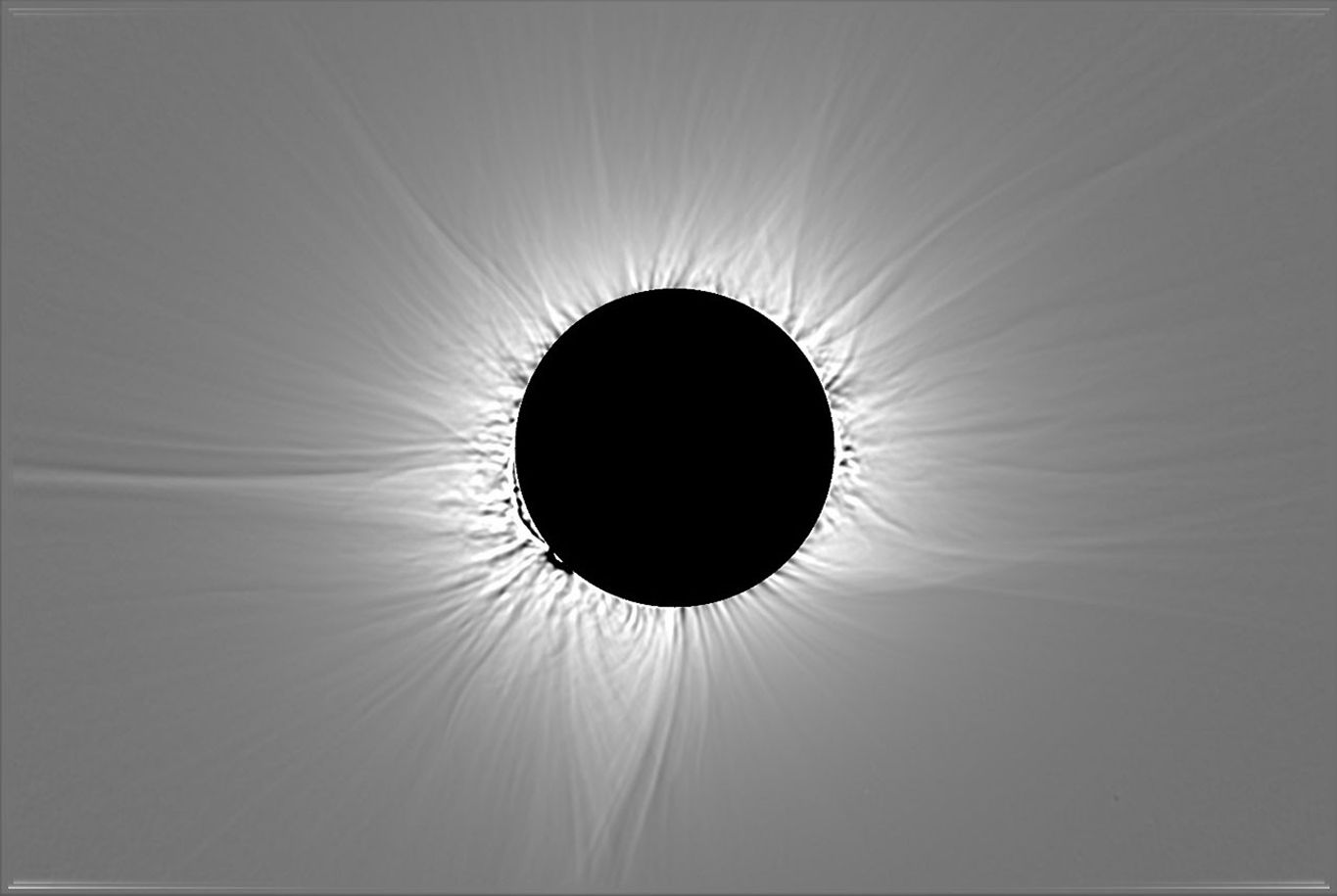
Over the coming months, scientists will analyze the observations and images captured during the solar eclipse on Aug. 12 and present what they have learned about the Sun and its effects on our home planet. These observations will also help prepare science teams to investigate future solar eclipses, such as a much longer total solar eclipse that will be visible from southern Spain and northern Africa on Aug. 2, 2027.
Read more about NASA’s research during the eclipse and rewatch NASA’s eclipse broadcast to hear from some of the scientists and students who conducted the experiments.

Vanessa Thomas is a science writer with the heliophysics communications team at NASA’s Goddard Space Flight Center in Greenbelt, Maryland.
Source: science.nasa.gov
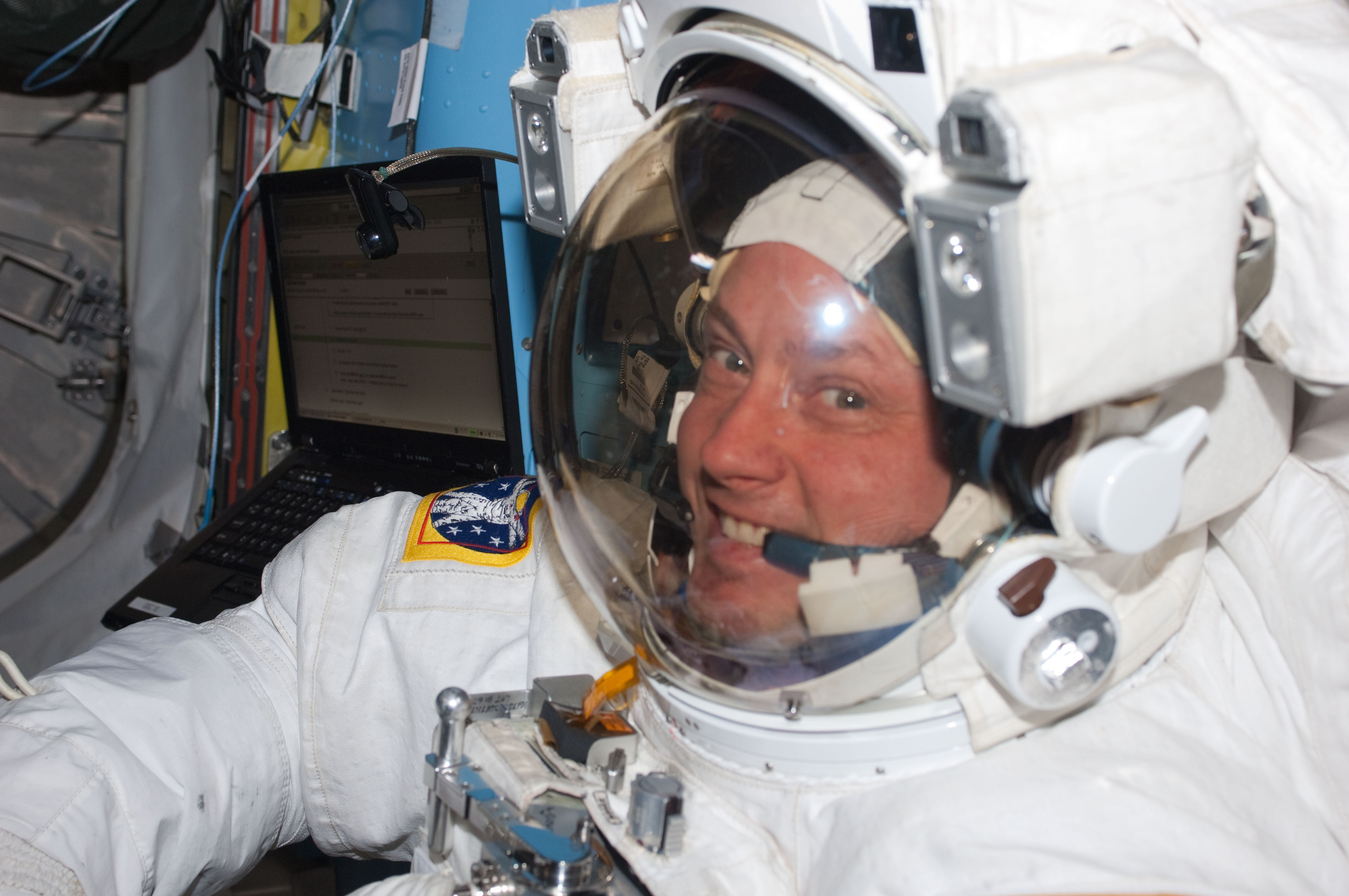
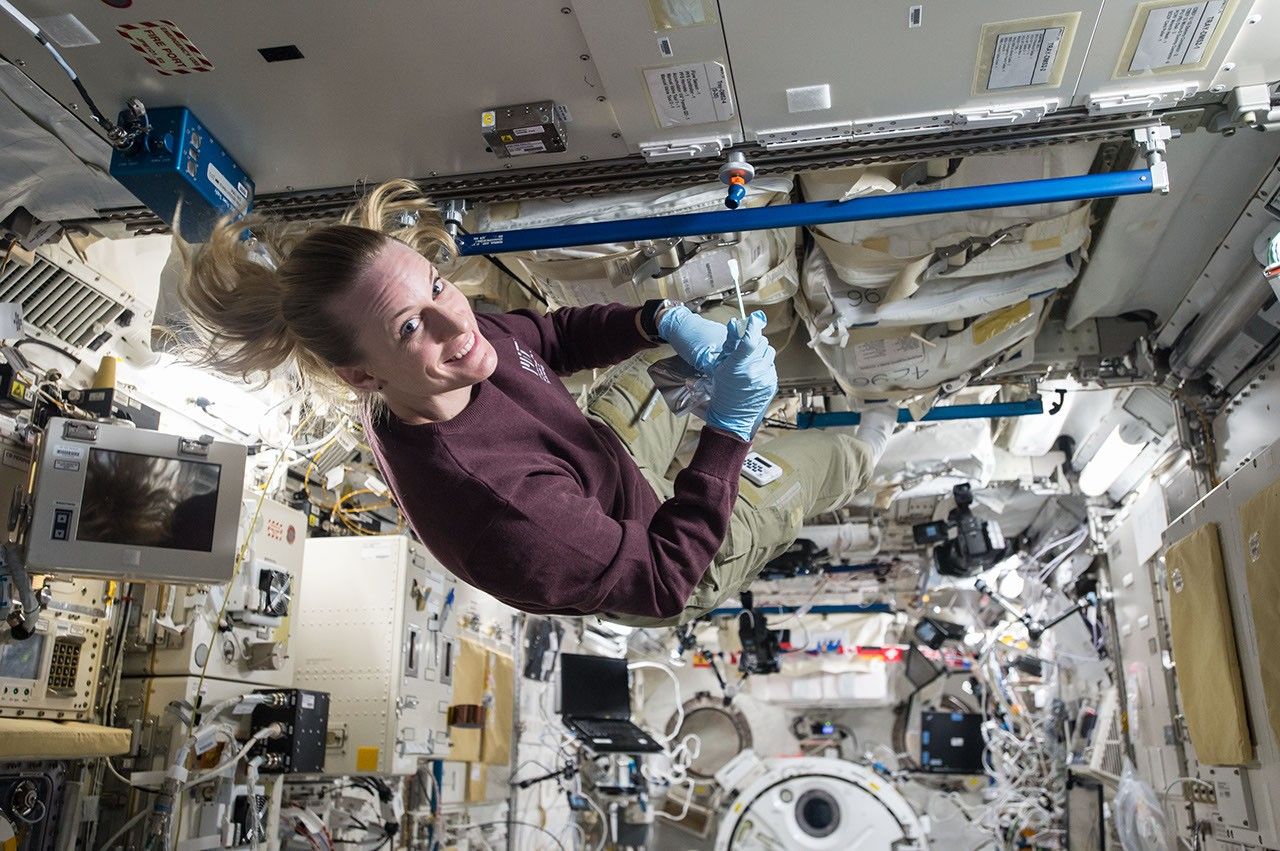
NASA astronaut Mike Fincke is departing the agency on Wednesday after 30 years of service. Throughout his career, he flew four missions, spent 549 days in space, and completed nine spacewalks in support of the International Space Station.
“Few people have had the opportunity to shape as many chapters of NASA’s history as Mike Fincke,” said NASA Administrator Jared Isaacman. “Over a remarkable career, Mike served our nation as a pilot, engineer, astronaut, and mentor. From long-duration missions aboard the International Space Station to helping prepare the Artemis generation, his contributions have helped position NASA for what comes next. The success we’re building on today is possible because of people like Mike, who dedicated their careers to moving our space program forward and preparing the next generation to carry the mission even further. I’d like to congratulate Mike on an incredible career and thank him for his decades of service to NASA, our nation, and the countless people who had the opportunity to learn from and fly alongside him.”
He ranks fourth among NASA astronauts in accumulated time in space, and his spacewalks total 48 hours and 37 minutes. Most recently, Fincke piloted NASA’s SpaceX Crew‑11 mission, which launched in August 2025 and returned in January. During the mission, he served as a flight engineer for International Space Station Expedition 73 and commander of Expedition 74.
Fincke joined NASA’s 16th astronaut class in 1996 and first flew to space in 2004 aboard Soyuz TMA‑4 in support of the space station’s Expedition 9. Serving as a science officer and flight engineer, he helped maintain station systems and performed four spacewalks. He returned to space in 2008 on Soyuz TMA‑13 as commander of Expedition 18, preparing the space station for its transition to six‑person crews at the time and completing two more spacewalks.
In 2011, Fincke flew on STS‑134, the final flight of space shuttle Endeavour. As mission specialist and robotic arm operator, he completed three spacewalks and helped deliver and install the Alpha Magnetic Spectrometer.
“Mike’s remarkable career reflects three decades of dedication to NASA’s mission and the advancement of human spaceflight,” said Vanessa Wyche, director of NASA’s Johnson Space Center in Houston. “From his time aboard the International Space Station to his commitment to mentoring the next generation, Mike has made an immense impact across our agency. His legacy of service, mentorship, and dedication to exploration will continue to inspire the generations to come.”
Throughout his career, Fincke bridged spacecraft development, flight testing, and mission operations. Early in the International Space Station Program, he helped test and integrate several of the station’s initial modules before launch. His flight experience spanned multiple generations of human spacecraft, including two missions aboard Soyuz, one aboard the space shuttle, and later piloting the SpaceX Dragon.
Fincke was a foundational contributor to NASA’s Commercial Crew Program. As chief of the Astronaut Office’s Commercial Crew Branch, he worked to ensure astronaut needs, crew safety, and human spaceflight experience informed development of the nation’s next generation of crewed spacecraft. He spent five years supporting Boeing’s Crew Flight Test program training as a crew member and backup pilot, contributing to flight software, systems integration, integrated testing, and spacecraft interfaces.
Fincke also supported station operations from the ground as a crew test support team member in Russia, a capsule communicator, or capcom, and crew procedures team lead. He helped translate complex engineering and operational requirements into clear instructions for crews working in orbit. His continuity across development, integration, mission support, and long‑duration flight gave him an end‑to‑end perspective on space station assembly and operation.
“Mike approached every assignment with experience, humility, and an unwavering focus on the mission,” said Scott Tingle, chief of the Astronaut Office at NASA Johnson. “Whether flying aboard the station, supporting crews from the ground, or helping shape the spacecraft that future crews will rely on, he consistently strengthened our team. His legacy is woven into the way we fly today.”
A native of Emsworth, Pennsylvania, Fincke holds bachelor’s degrees in aeronautics and astronautics and in Earth, atmospheric, and planetary sciences from the Massachusetts Institute of Technology, where he also studied in the Soviet Union through an exchange program with the Moscow Aviation Institute. He earned master’s degrees in aeronautics and astronautics from Stanford University and in planetary geology from the University of Houston, Clear Lake.
Fincke is a retired U.S. Air Force colonel and distinguished graduate of the U.S. Air Force Test Pilot School. He served as a space systems engineer and flight test engineer at Edwards and Eglin Air Force Bases and later as the U.S. flight test liaison to the Japanese‑U.S. XF‑2 fighter program at Gifu Air Base in Japan. He accumulated more than 2,000 flight hours in more than 30 aircraft types.
“After exactly 30 years, I am departing NASA, but I remain deeply committed to the work of exploration.” Fincke said. “NASA gave me the extraordinary privilege of serving alongside remarkable people, flying and helping develop spacecraft, and contributing to the International Space Station from its earliest days through command in orbit. I am profoundly grateful to my crewmates, the teams on the ground, our international partners, and the families who make this work possible. I am excited to carry those lessons forward and help prepare the next generation of engineers, explorers, and leaders. Together, we will return humanity to the Moon, travel to Mars, journey outward to the planets and moons beyond Earth, and someday reach for the stars – all while caring for Earth, the most beautiful planet in our solar system.”
To learn more about NASA’s astronauts and space exploration, visit:
https://www.nasa.gov/astronauts
-end-
Jimi Russell
Headquarters, Washington
202-358-1100
[email protected]
Anna Schneider
Johnson Space Center, Houston
281-483-5111
[email protected]
Source: www.nasa.gov
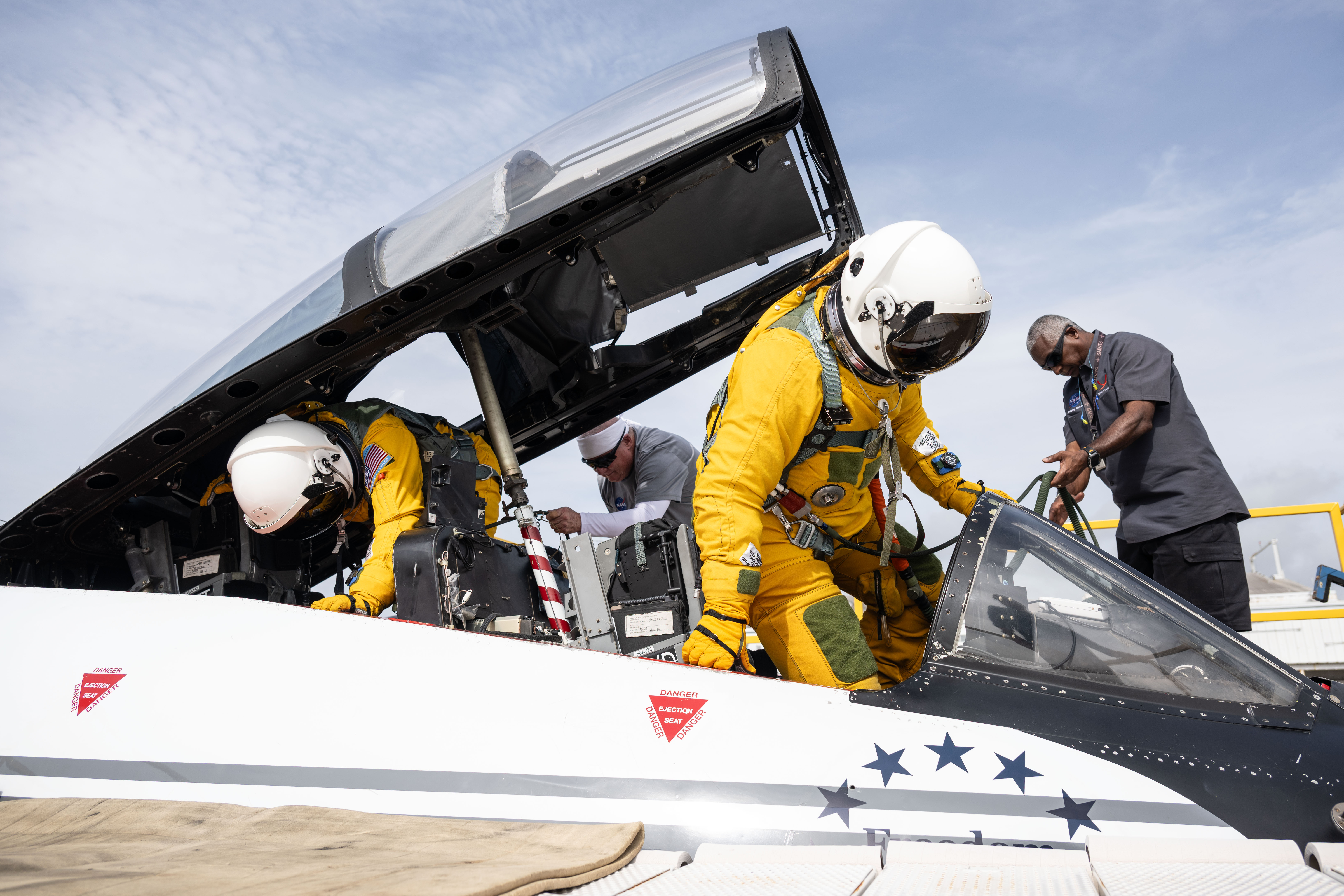
NASA astronaut Adam Fuhrmann (right, in yellow) prepares for a training flight aboard NASA’s WB-57 aircraft in this July 16, 2026, photo.
These high-altitude flights train the crew to work in a tight environment and operate aircraft systems while in a pressure suit, preparing them for future missions to the International Space Station, Moon, or beyond.
Image credit: NASA/Josh Valcarcel
Source: www.nasa.gov