Posted on Leave a comment

NASA Data Feeds River Forecasts as Snow Drought Effects Linger

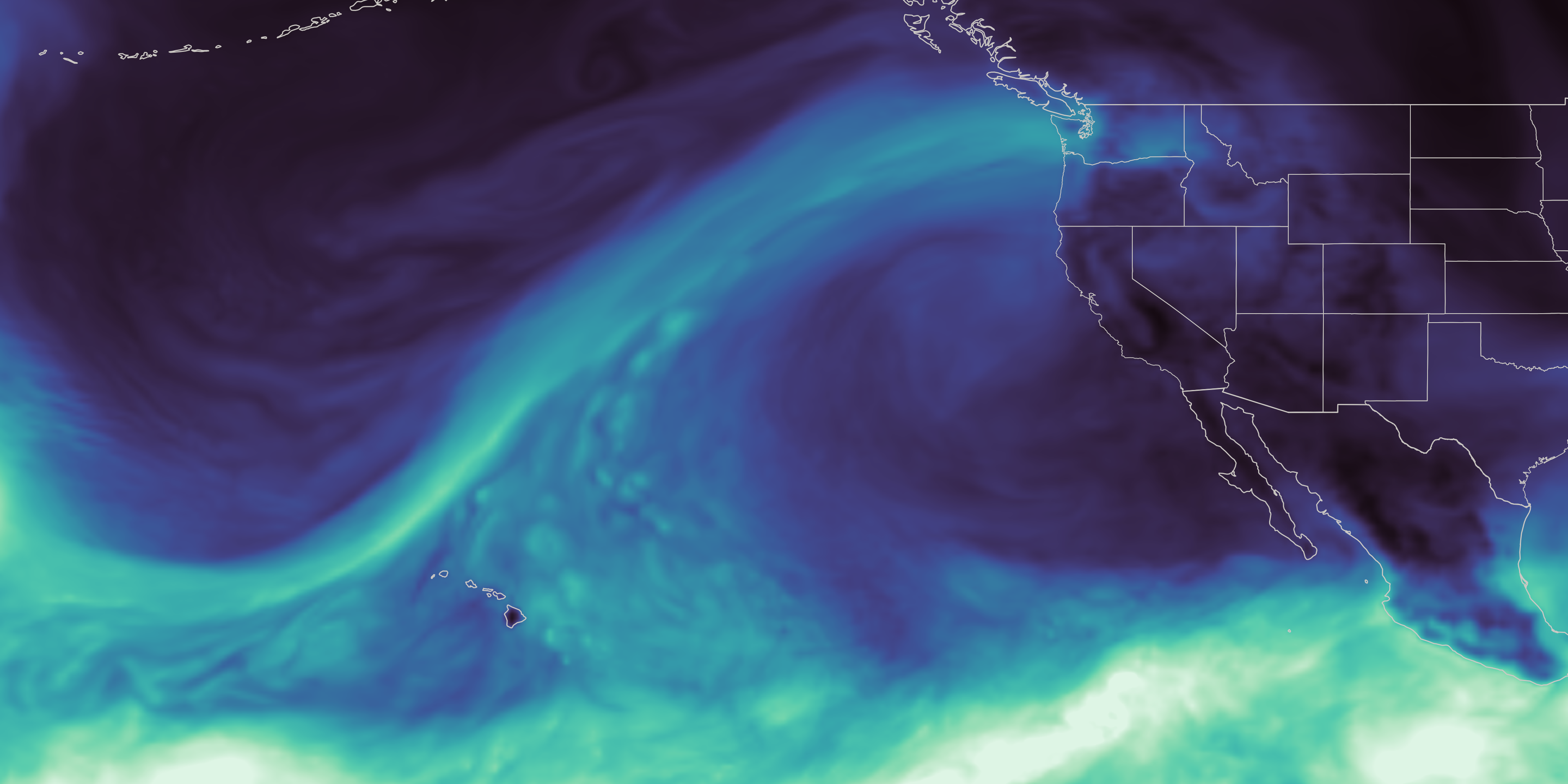
This map, derived from NASA’s GEOS (Goddard Earth Observing System), shows an atmospheric river reaching Washington state in December 2025, during a winter marked by extreme rainfall and too little mountain snow.
NASA’s Scientific Visualization Studio

As the effects of the 2026 snow drought in the western United States carry into summer, NASA Earth data is feeding machine-learning forecasts that inform decisions about water, power, and public safety in Washington state.  

Tacoma Power, a Washington public utility, is using a U.S. technology company’s river-flow forecasts during a year of water extremes on the Cowlitz River. The utility’s largest hydroelectric project uses water stored behind Mayfield and Mossyrock dams to generate enough electricity to serve more than 151,000 homes each year.

Upstream Tech’s HydroForecast combines weather forecasts and river measurements with NASA-produced satellite data on snow cover and vegetation conditions to predict river flow from hours to days ahead. Updated every two hours, the forecasts are used by reservoir managers, hydropower producers, water utilities, and government agencies to prepare for storms, plan reservoir water releases, and navigate dry periods.

“Part of NASA’s mission is to make the view from space useful on the ground,” said Erin Urquhart, manager for NASA’s Water Resources program at the agency’s headquarters in Washington, D.C. “When an American company incorporates NASA’s freely available data into forecasts that help water managers prepare for floods, generate power, and steward water supplies, that’s NASA delivering practical value to the nation.”

Year of water extremes

During the winter of 2025-26, unusual warmth meant a larger share of precipitation fell as rain instead of snow across much of the West, while below-normal precipitation deepened deficits in some areas. January, February, and March each had the lowest Western snow cover for that month in the NASA MODIS (Moderate Resolution Imaging Spectroradiometer) satellite record since 2001.

On the Cowlitz, those conditions produced a season of extremes. In December 2025, a powerful atmospheric river brought a long, narrow band of Pacific moisture into the region, causing one of the largest one-day inflow surges ever recorded at Tacoma Power’s hydroelectric project. Across the season, that rain-heavy pattern sent water downstream quickly instead of building mountain snowpack that would melt and release water steadily into summer. Snowpack remained at just 20% to 50% of normal levels.

As winter became spring, the rain tapered off, and on April 8, Washington state placed every watershed, including the Cowlitz, under a drought emergency. From April through June, peak daily inflow into the project was among the lowest on record, leaving Tacoma Power with less incoming water to replenish its reservoirs ahead of summer demand, said Saul Villarreal, Tacoma Power’s senior hydro operations manager.
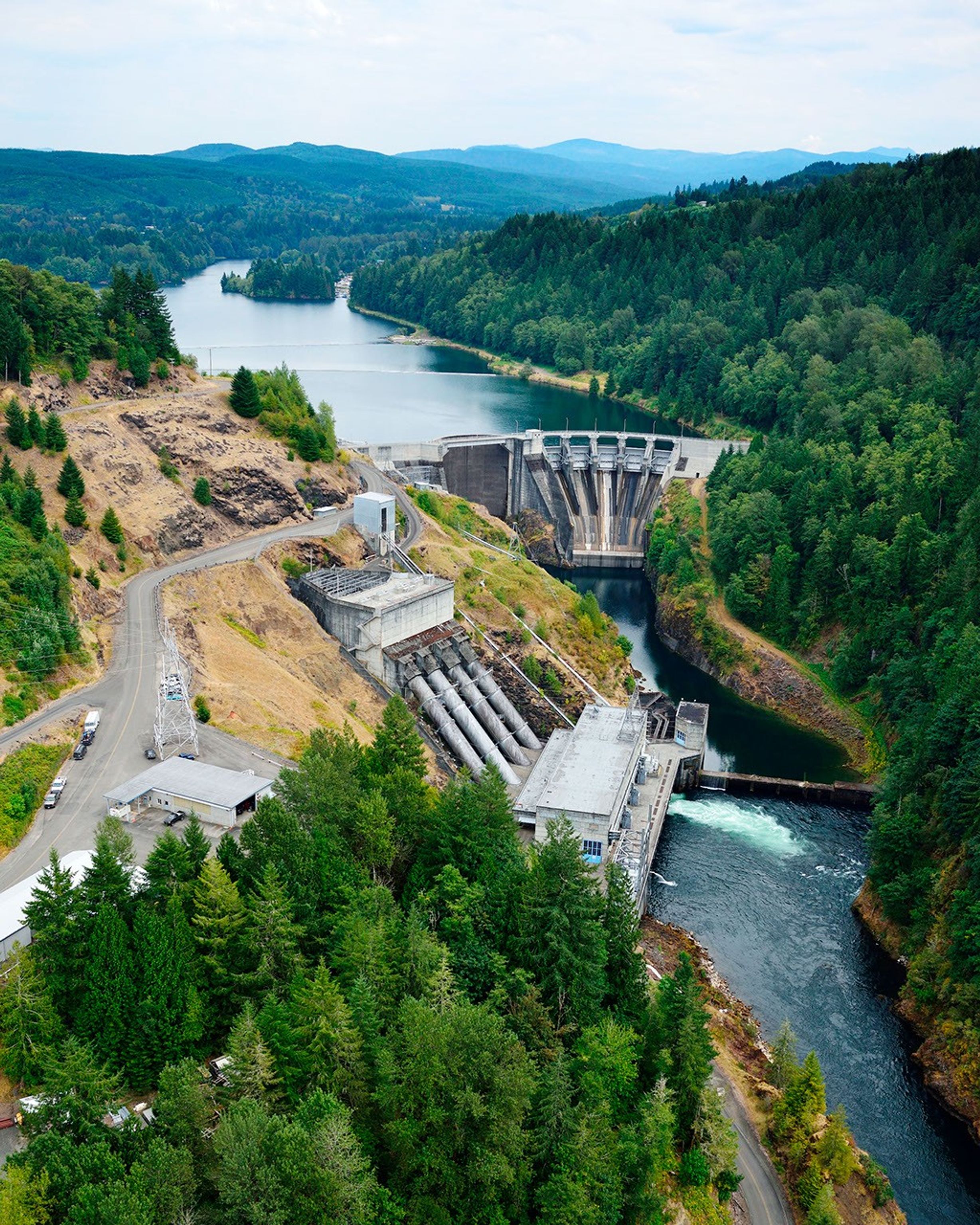
Tacoma Power’s Mayfield Dam and powerhouse sit on the Cowlitz River in southwest Washington, where forecasts using NASA data support reservoir operations and hydropower generation.
Tacoma Power, used with permission

Turning satellite data into river forecasts

NASA turns observations collected by the VIIRS (Visible Infrared Imaging Radiometer Suite) instrument on the Suomi-NPP (Suomi National Polar-orbiting Partnership) satellite into data products that provide information about snow cover and vegetation greenness across entire watersheds, including where ground monitors are sparse.

To train HydroForecast, Upstream Tech collects and archives years of those NASA products alongside weather forecast data and actual river-flow measurements. Using records from hundreds of watersheds, the models learn common patterns in how water moves through the landscape and apply them in new locations.

Tests across multiple basins found that including snow and vegetation observations increased forecast skill, said Dr. Laura Read, director of technical and federal partnerships for HydroForecast at Upstream Tech. “NASA’s data gives us the reliability, global coverage, and consistency we need,” said Read. “Our short-term models run every two hours, so those inputs have to show up when we need them. Though we have stopgaps in place, any interruption to our operational pipeline is a huge deal.”

Tacoma Power uses HydroForecast alongside stream gauges, snow stations, and operator judgment. During the December storm, the NASA-informed, short-term forecast helped the utility anticipate how much water would reach the project and prepare for dynamic river conditions, while meeting operating requirements and keeping public safety at the forefront, Villarreal said.

NASA’s GEOS (Goddard Earth Observing System) maps an atmospheric river, a ribbon of water vapor, before Washington’s January-April 2026 snow cover is compared with a historical median.
NASA’s Scientific Visualization Studio

As spring approached, the operational challenge reversed. Tacoma Power used HydroForecast’s seasonal model to track the growing risk of weak runoff and began keeping its reservoirs higher than usual to preserve water for summer. That left less space to contain another large storm, so operators continued checking the short-term forecast “to play defense,” and remained ready to adjust operations if another atmospheric river developed.

“The earlier we understand how conditions might change, the more effective planning we can do to manage our reservoir and balance the many demands of our system throughout the season,” said Villarreal.

Tacoma Power entered summer 2026 with reservoir levels near average despite the dry spring. The stored water supports reliable hydropower, required river flows to support fish and aquatic habitat, and public recreation. It also gives the utility more flexibility to meet electricity demand during heat waves or unexpected outages and, when possible, support the wider regional power system.

From forecasts to drought assessments

Tacoma Public Utilities’ Cowlitz Hydro Project is just one example of NASA science supporting water decisions across the West.

NASA also has partnered with the U.S. Department of Agriculture’s Natural Resources Conservation Service to bring satellite-based snow and groundwater information into machine-learning water-supply forecasts.

The National Oceanic and Atmospheric Administration’s Colorado Basin River Forecast Center uses MODIS and VIIRS data to adjust snowmelt rates in its model. The Bureau of Reclamation uses NASA and NASA-derived snow data, alongside other sources, for reservoir operations in California’s San Joaquin Basin.

NASA data and research have long informed the U.S. Drought Monitor, the weekly assessment used by farmers, water managers, and public agencies. NASA became a formal partner in 2026, expanding its role from providing information to helping produce the assessment. The agency took its first turn authoring the Drought Monitor during the week of Aug. 17.

About the Author

Emily DeMarco

Emily DeMarco

Writer/Editor (IV), Earth Science Division

Emily is a science writer and editor with NASA’s Earth Science Division, with more than 10 years of experience in science journalism and communication. A former deputy news editor at the magazine Science News, she holds a master’s in environmental science and management from UC Santa Barbara’s Bren School, where she specialized in water resources management and science communication.

Source: science.nasa.gov

Posted on Leave a comment

President Honors NASA’s Artemis II Crew with Highest US Space Award

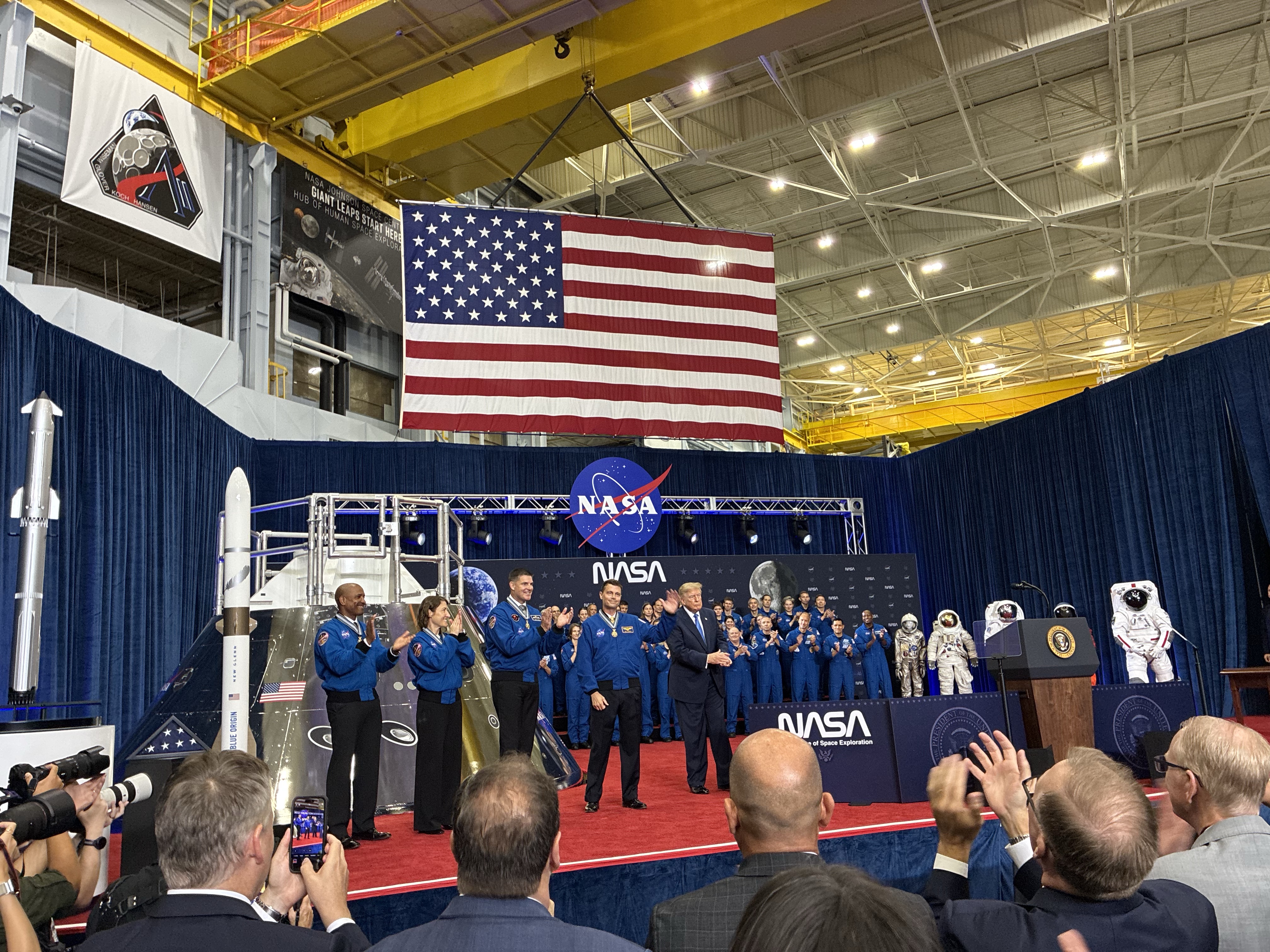
President Donald J. Trump awarded NASA astronauts Reid Wiseman, Victor Glover, and Christina Koch, and CSA (Canadian Space Agency) astronaut Jeremy Hansen with the Congressional Space Medal of Honor on Aug. 28, 2026, at NASA’s Johnson Space Center in Houston.
Credit: NASA

President Donald J. Trump awarded NASA astronauts Reid Wiseman, Victor Glover, and Christina Koch, and CSA (Canadian Space Agency) astronaut Jeremy Hansen with the Congressional Space Medal of Honor Friday for their service during the Artemis II mission. He presented the awards during a ceremony at NASA’s Johnson Space Center in Houston, honoring the first medal recipients since 2023.

NASA’s historic Artemis II mission launched on April 1, and splashed down safely in the Pacific Ocean on April 10. The crew members were the first astronauts to launch on the agency’s SLS (Space Launch System) rocket, flying aboard NASA’s Orion spacecraft, which the crew named Integrity. During their record-setting mission, the astronauts traveled 252,756 miles from Earth, farther than any humans have traveled before, surpassing a previous record set by Apollo 13 astronauts in 1970. In total, they flew 695,081 miles, including a lunar flyby.

“We gather on these historic grounds to celebrate the immense courage of four intrepid space heroes whose sense of daring and adventure led them further from Earth than anyone has ever traveled ever before,” said President Trump. “Today we’re proudly awarding the Congressional Space Medal of Honor to the remarkable crew of Artemis II. These astronauts did not do it alone. I want to salute all of the engineers, and scientists, launch and landing specialists, everyone at NASA who helped make this mission a great success.”

The Congressional Space Medal of Honor was authorized by Congress in 1969 to recognize an astronaut who in the performance of duties has distinguished himself or herself by exceptionally brave and meritorious efforts, and contributions to the welfare of the nation and humanity. There now are 34 recipients of the award since the beginning of the space program, including the crews of Apollo 1, Challenger, and Columbia who received the award posthumously.

“President Trump’s leadership has put America back on a path to lead the world in space, from creating the Artemis program to giving NASA the resources and mandate to win this new space race,” said NASA Administrator Jared Isaacman. “The Artemis II crew answered that call with extraordinary skill and courage, showing the world the Moon again and what American leadership and exploration look like at their best. Their achievement was made possible by the exceptional NASA workforce, alongside our industry and international partners, who showed once again what can be accomplished when we commit to big, bold endeavors. We will build on this success as we return to the lunar surface and establish an enduring presence on the Moon.”

The first crewed mission under NASA’s Artemis program paved the way for the 2027 Artemis III test flight in low Earth orbit to demonstrate rendezvous and docking capabilities between Orion and commercial human landing systems, and the Artemis IV mission in 2028, which will return American astronauts to the lunar surface.

“It was the honor of my lifetime to fly on Integrity around the Moon with Victor, Christina, and Jeremy. Having President Trump here at the agency’s Johnson Space Center to honor NASA and my crew underscores the significance of what our teams accomplished,” said Wiseman, who served as commander of the mission. “I can’t wait to see my friends continue this legacy on Artemis III.”

Glover served as pilot of the Orion spacecraft.

“Piloting Orion for the first time in space was a profound honor, made possible because of the years of hard work, dedication, and expertise by countless individuals dedicating their time and talents to the mission,” said Glover. “We share this recognition with the thousands of people who launched us around the Moon and brought us safely back to Earth.”

Koch served as a mission specialist.

“The response to our mission here on Earth was beyond anything we ever imagined and all we ever hoped for. We are grateful every time we hear from people who followed along with our journey. As team members on this shared mission, we accept this award to honor those who made it happen, from factory floors to clean rooms and mission control rooms,” said Koch.

Hansen also served as a mission specialist.

“It is a privilege to receive the Congressional Space Medal of Honor alongside my Artemis II crewmates,” said Hansen. “I share this recognition with the dedicated teams in Canada, the United States, and our international partners who made the mission possible. Artemis II showed what we can accomplish for humanity when we set ambitious goals and work together. For Canada, the mission and the Artemis program as a whole are about much more than just going back to the Moon. It is about the pursuit of excellence and collaboration.”

As part of a Golden Age of innovation and exploration, NASA will send Artemis astronauts on a series of challenging missions to explore more of the Moon and establish a Moon Base on the lunar surface for long-term exploration. These missions will set the stage for sending the first astronauts — Americans — to Mars. Learn more:

https://www.nasa.gov/artemis

-end-

Bethany Stevens / Cheryl Warner
Headquarters, Washington
202-358-1600
[email protected] / [email protected]

Brandi Dean / Chelsey Ballarte
Johnson Space Center, Houston
281-483-5111
[email protected] / [email protected]

Details

Last Updated

Aug 28, 2026

Editor
Jessica Taveau

Related Terms

Source: www.nasa.gov

Posted on Leave a comment

President Trump Signs Executive Order to Create US Space Academy  

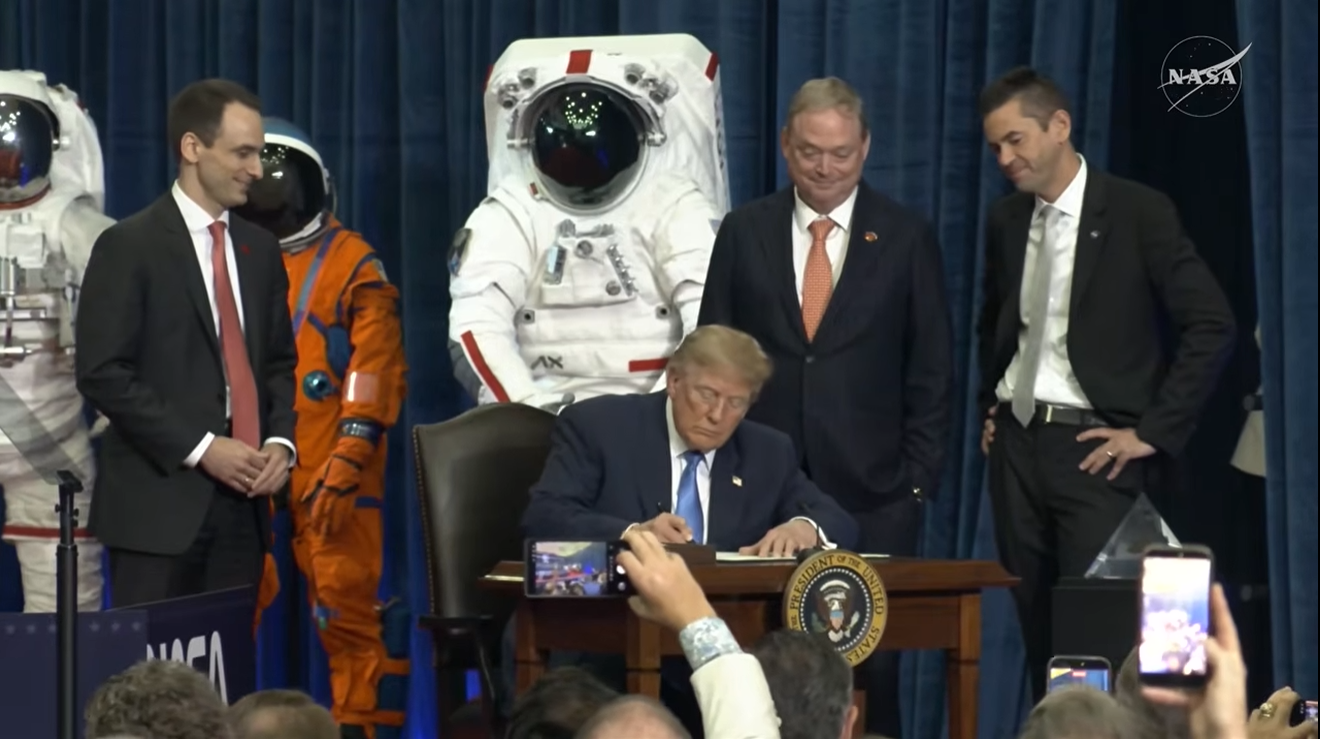
President Donald J. Trump signed an Executive Order on Aug. 28, 2026, to establish the nation’s first U.S. Space Academy at NASA’s Johnson Space Center in Houston.
Credit: NASA

To strengthen the nation’s space workforce and develop the next generation of space leaders, President Donald J. Trump signed an Executive Order on Friday to establish the nation’s first U.S. Space Academy.

The order highlights how space is a critical domain for American national security, economic growth, scientific discovery, and technological innovation. The proposed academy would focus technical education with leadership development, discipline, and a commitment to public service, helping ultimately advance U.S. interests in space.

“Given the rapid growth of the U.S. Space Force and commercial space industry, and the expansion of our ambitions to the Moon and far beyond the Moon, it’s clear we will need to educate and train an entire generation of skilled service members, engineers, and civil operators,” said President Trump. “That’s why I will sign an Executive Order to begin the process of creating a new a national academy called the U.S. Space Academy.”

The order also calls on NASA Administrator Jared Isaacman to serve as the chair of a new Presidential Commission on the United States Space Academy, and NASA Deputy Administrator Matt Anderson to serve as the executive director. They will work with vice chairs — Assistant to the President for Science and Technology, Michael Kratsios, and Assistant to the President for Economic Policy, Kevin Hassett — and other representatives from the White House and the interagency on the commission.

“President Trump’s vision for a new academy is a transformational step to educate the engineers, scientists, technicians, operators and even the astronauts who will be necessary for the inspiring future we are pursuing in space. In the years ahead, we will return NASA astronauts to the lunar surface, build the Moon Base, get underway on nuclear power, ignite the orbital economy and launch more missions of science and discovery,” said Isaacman. “I have no doubt that so much of the future talent that will graduate and contribute to these exciting endeavors will be educated at the United States Space Academy.”

A report from the commission to the President is due within 120 days of the signing with recommendations on governance framework, service obligations for graduates, physical location of the academy, legislative requirements, and more.

The signing of “Establishing the United States Space Academy Executive Order,” took place at NASA’s Johnson Space Center in Houston where the President also presented the Artemis II crew members with the Congressional Space Medal of Honor.

The Executive Order is the latest from President Trump that demonstrates his commitment to maintaining U.S. leadership in space and advancing NASA’s Golden Age exploration and innovation. In December 2025, he signed the Ensuring American Space Superiority, and recently, a new National Space Transportation Policy memorandum on Aug. 20.

Read the full Executive Order on The White House website: 

https://www.whitehouse.gov/presidential-actions/2026/08/establishing-the-united-states-space-academy

-end-

Bethany Stevens / Cheryl Warner
Headquarters, Washington
202-358-1600
[email protected] / [email protected]

Details

Last Updated

Aug 28, 2026

Editor
Jennifer M. Dooren

Related Terms

Source: www.nasa.gov

Posted on Leave a comment

Grants

6 Min Read

Grants

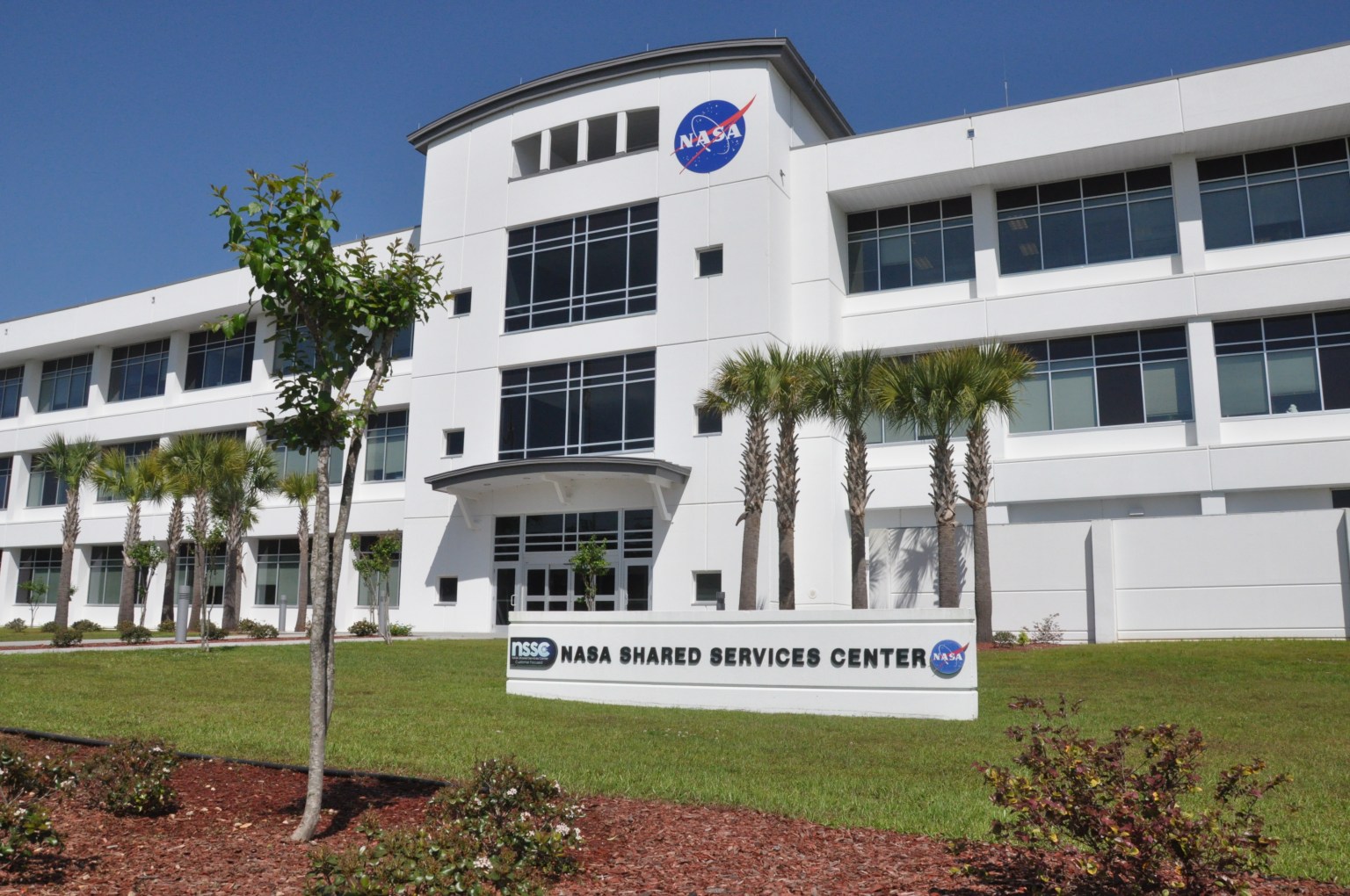
The NSSC supports the Agency’s internal effort to create an environment conducive to streamlining and simplifying grants and cooperative agreements. The National Aeronautics and Space Administration (NASA), through the establishment of the NSSC, has transitioned to a consolidated model for the award and administration of all Agency grants and cooperative agreements. The consolidation is designed to achieve efficient and effective service, improve data quality, standardize processes, leverage skills and investments, and provide economies of scale.

*Notice*

The Payment Management System (PMS) is currently experiencing issues affecting Federal Financial Report (FFR) generation. Impacted NASA grant recipients will not be considered noncompliant. NASA is working with PMS to resolve the issue. Updates will be posted here.

Grants Status Requests

To submit a request, visit NASA General Information Request Form and complete the form. You will receive an automated email with the most commonly requested grant status information.

Important Instructions:

  • Ensure you enter a valid email address, as replies will only be sent via email.
  • The confirmation email may take a few minutes to arrive in your inbox.

How to Fill Out the Form:

  1. Category: Select “Procurement including Grants & Cooperative Agreements.”
  2. Procurement Area: Choose “Grants/Agreements.”
  3. Grants/Agreements Activity: Select “Grant Status.”
  4. Required Information: Provide either a Grant Number, Purchase Requisition Number, or both.

Memorandum for NASA Grantee Community

Guidance Regarding OMB Memorandum M-25-14 and Recent Temporary Restraining Orders

Update on Diversity, Equity, Inclusion, and Accessibility (DEIA) Executive Orders – January 29, 2025
On January 23, 2025, NASA’s Office of Procurement (OP) released a memorandum for the NASA contractor and grant community regarding Executive Order “Initial Rescission of Harmful Executive Orders and Actions” and the Office of Personnel Management’s (OPM) memorandum “Initial Guidance Regarding DEIA Executive Orders.”

Per OP’s memo, NASA grant and cooperative agreement recipients shall immediately cease and desist all DEIA activities required for their grant. This work may include but is not limited to: DEIA plan requirements, training, workshops, reporting, considerations for staffing, or any other direct or indirect grant activity related to DEIA. All grant recipients shall notify their cognizant Grant Officer if they identify requirements within their grants that are in violation of this guidance. Your Grant Officer’s contact information can be found on your NF 1687, Notice of Award for Grant and Cooperative Agreement (NOA).

Thank you for your work and partnership with NASA. 

NASA Grant and Cooperative Agreement Terms and Conditions

In FY2025, NASA separated the Terms and Conditions from the GCAM to create a standalone document. This document outlines both the general and specific terms and conditions and applies to all awards issued under 2 CFR 1800 (NASA’s adoption of 2 CFR 200.)
NASA Grant and Cooperative Agreement Terms and Conditions 7-15-2026

Request for Supplemental Grant and Cooperative Agreement Actions

Administrative Supplement Requests Templates :

No Cost Extension (NCE) Request Form

Other Administrative Supplement Request Form

Principal Investigator (PI) Change Request Form

Period of Performance (POP) Change Form

Submit via email to NSSC-ADMIN-SUPPLEMENT REQUEST

PI Transfer Requests:

Submit via email to NSSC-Grants-PI-Transfer

NASA Insignia Guidelines

Grantees are strongly encouraged to use the NASA Insignia Format identified in the guidelines at NASA Insignia Guidelines for NASA Grantees. These guidelines aim to increase awareness of NASA’s mission activities via Grantee partnerships for a broader and more diverse population.

Payment Management System

NASA uses a service provider, currently the Department of Health and Human Services (HHS) Payment Management System (PMS), to provide Federal funds to recipients. PMS will provide instructions to the recipients for registering and requesting funds through the system.
 

Routine Monitoring

NASA is responsible for routine post-award monitoring on all awards, regardless of the award’s risk determination. At a minimum, routine monitoring includes reviewing award recipients’ annual performance reports, semi-annual Federal Financial Report (FFR), and Transactions Testing Review.

Research Performance Progress Reports

All NASA award recipients must submit annual performance reports. Annual reports are due to NASA 60 days prior to the annual anniversary of the award’s POP start date (e.g., if the POP of an award is October 1 – September 30, the report would be due 60 days prior to October 1.)

Federal Financial Reports (SF-425)

Recipients will submit their semi-annual FFRs in PMS:

Period 1 (October 1 – March 31): Due by April 30 each year.

Period 2 (April 1 – September 30): Due by October 30 of each year.

Final FFRs are due 120 days after the end of the POP

Additional information and training are available on the Payment Management System website at https://pms.psc.gov/. The PMS help desk number is 1-877-614-5533. 

Forms

Post-Award Certifications and Representations

NASA Biographical Sketch Form

Current and Pending Support (CPS) Form

NASA Pre-Award and Post-Award Disclosure Requirements

Regulations and Guidance

Regulations

Electronic Code of Federal Regulations

Guidance

NASA Grant and Cooperative Agreement Manual (GCAM): NASA’s Grant Manual for Proposers and Recipients

The NASA Grant and Cooperative Agreement Manual (GCAM) provides pre and post award policy guidance to NASA proposers and award-managing personnel and award recipients to implement government-wide and NASA-specific regulations for applying for, awarding and administering grants and cooperative agreements with educational and non-profit organizations; State, local, and Indian tribal governments; and for-profit organizations.

NASA Grant and Cooperative Agreement Terms and Conditions

In FY2025, NASA separated the Terms and Conditions from the GCAM to create a standalone document. This document outlines both the general and specific terms and conditions and applies to all awards issued under 2 CFR 1800 (NASA’s adoption of 2 CFR 200.)

Research Terms and Conditions (For Research Awards Issued Prior to October 1, 2024)

NASA implemented the Federal-wide research terms and conditions for all research and research-related grant and cooperative agreement awards issued under 2 CFR 1800 (NASA’s adoption of 2 CFR 200). The Research Terms and Conditions implement the requirements of the Uniform Guidance and includes three companion documents:

RTC Appendix A: Prior Approval Matrix, RTC Appendix B: Subaward Requirements, and RTC Appendix C: National Policy Requirements).

The Research Terms and Conditions and companion documents are accessible on the NSF website.

NASA Office of Inspector General

To file a complaint regarding denial of equal opportunity or discrimination based on race, color, national origin, sex, disability, or age; go to

https://oig.nasa.gov/hotline.html
1-800-424-9183
300 E Street, S.W. Suite 8V39
Washington, DC 20546-0001
NASA OIG Hotline
 http://missionstem.nasa.gov/filing-a-complaint.html​​​​​​​

Resources

Grants.gov
NSSC Grants Payment Package
NASA Research Opportunities Online (NSPIRES)
System for Award Management (SAM)

Source: www.nasa.gov

Posted on Leave a comment

Free Spins Keep What You Win No Deposit

Free Spins Keep What You Win No Deposit

Free Spins Keep What You Win No Deposit: Complete Guide for Players

The phrase free spins no deposit has become one of the most searched terms among online casino players—and for good reason. It promises something incredibly appealing: the chance to play slot games for free and keep what you win without risking your own money.

But how does this actually work? Are these offers truly free, or is there a catch? In this complete guide, we break down everything you need to know about free spins keep what you win no deposit, including how they function, what to expect, and how to make the most of them.

What Are Free Spins No Deposit?

At its core, free spins no deposit is a promotional offer given by online casinos that allows new players to spin slot reels without making an initial deposit.

Key Characteristics

  • No payment required to claim
  • Usually offered as a welcome bonus
  • Valid on selected slot games
  • Can generate real money winnings

These promotions are designed to attract new players while giving them a risk-free way to try the platform.

What Does “Keep What You Win” Really Mean?

The phrase “keep what you win” sounds simple, but it’s important to understand the details behind it.

The Basic Idea

When you use free spins no deposit, any winnings you generate:

  • Are credited to your account
  • Can potentially be withdrawn
  • May come with certain conditions

The Catch: Bonus Terms

In most cases, “keep what you win” does not mean instant withdrawal. Instead:

  • Winnings are often added as bonus funds
  • You may need to meet wagering requirements
  • There may be withdrawal limits

So while you can keep your winnings, you usually need to meet specific criteria first.

How Free Spins No Deposit Work Step-by-Step

Understanding the process helps you avoid confusion and maximize your chances.

Step 1: Sign Up

Register at an online casino offering free spins no deposit.

Step 2: Receive Free Spins

After registration:

  • Spins may be credited automatically
  • Or require entering a promo code

Step 3: Choose Eligible Games

Free spins typically work only on:

  • Specific slot titles
  • Featured or promotional games

Step 4: Play the Spins

Each spin uses bonus credits instead of your own money.

Step 5: Winnings Are Credited

Any winnings from your spins:

  • Go into your bonus balance
  • Are subject to wagering rules

Step 6: Meet Requirements

Complete wagering to convert bonus funds into withdrawable cash.

Types of Free Spins No Deposit Offers

Not all offers are the same. Knowing the types helps you pick the best one.

Sticky Free Spins

These are the most common.

  • Bonus funds cannot be withdrawn directly
  • Must be wagered first
  • Often have higher wagering requirements

Non-Sticky Free Spins

More flexible than sticky bonuses.

  • Winnings may be withdrawable after conditions
  • Bonus itself may disappear after use

Wager-Free Free Spins

These are rare but highly valuable.

  • No wagering requirements
  • Winnings can often be withdrawn instantly

Daily Free Spins

Some casinos offer recurring promotions:

  • Daily or weekly free spins
  • Often require login or small activity

Benefits of Free Spins No Deposit

Why are these offers so popular? The advantages are clear.

Risk-Free Gaming

You don’t need to deposit money, making it ideal for beginners.

Real Winning Potential

Even without a deposit, you can:

  • Win real money
  • Test different slot games
  • Explore casino features

Learning Opportunity

Free spins allow you to:

  • Understand game mechanics
  • Learn payout structures
  • Develop strategies

Try Before You Commit

Before depositing, you can evaluate:

  • Game quality
  • Platform usability
  • Bonus fairness

Wagering Requirements Explained

This is the most important concept to understand.

What Is Wagering?

Wagering means you must bet your winnings a certain number of times before withdrawing.

Example

  • You win $20 from free spins no deposit
  • Wagering requirement = 35x
  • You must bet $700 before withdrawal

Why Casinos Use Wagering

Casinos include wagering to:

  • Prevent abuse of bonuses
  • Ensure fair use of promotions
  • Encourage gameplay

How to Track Progress

Most casinos provide:

  • Wagering progress bars
  • Remaining playthrough amount
  • Time limits

How to Choose the Best Free Spins No Deposit Offers

Not all offers are equal. Here’s how to pick wisely.

Check Wagering Requirements

Lower is better. Look for:

  • 20x–30x (good)
  • 40x+ (high)

Look for High RTP Games

RTP (Return to Player) affects your chances.

  • Higher RTP = better returns
  • Aim for 96%+

Check Withdrawal Limits

Some offers cap winnings, for example:

  • Max withdrawal: $50 or $100

Review Expiry Dates

Free spins often expire within:

  • 24–72 hour

Verify Casino Reputation

Choose platforms with:

  • Positive reviews
  • Valid licenses
  • Transparent policies

Common Mistakes to Avoid

Even experienced players make mistakes with free spins no deposit.

Ignoring Terms and Conditions

This leads to confusion about:

  • Wagering
  • Withdrawal rules
  • Game restrictions

Playing Wrong Games

Free spins only work on specific slots.

Missing Expiry Deadlines

Unused spins or winnings may expire.

Overestimating Winnings

Free spins are not guaranteed profit.

Strategies to Maximize Free Spins No Deposit

Want better results? Use these tips.

Focus on High RTP Slots

This increases your chances of winning.

Manage Your Bonus Balance

Avoid reckless betting—play strategically.

Complete Wagering Efficiently

Choose games that contribute 100% to wagering.

Withdraw Quickly After Completion

Once requirements are met, withdraw your winnings.

Are Free Spins No Deposit Really Worth It?

Short answer: yes—but with realistic expectations.

Pros

  • No financial risk
  • Chance to win real money
  • Great for beginner

Cons

  • Wagering requirements
  • Withdrawal limits
  • Limited game selection

Free Spins No Deposit on Mobile vs Desktop

Mobile Experience

  • Convenient gameplay
  • Easy bonus access
  • Fast performance

Desktop Experience

  • Better visibility
  • Easier tracking of wagering
  • More detailed interface

How Casinos Benefit From Free Spins

It’s not just about giving away money.

Marketing Strategy

Casinos use free spins no deposit to:

  • Attract new users
  • Promote games
  • Increase engagement

Long-Term Player Value

Even if players start free, casinos benefit when:

  • Players deposit later
  • They continue playing

Frequently Asked Questions

Can I really keep what I win?

Yes, but usually after meeting wagering requirements.

Do I need to deposit to withdraw?

Some casinos require a small deposit for verification.

How many free spins do I get?

Typically between 10 and 100 spins.

Are these offers safe?

Yes, if you choose licensed and reputable casinos.

Final Thoughts

Free spins no deposit offers are one of the best ways to explore online casinos without financial risk. While the idea of “keep what you win” is attractive, it’s essential to understand the conditions attached.

To get the most out of these offers:

  • Read all terms carefully
  • Choose low wagering bonuses
  • Play high RTP games
  • Track your progress

When used wisely, free spins can provide both entertainment and real winning opportunities—making them a valuable tool for both beginners and experienced players.

If you want, I can also: