Posted on Leave a comment

NASA’s Nancy Grace Roman Space Telescope Launches

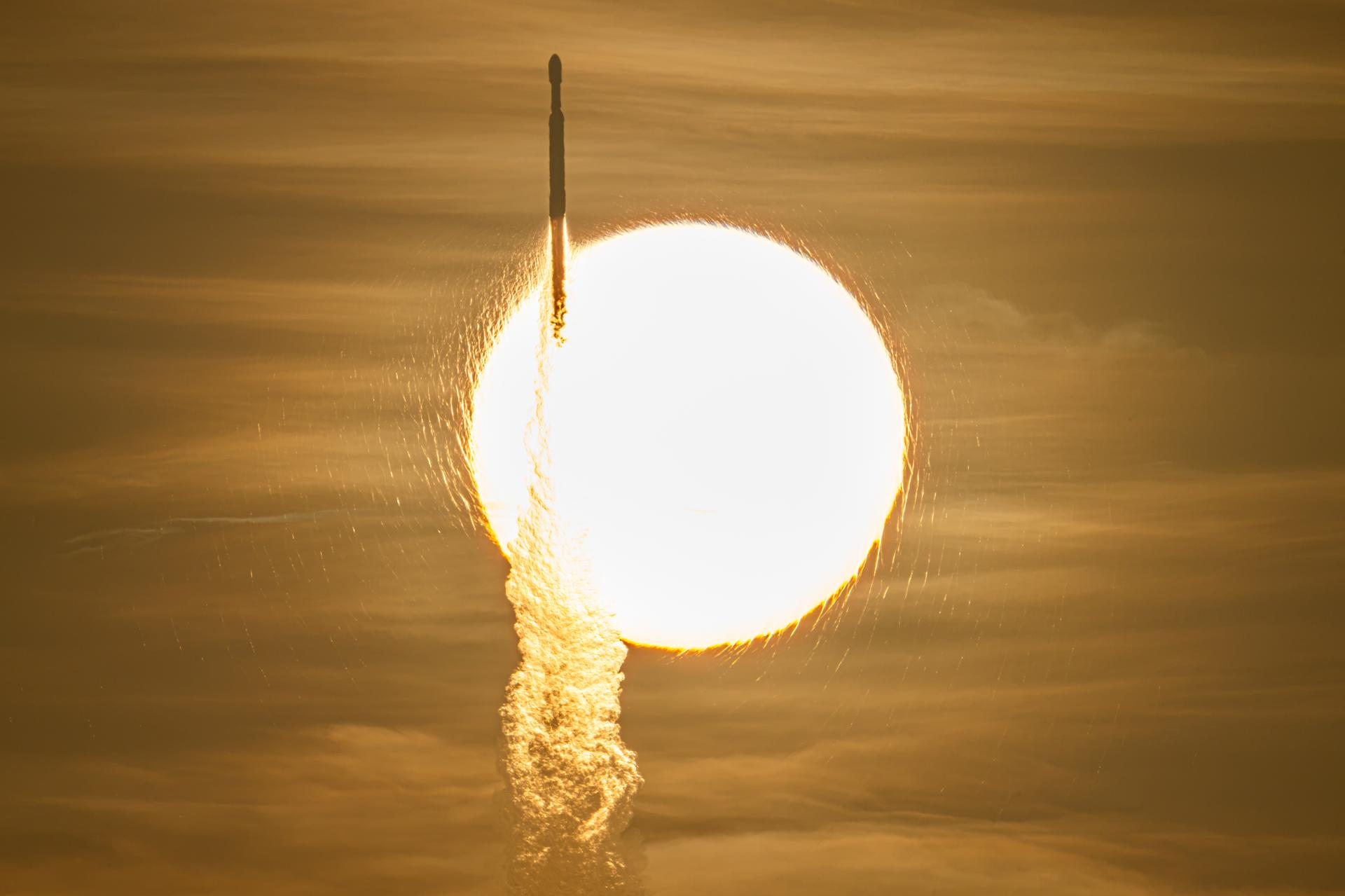
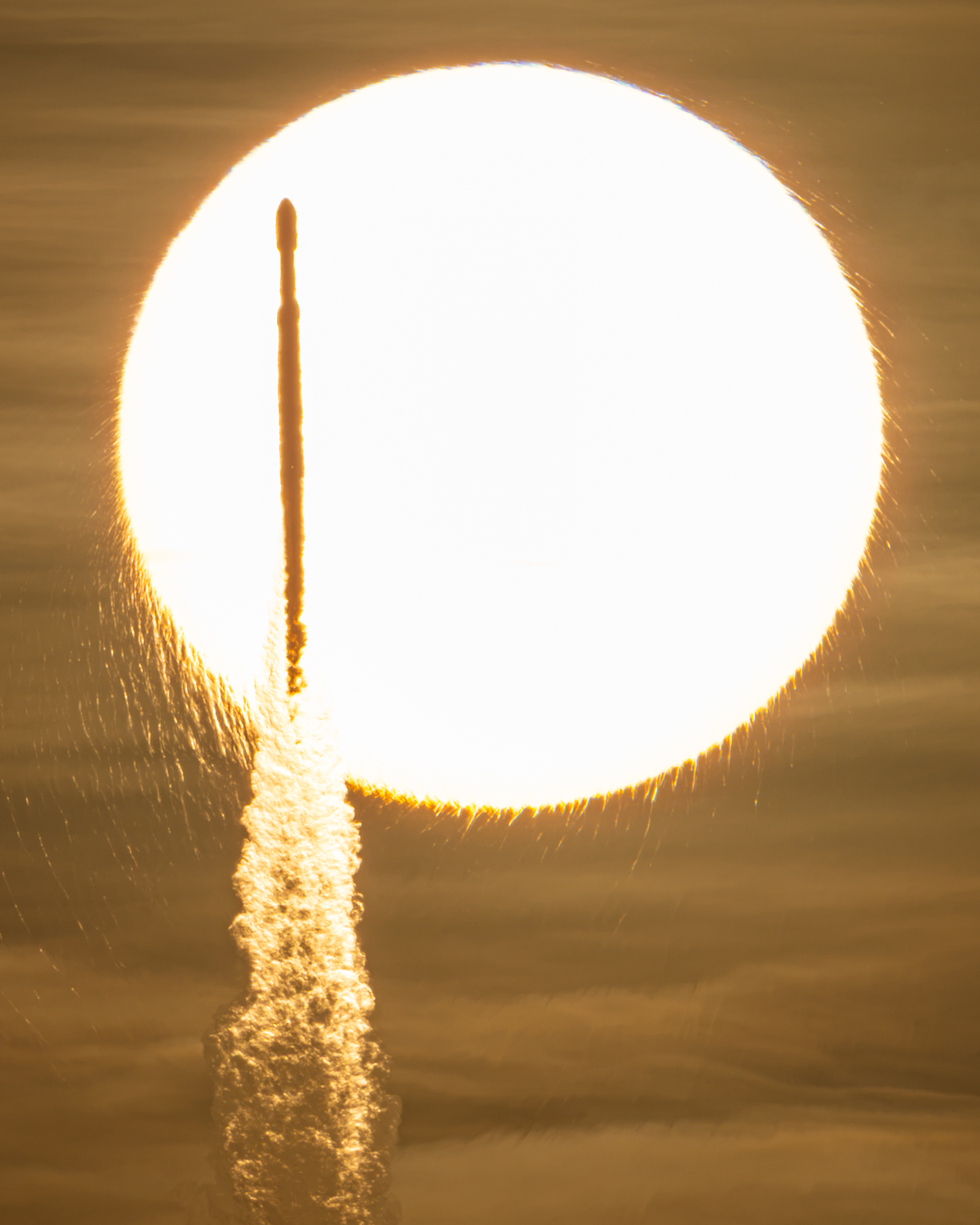
In a sepia-toned photo, the Sun appears as a bright, enormous orb that appears to have frayed edges. Against this backdrop, a tall and slender rocket is seen in silhouette atop a cloudy plume.
NASA/John Kraus

NASA’s Nancy Grace Roman Space Telescope, aboard a SpaceX Falcon Heavy rocket, transits the Sun during launch from the agency’s Kennedy Space Center in Florida on Aug. 30, 2026. Roman is named after the agency’s first chief astronomer.

Roman will survey billions of stars and galaxies with a field of view far larger than Hubble’s, helping scientists study dark energy, exoplanets, and the evolution of the universe.

Follow along with Roman’s journey.

Image credit: NASA/John Kraus

Source: www.nasa.gov

Posted on Leave a comment

September 2026 Satellite Puzzler

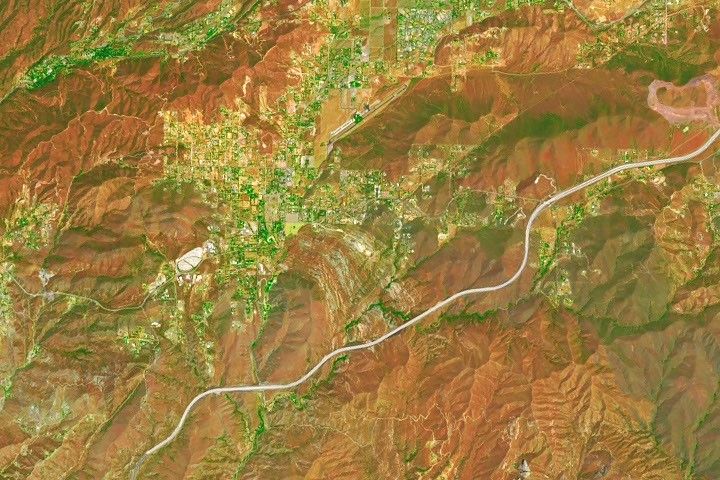
The image features a mixture of browns, greens, oranges, and yellows in both rectilinear and organic, curved shapes. A curving gray line runs diagonally through it.

Every month, NASA Earth Observatory features a puzzling satellite image. The September 2026 puzzler appears above. 

Your Challenge
I
dentify the location shown in this satellite image. Share what clues you see, where you think it is, and what makes this place interesting or unique to you.

How to Answer
Submit your response using this form and select “Puzzler Answer” as the topic. Please include your preferred name or alias.

You can keep it simple and just guess the location. Want to impress us? Tell us which satellite and instrument captured the image, which spectral bands were used, or point out a subtle detail about the geology or history of the area. If something catches your eye, or if this is your home or means something to you, we’d love to hear about it.

The Prize
We can’t offer prize money or a trip to space to see Earth like satellites and astronauts do. But we can offer something almost as rewarding: puzzler bragging rights.

About a week after the challenge, we’ll post the answer at the top of this page, along with a link to an Earth Observatory Image of the Day story that explains the image in more detail. We’ll recognize the first person who correctly guesses the location, and we may also highlight readers who share especially thoughtful or interesting answers. By submitting a response, you acknowledge that your comments may be edited, excerpted, and published on this page.

Until then, zoom in, look closely, and enjoy the challenge. See you at the reveal!

Source: science.nasa.gov

Posted on Leave a comment

Galactic Gems Glisten in New Gallery From NASA’s Chandra

4 Min Read

Galactic Gems Glisten in New Gallery From NASA’s Chandra

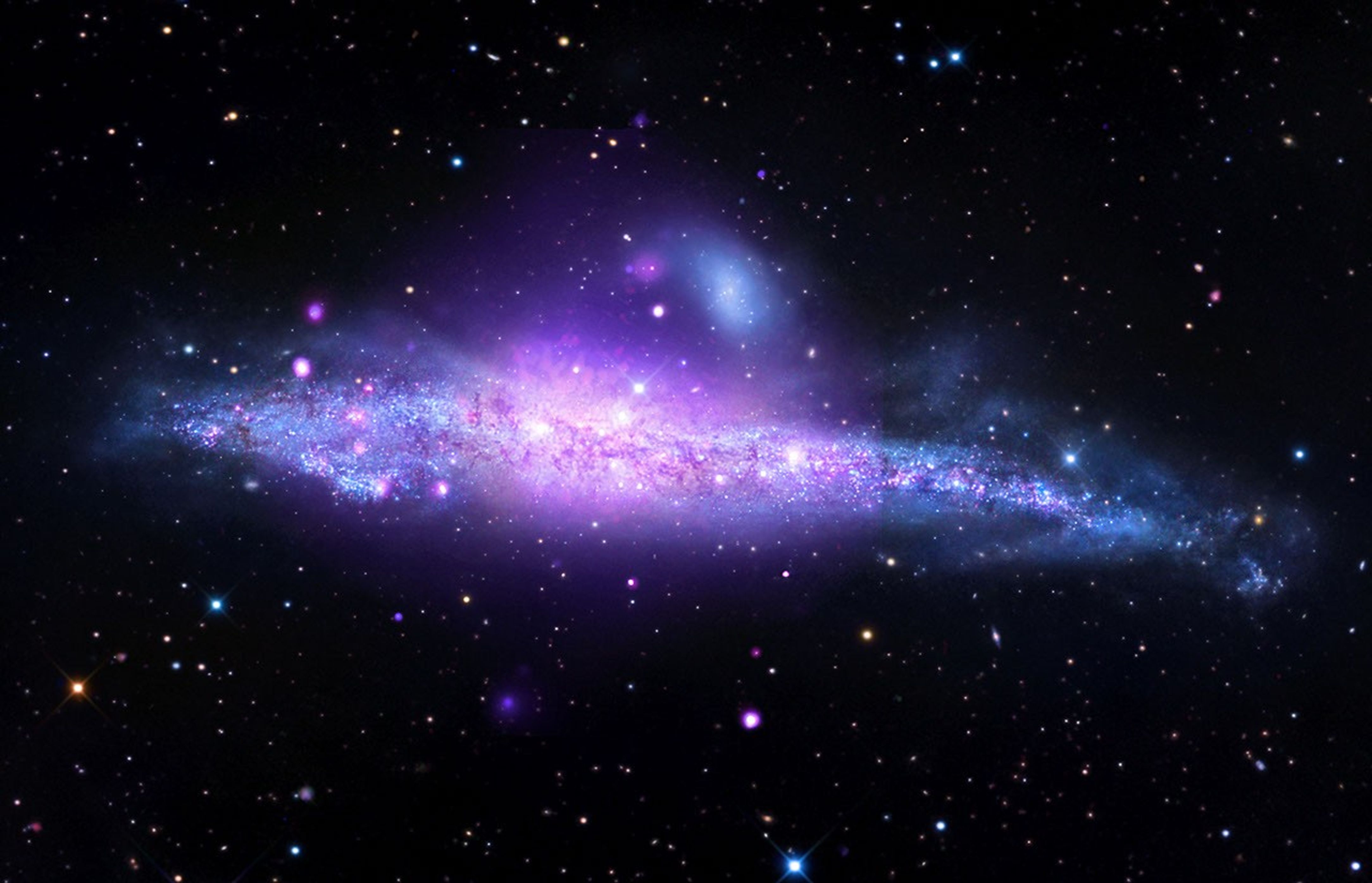
A spiral galaxy viewed from its side, featuring a giant halo of hot gas blowing out of its stellar disk. X-rays from Chandra and ESA’s XMM-Newton (purple and royal blue) trace hot gas driven out by supernovas and black holes and neutron stars pulling gas from their companions, while optical light (light blue, gold and white) from ground-based observer R. Jay GaBany showcases dense dust lanes. Edge-on views of galaxies allow astronomers to study how flat their stellar disks are and provide the clearest views of material located above or below the disk.

Galaxies are like cosmic gems, each with characteristics including size and shape that make them distinct. A new gallery released today from NASA’s Chandra X-ray Observatory and other telescopes displays a collection of galactic images that showcase this variety.

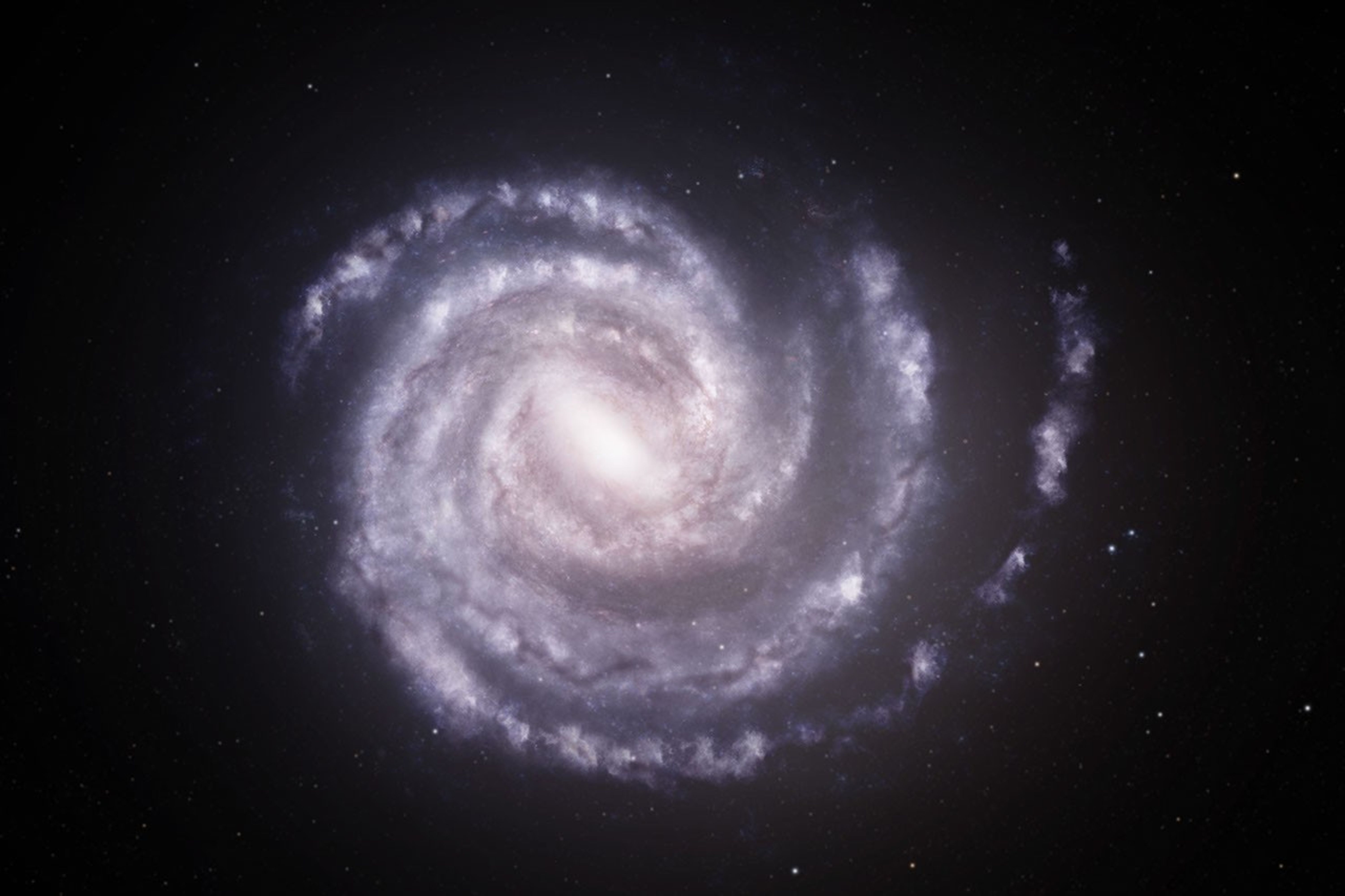
Astronomers put galaxies into three main categories: spirals like our own Milky Way with arms emanating from their cores, ellipticals that are older and likely the results of mergers, and irregulars that can encompass a wide range of galactic phenomena.

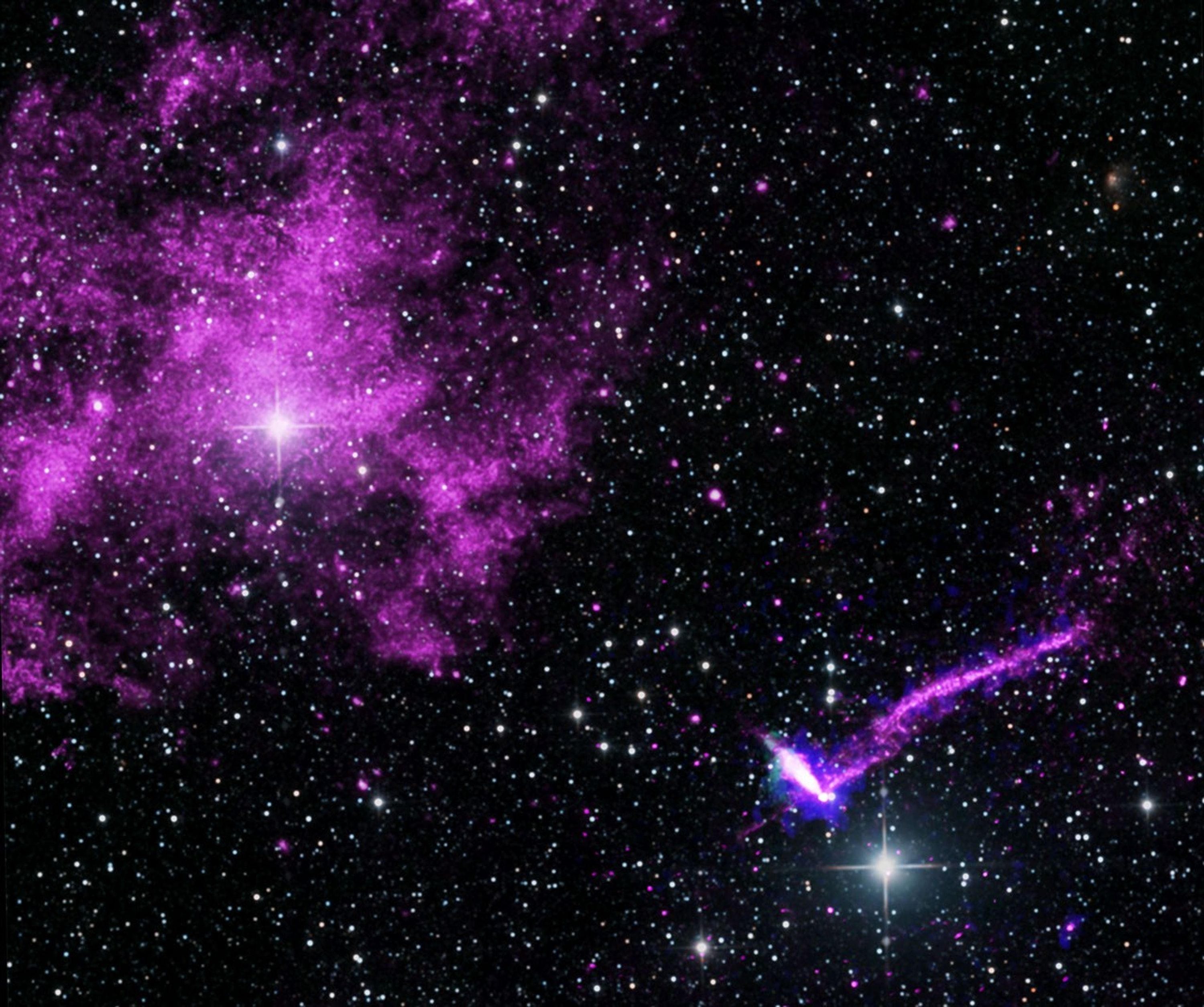
This gallery displays a collection of 16 galactic images from Chandra and other telescopes. Astronomers put galaxies into three main categories: spirals like our own Milky Way, ellipticals that are older and likely the results of mergers, and irregulars that can encompass a wide range of galactic phenomena. All types are represented in this collection. Each galactic image contains X-ray data from Chandra combined with data from telescopes such as NASA’s Webb, Hubble, IXPE, Swift, and NuSTAR, and others both in space and on the ground.
Credit: NASA/CXC/SAO

See full gallery

Just as gems reveal the history of Earth through how they were forged over billions of years, these galactic gems are a way to study Earth’s place in our home galaxy of the Milky Way. By looking outward to other galaxies, we learn more about our own – including clues to its past and future.

There are 16 new images in this galactic gallery. Each one contains X-ray data from Chandra that has been collected across Chandra’s decades in space. This high-energy data has been combined with data from telescopes such as NASA’s James Webb and Hubble Space Telescopes, IXPE (Imaging X-ray Polarimetry Explorer), Neil Gehrels Swift Observatory, NuSTAR (Nuclear Spectroscopic Telescope Array), and others both on the ground and in space.

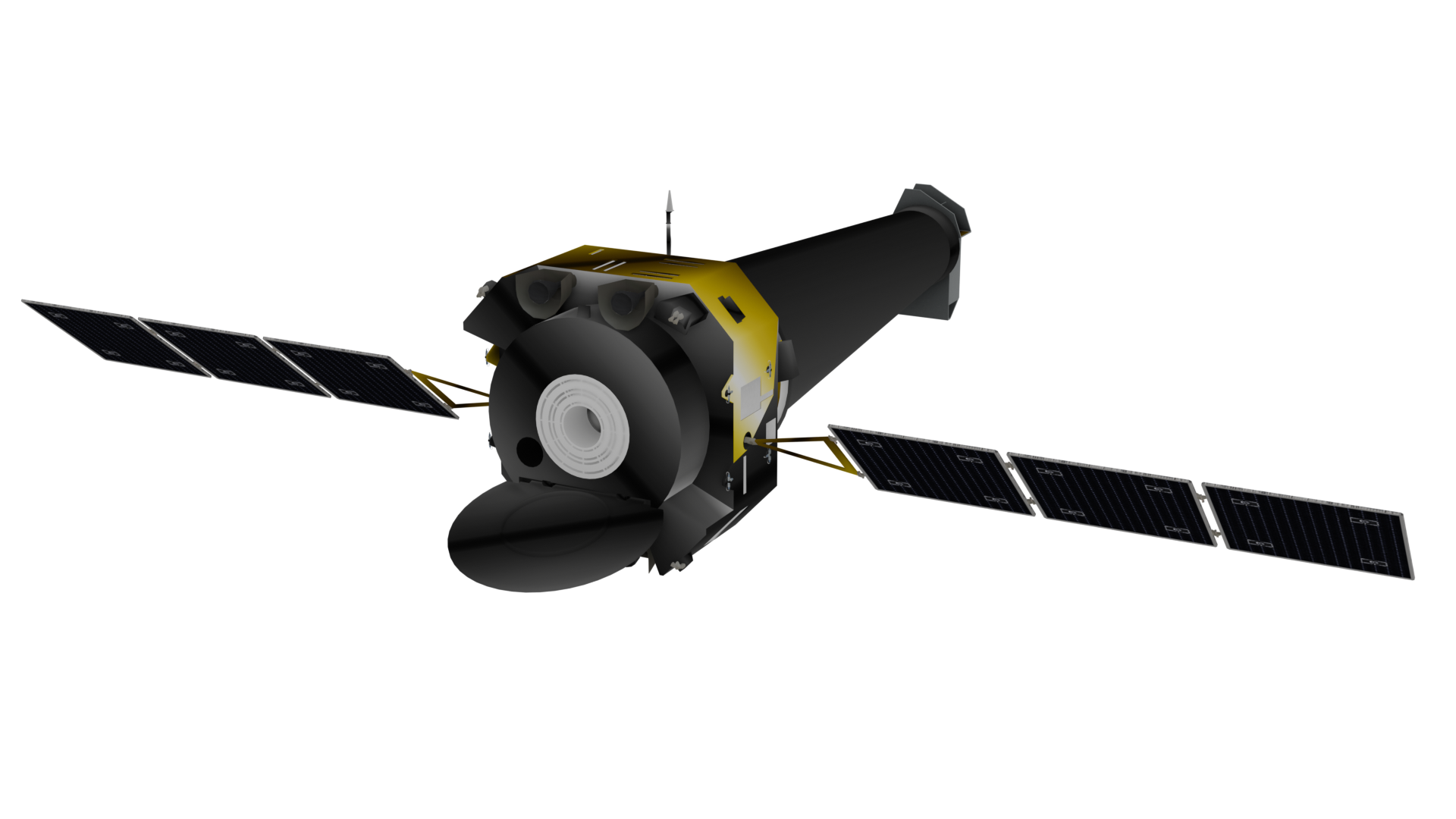
X-rays are critical for the study of galaxies, revealing unique and important information about these cosmic building blocks. For example, Chandra exposes gas that has been superheated to millions of degrees by winds from massive stars, the outflows from supermassive black holes, and the debris from exploded stars. These are key sources of elements in our bodies, in the air we breathe, and the planet we live on. Chandra also sees some of the hottest and most energetic galactic phenomena in the universe, forming a more complete picture of how galaxies live, interact, and evolve when combined with data from other types of light and telescopes.

Spiral and star-forming engines

Face-on spiral galaxies like Messier 33 and NGC 3938 offer unobstructed views of places where energetic pairs of stars and cosmic explosions live along spiral arms. Barred spirals like NGC 1672 and NGC 1385 show how central bar-shaped collections of stars, gas, and dust funnel fuel inward to ignite bursts of star formation. NGC 4725 reveals how star formation can be triggered by a previous collision with another galaxy. Meanwhile, edge-on views of NGC 4631 (the Whale Galaxy) and the starburst Messier 82 (the Cigar Galaxy) showcase giant halos and superwinds of million-degree gas driven thousands of light-years into space by intense explosions of stars, enriching surrounding intergalactic space with vital elements.

Active galactic nuclei, black hole outflows

Powerful, growing black holes in the cores of their host galaxies, known as active galactic nuclei, send energy outward in outbursts and jets that impact entire galaxies. In Centaurus A, Chandra and IXPE data expose a high-energy particle jet blasting tens of thousands of light-years into space from its central engine. In Messier 106, jets from the supermassive black hole heat surrounding gas to create spiral arms that are different from those typically found in spiral galaxies. Meanwhile, the iconic Sombrero Galaxy (Messier 104) highlights a supermassive black hole embedded in a colossal stellar bulge, where Chandra’s X-rays map a diffuse halo of million-degree gas and hot stellar remnants surrounding its sweeping dust lanes.

Collisions, mergers, cosmic disruptions

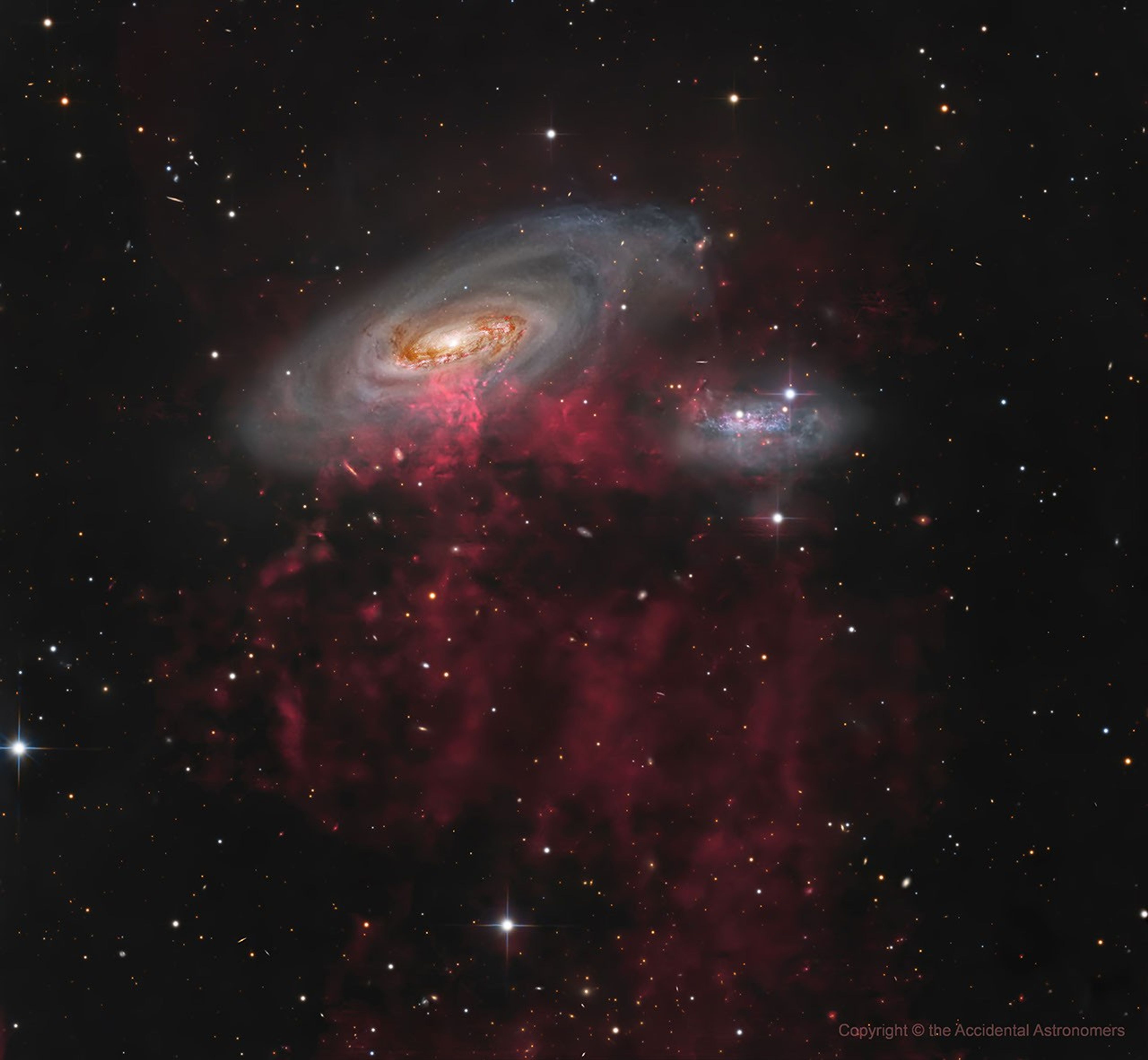
The gallery also showcases galaxies undergoing extreme gravitational transformations. A direct impact in Arp 143 acts like a cosmic bullseye, creating an expanding ring galaxy and triggering waves of star birth. Violent mergers, such as NGC 3256 and the dust-shrouded starburst II Zw 096, reveal the kind of chaotic galaxy collisions that dominated the early universe and offer a preview of the Milky Way’s distant future merger with nearby galaxy Andromeda. NGC 1569 acts as a local laboratory for studying early universe starbursts, NGC 660 showcases a rare “polar ring” galaxy where a ring of stars orbits over its poles, and Messier 90 shows a spiral galaxy plowing through the Virgo Cluster, having its star-forming gas violently stripped away.

NASA’s Marshall Space Flight Center manages the Chandra program. The Smithsonian Astrophysical Observatory’s Chandra X-ray Center controls science operations from Cambridge, Massachusetts, and flight operations from Burlington, Massachusetts.

Read more from NASA’s Chandra X-ray Observatory

To learn more about Chandra, visit

https://nasa.gov/chandra

About the Author

Megan Watzke

Source: science.nasa.gov

Posted on Leave a comment

NASA’s Pandora Mission Begins Study of Exoplanets, Host Stars

5 min read

NASA’s Pandora Mission Begins Study of Exoplanets, Host Stars

Pandora, NASA’s newest exoplanet mission and the first satellite to launch through the agency’s Astrophysics Pioneers program, is now making unique observations of worlds beyond our solar system and the stars they orbit. The mission will determine the atmospheric make-up of at least 20 exoplanets, including the presence of hazes, clouds, and water.

“Pandora’s data will help close a major gap in our knowledge about planets and their host stars because, right now, we can’t be entirely sure how the star’s light affects measurements of what makes up exoplanet atmospheres,” said Elisa Quintana, Pandora’s principal investigator at NASA’s Goddard Space Flight Center in Greenbelt, Maryland. “We designed the Pandora spacecraft and its in-depth observing program to better understand this vexing issue.”

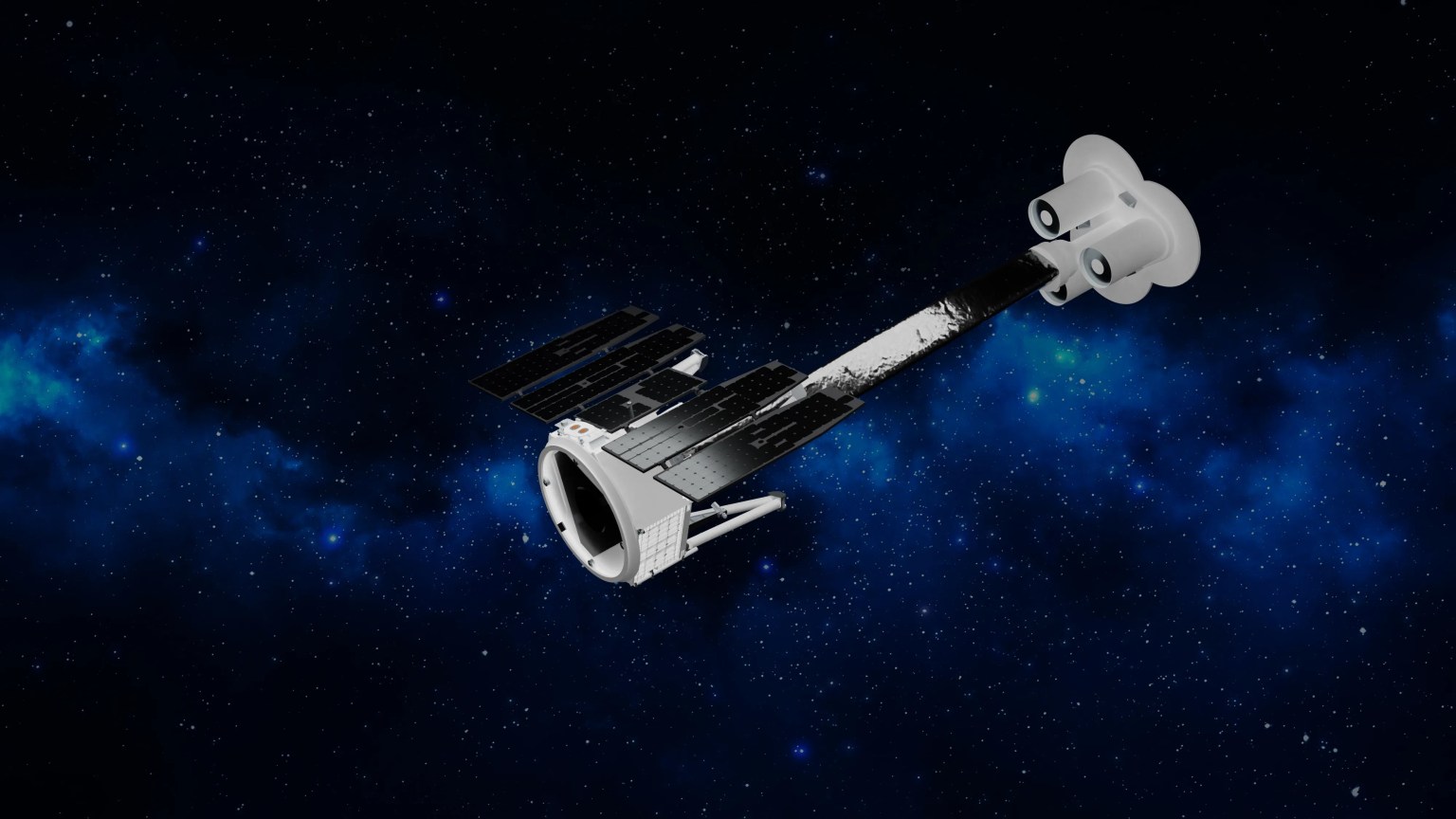
The Pandora spacecraft with an exoplanet and two stars in the background
Artist’s concept of NASA’s Pandora mission, which will help scientists untangle the signals from exoplanets’ atmospheres and their stars.
NASA’s Goddard Space Flight Center/Conceptual Image Lab

The results of the mission will lay a firm foundation for interpreting measurements by NASA’s James Webb Space Telescope, as well as future observatories focused on finding habitable worlds. In fact, Pandora’s near-infrared detector is a spare originally developed for Webb.

“The spacecraft is healthy and all of the instruments are performing as well as we could have hoped,” said Jordan Karburn, Pandora’s deputy project manager at Lawrence Livermore National Laboratory in California. “Our team’s hard work throughout the commissioning process has paid off, and we can now confidently start science.”

Pandora mission explainer infographic
This artist’s concept summarizes NASA’s Pandora mission and its science goals. Pandora will repeatedly observe multiple planets and their host stars in both visible and near-infrared light. These measurements will enable astronomers to separate chemical fingerprints detected in a planet’s atmosphere from potentially misleading signals originating from its host star.
NASA/Sophia Roberts

Launched into low Earth orbit on Jan. 11, Pandora is an ambitious small satellite (SmallSat) funded by NASA’s Astrophysics Pioneers program. Pioneers are designed to explore compelling questions about the universe with fast-paced, low-cost missions that require a higher-than-usual tolerance for failure. 

Three factors make Pandora unique. It carries a novel all-aluminum telescope about 18 inches (45 centimeters) in diameter, it will study planets and their host stars simultaneously in both visible and infrared light, and it will observe targets for a much longer time than flagship observatories like Webb are able to.

Telescopes can sample a planet’s atmosphere in systems where the planet passes in front of its star as seen from our perspective. During this event, called a transit, some starlight skims the planet’s atmosphere before making its way to us. As this light interacts with atmospheric molecules, their chemical fingerprints become embedded in it. For each molecule, astronomers see brightness dips at characteristic wavelengths. 

But our instruments also see light from the whole star, not just what grazes the planet. Stellar surfaces aren’t uniform. They sport hotter, brighter areas called faculae and cooler, darker regions similar to sunspots. Both can grow, shrink, and change position as the star rotates.

“Water is one of the most important molecules we can measure to understand the composition and physical conditions of an exoplanet atmosphere,” said Benjamin Rackham, a team member at the Massachusetts Institute of Technology in Cambridge. “But features on the star can distort the water signal we’re searching for. Pandora is designed to disentangle the signals from the planet and the star, helping us to understand the planets more accurately and laying the groundwork for the eventual study of planets that could harbor life.”

Watch to learn more about NASA’s Pandora mission, which will revolutionize the study of exoplanet atmospheres.
NASA’s Goddard Space Flight Center

Pandora’s telescope, jointly developed by Livermore and Corning Incorporated, and its detectors make up the mission’s heart. The detectors will capture the star’s brightness in visible light and its near-infrared spectrum at the same time, while also obtaining a near-infrared spectrum from the planet when it transits the star. Over the course of its year-long primary mission, Pandora will observe at least 20 exoplanets 10 times with a long-duration stare covering 24 hours, with a transit included in each observation.

“Pandora’s advantage is its ability to observe targets for extended periods at multiple wavelengths, something high-demand flagship missions like Webb cannot regularly do,” said Knicole Colón, the mission’s project scientist at NASA Goddard. “Combining Pandora and Webb data will uniquely enable scientists to determine the properties of stellar surfaces and cleanly separate star and planetary signals.”

Pandora is led by NASA’s Goddard Space Flight Center. Lawrence Livermore National Laboratory provides the mission’s project management and engineering. Pandora’s telescope was manufactured by Corning and developed collaboratively with Livermore, which also developed the imaging detector assemblies, the mission’s control electronics, and all supporting thermal and mechanical subsystems. The infrared sensor was provided by NASA Goddard. Blue Canyon Technologies provided the bus, performed spacecraft assembly, integration and environmental testing, and is providing mission operations support. NASA’s Ames Research Center in California’s Silicon Valley performs the mission’s data processing. Pandora’s science data is available at the NASA Exoplanet Archive, which is operated by IPAC at the California Institute of Technology in Pasadena. The University of Arizona leads mission operations for Pandora and contributes to its science program. Many additional universities also support the science team.

To learn more about the Pandora mission, please visit:

https://science.nasa.gov/mission/pandora/

Details

Last Updated

Aug 27, 2026

Editor
Francis Reddy
Contact
Alise Fisher

Source: science.nasa.gov

Posted on Leave a comment

9 Things to Know About NASA’s Nancy Grace Roman Space Telescope

NASA’s Nancy Grace Roman Space Telescope is set to launch at 7:26 a.m. EDT on Sunday, Aug. 30. While you wait to watch the launch, brush up on some key facts about this wide-view mission.

Roman observatory being encapsulated
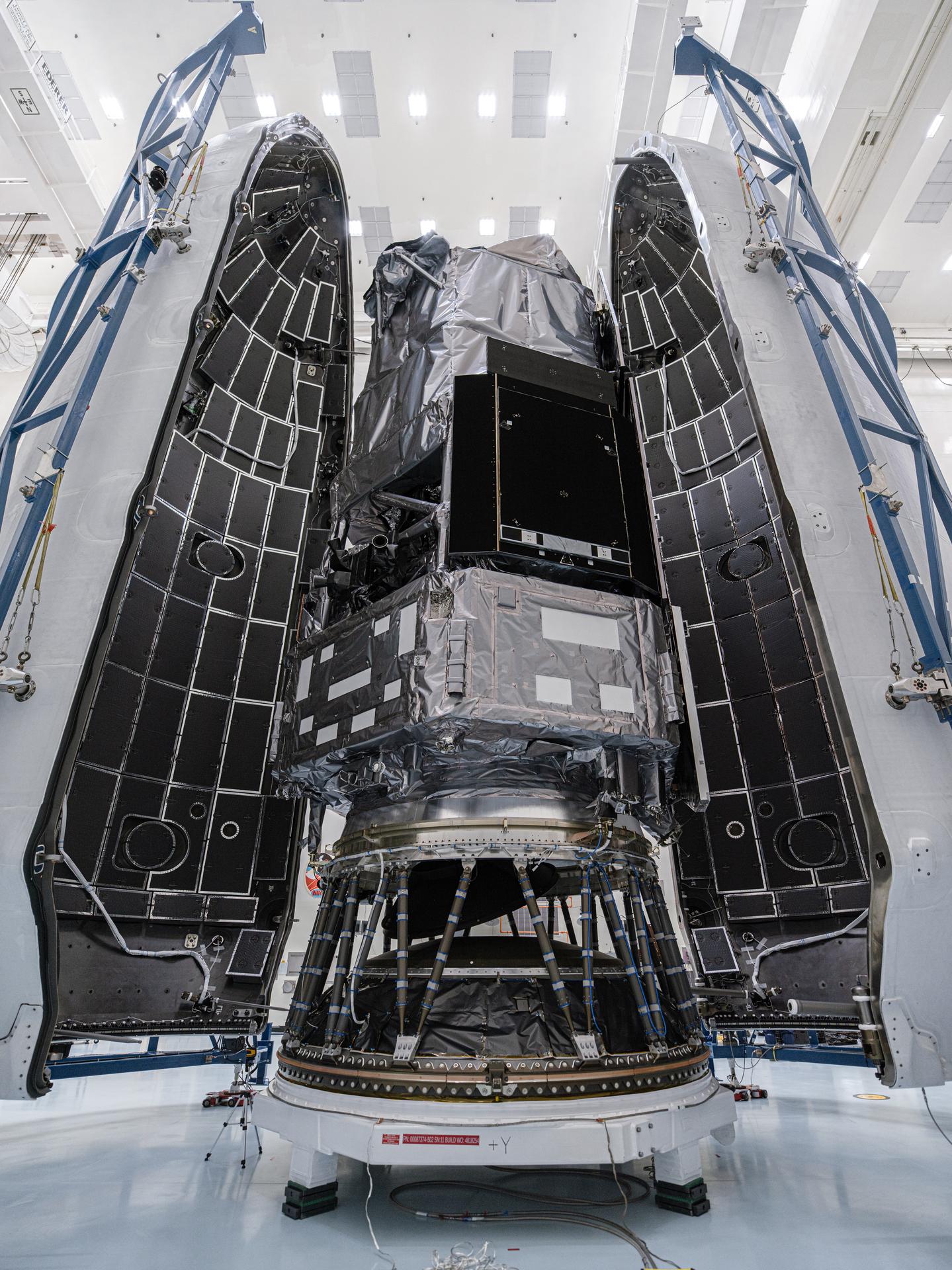
Teams inside the Payload Hazardous Servicing Facility at NASA’s Kennedy Space Center in Florida encapsulate the agency’s Nancy Grace Roman Space Telescope within the payload fairing on Friday, Aug. 21, 2026, ahead of mating to a SpaceX Falcon Heavy rocket. Encapsulation shields the spacecraft during rollout, ascent, and the early phases of flight. Roman will investigate dark energy and dark matter, conduct a statistical census of planetary systems, and enable a broad range of additional astrophysics research. Liftoff from Launch Complex 39A at Kennedy is targeted for no earlier than Sunday, Aug. 30, 2026.
NASA/Sydney Rohde (Rocz)

  • 01

    The mission is named after NASA’s first chief astronomer, Dr. Nancy Grace Roman.

    Roman is named after Dr. Nancy Grace Roman (1925–2018), NASA’s first chief of astronomy. She championed space-based observatories that could study the universe above Earth’s hazy atmosphere while making their data broadly available to the scientific community.
     
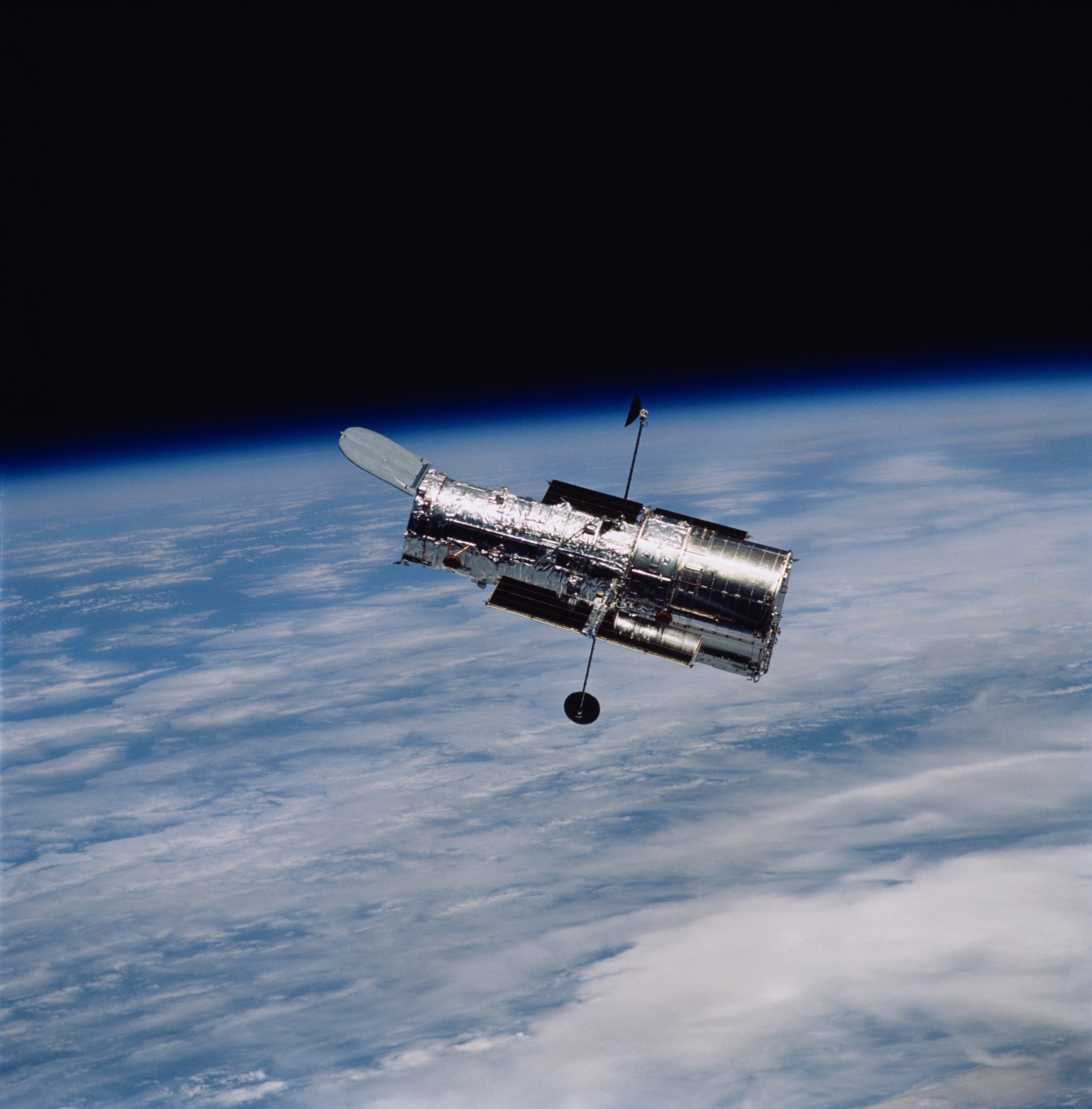
    While she’s known as the “mother” of the Hubble Space Telescope, Roman played an even broader role as the driving force behind NASA’s entire Great Observatories program, which included Hubble along with the Chandra X-ray Observatory and the retired Compton Gamma Ray Observatory and Spitzer Space Telescope.
     
    Her vision and leadership helped establish NASA as a world-class scientific institution and laid the foundation for generations of space telescopes that continue to expand humanity’s understanding of the cosmos.

  • 02

    Roman will transform our view of the cosmos by showing us the bigger picture.

    Roman will pair a large field of view with crisp infrared vision to scan vast, deep swaths of sky. This flagship mission is designed to help astronomers explore dark matter, dark energy, and planets outside our solar system, called exoplanets.
     
    Since each of Roman’s surveys will sample such a large volume of the cosmos, the mission will also offer practically limitless opportunities for astronomers to conduct a broad range of additional science. From objects in our outer solar system and exploding stars to growing black holes and galaxies by the billions, very little will be beyond Roman’s reach. Roman’s data will be made public as soon as it’s processed, allowing many teams to analyze it simultaneously.

  • 03

    The observatory will journey a million miles to join Webb at Lagrange point 2.

    Roman will orbit 1 million miles away at the second Sun-Earth Lagrange point (L2), the same location as NASA’s James Webb Space Telescope. At L2, gravity from the Sun and Earth works together with an object’s motion around the Sun to hold it roughly in place. This balance will give Roman a relatively steady orbit without using much fuel.
     
    Like Webb, Roman will trace out a large orbit around the actual L2 point — much larger than the Moon’s orbit around Earth — and the two will easily be kept far apart.

  • 04

    The spacecraft carries the names of more than a million people.

    This summer, everyone was invited to submit their name to be added to a memory card attached to a plaque on the Roman spacecraft. More than 1.3 million people did so and will have their names carried all the way to L2.

  • 05

    Roman will scan the skies for at least five years.

    Roman will have a primary mission lifetime of five years and is designed to support an additional five-year extended mission. Fuel is expected to be the mission’s life-limiting resource, and while NASA does not currently have an ability to service observatories at L2, Roman is designed to be refuelable.

  • 06

    Two instruments will enable myriad discoveries.

    The observatory’s Wide Field Instrument is a 300-megapixel infrared camera that will give Roman the same sharpness (angular resolution) as Hubble but with a field of view at least 100 times larger. Using this instrument, each Roman image will capture a patch of the sky about 1.5 times bigger than the apparent size of a full Moon.
     
    Roman’s Coronagraph Instrument is designed to demonstrate the most advanced technologies ever flown in space for directly imaging planets around other stars. It will block the glare from stars and make it possible for scientists to see the faint reflected light from planets in orbit around them, revealing giant worlds that are older, colder, and in closer orbits than the hot, young super-Jupiters direct imaging has mainly revealed so far.

  • 07

    Roman joins an international cohort of teamworking telescopes.

    Roman will work in tandem with many other NASA-led and international missions to provide the most complete view of our universe yet. Roman’s large panoramas will uncover interesting targets that Hubble could follow up on using infrared, visible, and ultraviolet light to offer a more comprehensive view. NASA’s James Webb Space Telescope can then use its larger mirror and more powerful vision to deliver even more detailed, ultra-sharp observations. And Roman can view regions around objects Hubble or Webb observe to offer context.
     
    Euclid, an ESA (European Space Agency) mission with key contributions from NASA, will observe a larger area of the sky than Roman, though with less detail. Since their survey areas will overlap, scientists can use Roman’s higher-quality data to apply corrections to Euclid’s, then extend these refinements over Euclid’s much larger area.
     
    Scientists can also pair Roman’s infrared data with visible-light observations from the ground-based Vera C. Rubin Observatory, a National Science Foundation–Department of Energy collaboration. That will allow astronomers to inch closer to achieving Roman-like quality over Rubin’s much greater sky coverage.
     
    By showcasing technology to directly photograph Jupiter-like exoplanets, Roman will also provide a crucial stepping stone for NASA’s Habitable Worlds Observatory concept, a flagship space telescope that would be designed to photograph Earth-like planets in other solar systems for the first time ever.

  • 08

    Watch the Roman launch live from anywhere.

    NASA will stream this event live through a variety of platforms. Learn where to watch online: nasa.gov/live. The launch broadcast will continue until approximately one hour past launch to follow the first several critical milestones post-launch.

  • 09

    NASA expects to share Roman’s first images by early 2027.

    The Roman team will complete a carefully orchestrated series of deployments, calibrations, and tests in the three months following launch before the observatory reaches its final orbit. Science operations begin once this commissioning period is completed, starting with the release of Roman’s first science images.

To learn more about the Roman mission, visit:

https://www.nasa.gov/roman

Media contact:

Claire Andreoli
NASA’s Goddard Space Flight Center, Greenbelt, Md.
[email protected]
301-286-1940

Details

Last Updated

Aug 27, 2026

Editor
Ashley Balzer
Contact
Ashley Balzer

Source: science.nasa.gov

Posted on Leave a comment

APOD: 2026 August 28 – The Sky Turns Above Paranal

APOD

Astronomy Picture of the Day

Discover the cosmos! Each day a different image or photograph of our fascinating universe is featured, along with a brief explanation written by a professional astronomer.

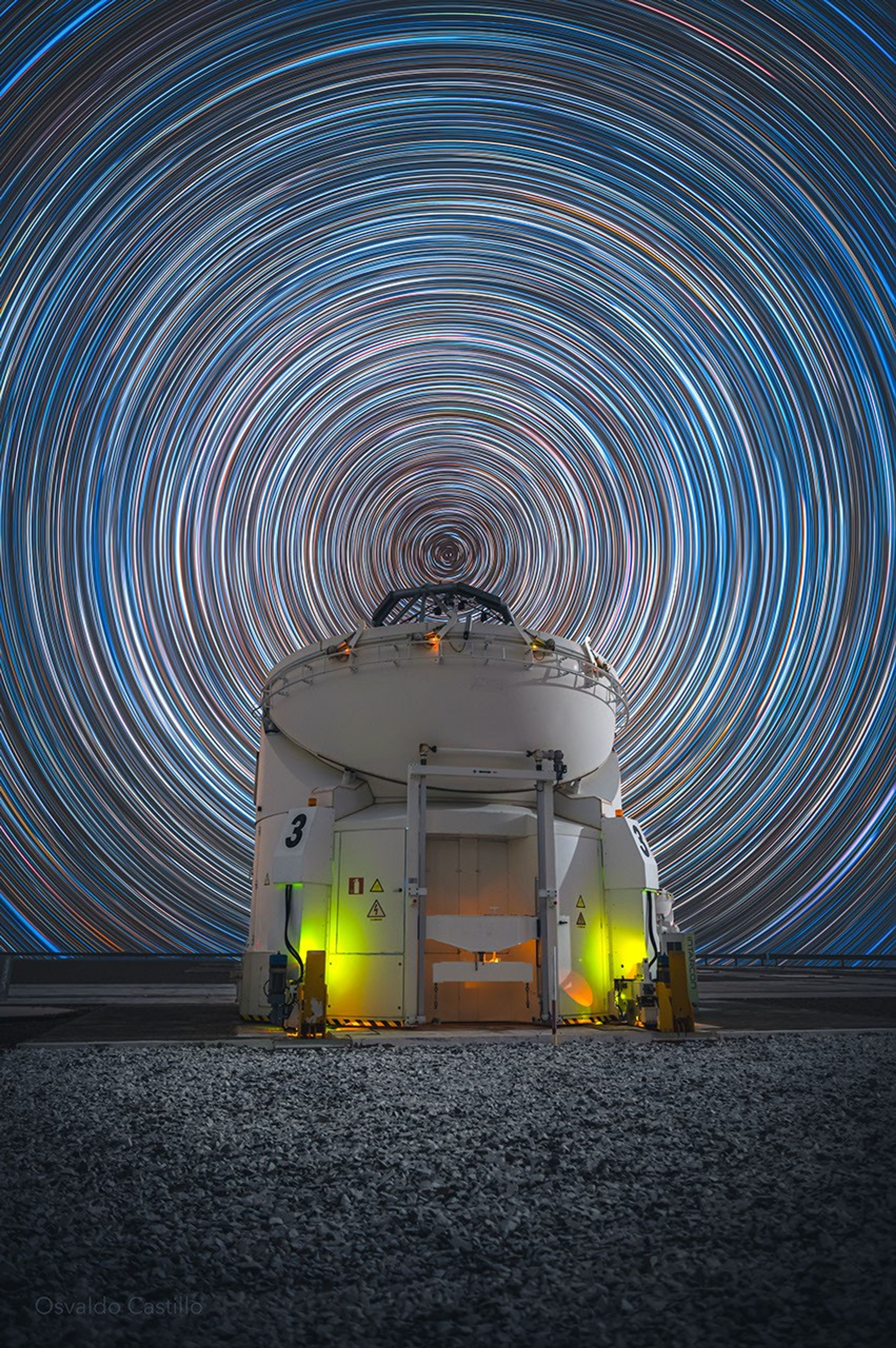
A picture of star trails in the night sky above a telescope.

The Sky Turns Above Paranal

Explanation: At the latitude of ESO’s Paranal Observatory in Chile, about 25 degrees south, Earth’s rotation moves the planet’s surface eastward at over 1,500 kilometers per hour. And while that’s faster than the speed of sound at sea level, the motion is imperceptible. Still, that motion can be revealed in the apparent rotation of the night sky by photographing star trails. This star trail image was composed from a digital stack of 300 consecutive 25-second exposures made with a camera fixed to a tripod to trace the star trail arcs. The graceful arcs are concentric and centered at the south celestial pole, the southern hemisphere extension of Earth’s axis of rotation into space. One of the observatory’s operating 1.8 meter auxiliary telescopes, AT 3, appears beneath the south celestial pole, faintly illuminated in the foreground of this well-planned scene from a rotating planet.

APOD’s main NASA site is moving: From apod.nasa.gov to science.nasa.gov/apod

Tomorrow’s picture: pixels in space

Date August 28, 2026
Credit & Copyright: Osvaldo Castillo
Authors & editors: Jerry Bonnell, Cecilia Chirenti, Robert Nemiroff, Keighley Rockcliffe
A service of: ASD at NASA / GSFC,
NASA Science Activation & Michigan Tech. U.

Source: science.nasa.gov

Posted on Leave a comment

NASA Awards First Prize in Phase 2 of Agency’s LunaRecycle Challenge 

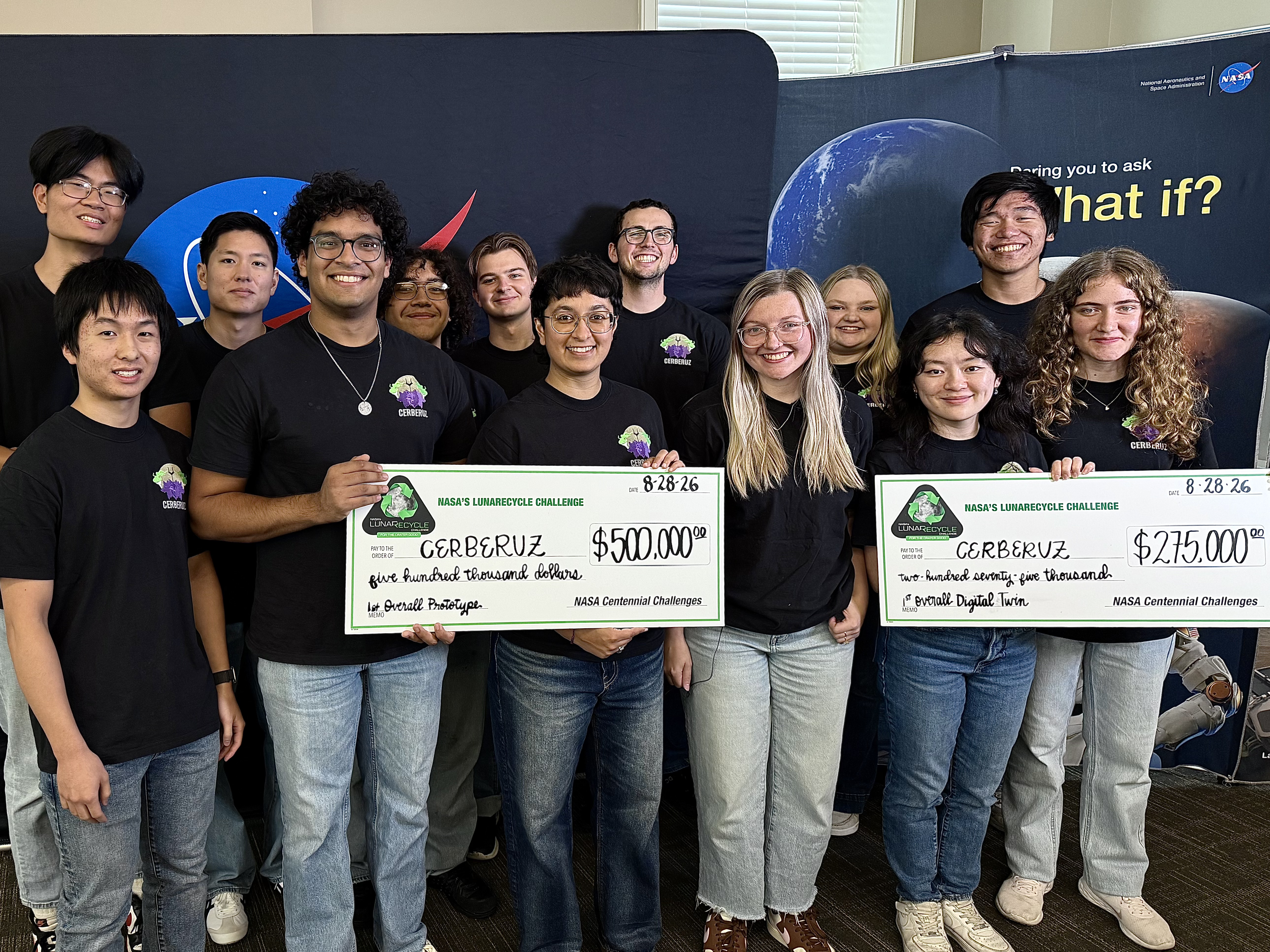
The Massachusetts Institute of Technology team won NASA’s LunaRecycle Challenge competition for their project, Composites for Extraterrestrial Recycling By Engineering the Reuse and Upcycling of Zotek (CERBERUZ).
Credit: NASA/Savannah Bullard

NASA named a team from the Massachusetts Institute of Technology (MIT) as the first prize winner for Phase 2 of the agency’s LunaRecycle Challenge, which focused on developing solutions for reducing waste during missions to the Moon or deep space by recycling common materials, like fabrics, plastics, foam, and metals. 

The Composites for Extraterrestrial Recycling By Engineering the Reuse and Upcycling of Zotek (CERBERUZ) team, comprised of undergraduate, graduate, and doctoral students at MIT, received a total of $775,000 in awards.  

The technology grinds mixed trash into a fine powder, repurposing materials such as Zotek foam as reinforcement rather than treating it as contamination that needs to be sorted out. The powder becomes feed for use as injection-mold finished parts or 3D-printing filament. The MIT team won in both the competition’s prototype development track and in the track focused on developing virtual models, known as “digital twins,” of recycling systems. 

“The LunaRecycle Challenge finale is the culmination of two years of innovation spurred by this competition,” said Jennifer Edmunson, program manager for Centennial Challenges at NASA’s Marshall Space Flight Center in Huntsville, Alabama. “It’s incredible to see these technologies go from concept to prototype and digital twin demonstrations in that time. Driving rapid and creative innovation is what NASA challenges are all about.” 

LunaRecycle is a $3 million, two-phase competition in partnership with The University of Alabama Lee J. Styslinger Jr. College of Engineering. Phase 2 of the competition required U.S. teams to submit a prototype, with an optional digital twin serving as a virtual model of it.

For Phase 2, 14 finalist teams from across the United States gathered at The University of Alabama’s Lee J. Styslinger Jr. College of Engineering, in Tuscaloosa, from Aug. 24 to Aug. 28 to demonstrate their technology prototypes. The digital twin models submitted by some teams were also presented alongside their respective prototypes.

The competitors’ backgrounds ranged from university students and faculty to entrepreneurs and space technology enthusiasts. Teams were encouraged to envision solutions that not only addressed recycling in deep space, but that also could have applications on Earth. 

Along with the first prize winner, nine teams received prizes: 

Prototype track winners: 

  • Second place overall ($225,000): Terasynth from Orlando, Fla. with Lunar Re-Forge System 
  • Most Innovative ($50,000): RECLAIM from Penn State University with the Resource Extraction and Conversion from Lunar Anthropogenic Inputs with Microwaves (RECLAIM) system 
  • Highest Mass Efficiency ($50,000): Cislune from Rosemead, Calif. with the Carbon Recovery and Feedstock Transformation for Extraterrestrial Reuse (CRAFTER) system 
  • Most Trash Types Recycled ($50,000): Team Lovegrove from Bob Jones University in Greenville, S.C. with LunaBrix 

Additional digital twin track winners: 

  • Second place overall ($125,000): Moon Made from Boulder, Co. with Fiber Forge 
  • Most Innovative ($25,000): RECLAIM from Penn State University with the RECLAIM system 
  • Best Visualization ($25,000): Waste Parrot Technologies from New York, N.Y. 

People’s choice winner ($25,000): 

  • Terasynth from Orlando, Fla. with Lunar Re-Forge System 

“This competition highlights how collaborations can lead to incredible solutions,” said Chris Frangione, who manages the LunaRecycle Challenge in support of NASA Centennial Challenges contracted through Amentum Space Exploration Division. “Between the solver teams, The University of Alabama, and NASA, this finale showcases what can be achieved when we bring together resources and great ideas towards a common goal.” 

The Phase 2 awards follow the success of the competition’s Phase 1, which received record-breaking interest from the global innovator community with more than 1,200 registrations – more than any competition in the 20-year history of NASA Centennial Challenges. For Phase 1, which concluded in 2025, participants from around the world could submit designs in either or both of the prototype or digital twin tracks. A panel of 50 judges evaluated nearly 200 Phase 1 submissions, selecting 17 teams representing five countries and nine U.S. states as winners.  Phase 2 entries were required to be unrelated to Phase 1. 

The LunaRecycle Challenge is managed at NASA’s Marshall Space Flight Center by Centennial Challenges, part of the Prizes, Challenges, and Crowdsourcing program within NASA’s Research and Technology Mission Directorate. NASA’s Centennial Challenges have a legacy of more than 20 years engaging the public to solve complex problems that benefit NASA’s broader initiatives. Past challenges have spurred advances in robotics, additive manufacturing, power and energy, textiles, chemistry, and biology. 

LunaRecycle is also supported by subject matter experts at NASA’s Kennedy Space Center in Florida, NASA’s Ames Research Center in California’s Silicon Valley, and NASA’s Langley Research Center, in Hampton, Virginia.  

To learn more about LunaRecycle, visit: 

www.nasa.gov/lunarecycle

Source: www.nasa.gov

Posted on Leave a comment

NASA’s Artemis II Crew Receives Congressional Space Medal of Honor

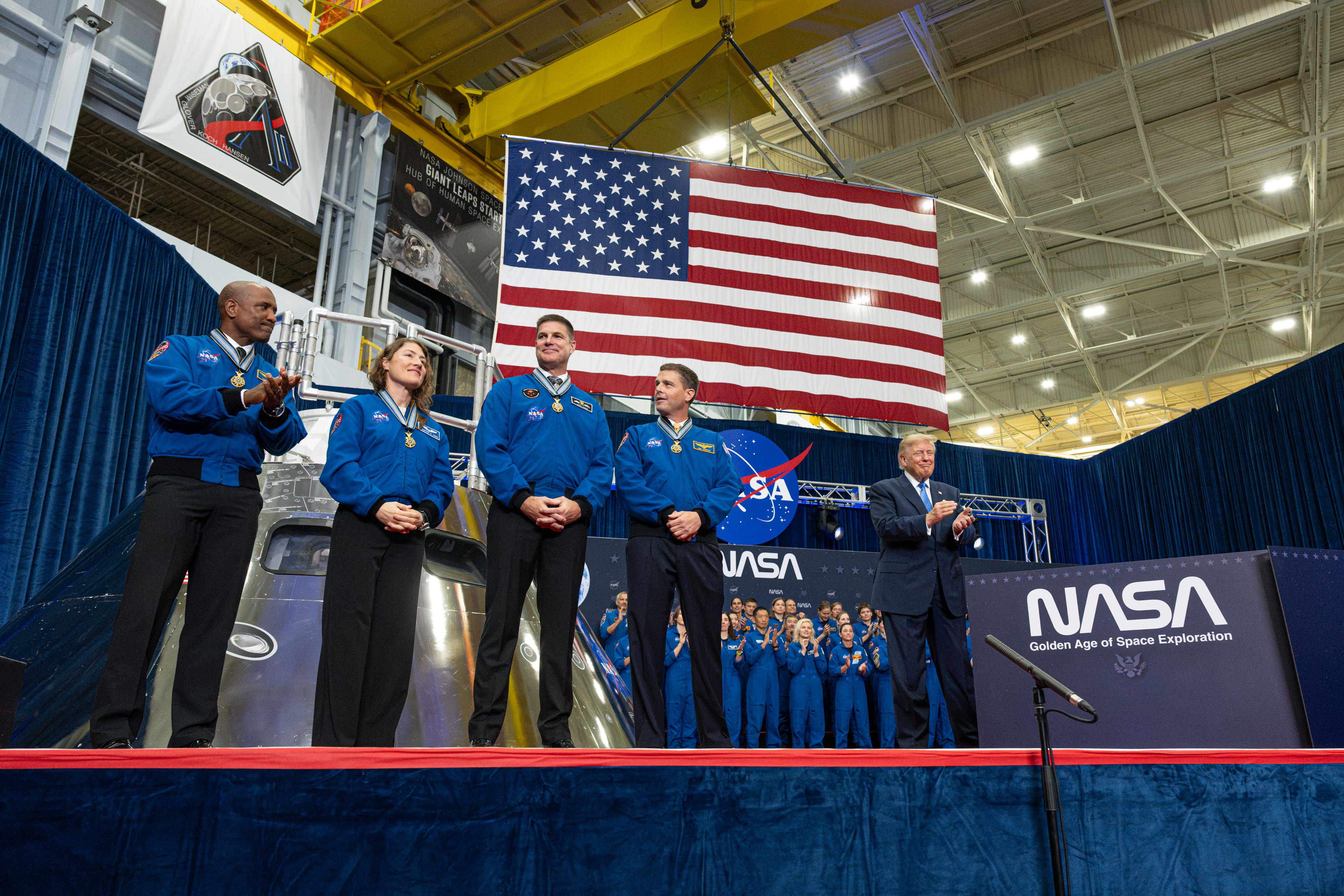
The four members of the Artemis II mission stand on stage after receiving the Congressional Space Medal of Honor. To their right is President Trump.
President Donald J. Trump awarded NASA astronauts Victor Glover and Christina Koch, CSA (Canadian Space Agency) astronaut Jeremy Hansen, and NASA astronaut Reid Wiseman with the Congressional Space Medal of Honor on Aug. 28, 2026, at NASA’s Johnson Space Center in Houston.
NASA/John Kraus

From left to right: NASA astronauts Victor Glover and Christina Koch, CSA (Canadian Space Agency) astronaut Jeremy Hansen, and NASA astronaut Reid Wiseman receive the Congressional Space Medal of Honor from President Donald J. Trump on Aug. 28, 2026, for their service during the Artemis II mission.

The Congressional Space Medal of Honor was authorized by Congress in 1969 to recognize an astronaut who in the performance of duties has distinguished himself or herself by exceptionally brave and meritorious efforts, and contributions to the welfare of the nation and humanity. There now are 34 recipients of the award since the beginning of the space program, including the crews of Apollo 1, Challenger, and Columbia who received the award posthumously.

Image credit: NASA/John Kraus

Source: www.nasa.gov

Posted on Leave a comment

NASA’s Dark Universe-Seeking Nancy Grace Roman Space Telescope Launches

A SpaceX Falcon Heavy rocket with NASA’s Nancy Grace Roman Telescope on board is seen transiting the sun during launch from Launch Complex 39A, Sunday, Aug. 30, 2026, at NASA’s Kennedy Space Center in Florida.
NASA/John Kraus

Now on a three-month, million-mile journey to its final orbit, NASA’s Nancy Grace Roman Space Telescope will soon reveal the universe’s darkest secrets. The mission launched at 7:26 a.m. EDT Sunday aboard a SpaceX Falcon Heavy rocket from Launch Complex 39A at the agency’s Kennedy Space Center in Florida.

Roman pairs a large field of view with crisp infrared vision to explore vast swaths of the sky and probe deeply into cosmic history. This flagship mission will help astronomers explore dark matter, dark energy, and worlds outside of our solar system, known as exoplanets. Its surveys will support a broad range of research extending far beyond the mission’s main science goals.

“Roman is exactly the kind of success story we want to see across NASA,” said NASA Administrator Jared Isaacman. “Delivered ahead of schedule and on budget, this mission reflects more than a decade of dedication from the NASA workforce and our industry partners. Now, Roman will give us a new atlas of the universe, push the boundaries of discovery, and demonstrate what is possible when America’s space program pairs bold ambition with disciplined execution.”

The ground control team at NASA’s Goddard Space Flight Center in Greenbelt, Maryland, began receiving telemetry data from Roman seven minutes after launch. The Falcon Heavy rocket performed as expected, separating from the observatory 31 minutes into the flight. After separating from the center core, the rocket’s boosters safely returned to the launch site for refurbishment.

“Roman will be a discovery machine that will bring us closer than ever before to answering humanity’s most profound questions about our cosmic history,” said Nicky Fox, associate administrator for the Science Mission Directorate at NASA Headquarters in Washington. “With its large field of view and fast survey speeds, Roman will usher us into a new era of discovery and make the invisible visible, setting the foundation for humanity’s search for life beyond our solar system.”

During launch and early orbit, Roman uses the Near Space Network’s ground stations and relay satellites to exchange tracking, telemetry, and command data with ground controllers. About 70 minutes after launch, the Deep Space Network takes over communications and guides Roman toward the second Sun-Earth Lagrange point, or L2, about one million miles from Earth. Roman connects to that network through the Canberra Deep Space Communication Complex in Australia first. Approximately six hours later it will transfer to the Madrid Deep Space Communication Complex in Spain and then to the Goldstone Deep Space Communication Complex in California, ensuring continuous contact with Roman throughout its journey.

The Roman team also confirmed successful deployment of the observatory’s solar panels and lower instrument sun shade an hour and 23 minutes after launch. Within the upcoming days, Roman’s high-gain antenna and visor-like deployable aperture cover will deploy, ground controllers will initiate the first of two-mid-course corrections, and the Coronagraph Instrument will power on. This instrument will demonstrate the technology that future missions like NASA’s Habitable Worlds Observatory concept could use to image Earth-like planets in the search for life in the universe. Roman’s Coronagraph will take a giant step in that direction by snapping pictures of Jupiter-like planets.

A few weeks into Roman’s voyage, its primary instrument, the Wide Field Instrument, will activate. This 300-megapixel infrared camera has 18 4K detectors, each about the size of a saltine cracker. These detectors collect photons of light that will be decoded into crisp cosmic panoramas. Thanks to the observatory’s rigid design and stable optical performance, it will rapidly scan the sky without needing substantial time between separate observations. The Roman telescope is designed to survey the universe a thousand times faster than NASA’s Hubble Space Telescope.

Throughout the rest of Roman’s three-month commissioning period, scientists will run the instruments through a series of calibrations and tests. NASA anticipates releasing Roman’s first images by early 2027.

Roman will send back 1.4 terabytes of data every day, the highest data rate of any NASA astrophysics mission, so far. Machine learning, artificial intelligence, and citizen scientists will help sift through it and flag significant findings, which astronomers can then study.

“We’ve never been able to view the universe with eyes like Roman’s before,” said Julie McEnery, Roman’s senior project scientist at NASA Goddard. “There’s no telling what more we’ll know and have seen by this time next year.”

Roman is the fourth primary mission NASA has launched on a Falcon Heavy rocket. Earlier this year, the agency’s Launch Services Program worked with SpaceX to accelerate the launch date to accommodate the space telescope’s early completion.

The telescope is managed at NASA Goddard with participation by the agency’s Jet Propulsion Laboratory in Southern California; Caltech/IPAC in Pasadena, California; the Space Telescope Science Institute in Baltimore; and a team of scientists from various research institutions. The primary industrial partners are BAE Systems Inc., L3Harris Technologies, and Teledyne Scientific & Imaging. Contributions to Roman also are made by ESA, JAXA, the French space agency CNES (Centre National d’Études Spatiales), and the Max Planck Institute for Astronomy in Germany.

To learn more about the Roman mission, visit:

https://www.nasa.gov/roman

-end-

George Alderman / Alise Fisher
Headquarters, Washington
202-358-1600
[email protected] / [email protected]

Claire Andreoli
Goddard Space Flight Center, Greenbelt, Md.
202-286-1940
[email protected]

Source: www.nasa.gov
Posted on Leave a comment

Panorama Showcasing the 34-Meter Antennas of the DSN’s Goldstone Complex

2 Min Read

Panorama Showcasing the 34-Meter Antennas of the DSN’s Goldstone Complex

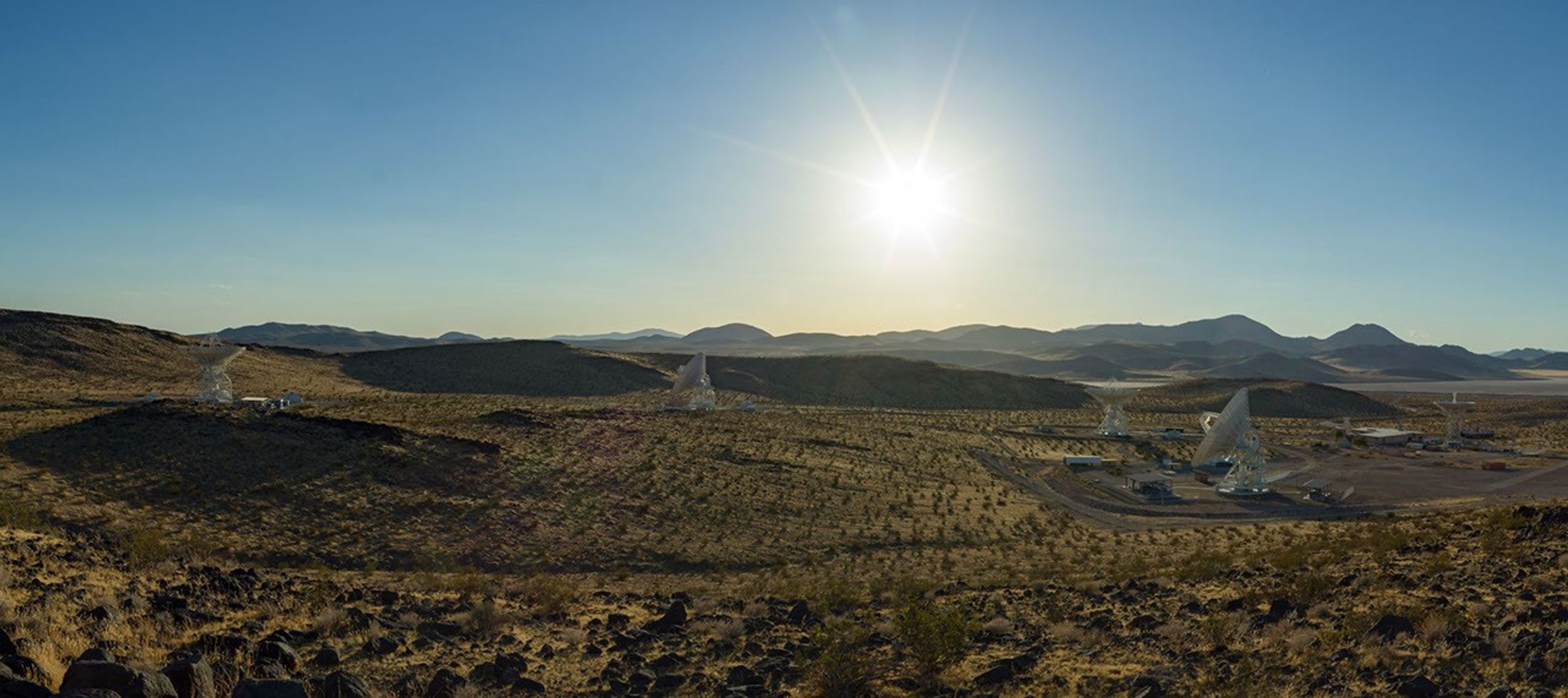
A wide desert landscape featuring several large white satellite dishes pointing toward a bright sun shining in a clear blue sky above distant mountain ranges.

PIA26777

Credits:
NASA/JPL-Caltech

Description

Five antennas soak in the summer sun at the Deep Space Network’s Goldstone complex near Barstow, California, in August 2026. The recently completed Deep Space Station 23, a 34-meter (114-foot) beam-waveguide antenna, can be seen to the right of the frame in the foreground. The other three 34-meter antennas are, from left, DSS-26, DSS-25, and DSS-24. At farthest right is a smaller 26-meter (85-foot) antenna, the retired “Apollo Antenna” that was built in 1967 as part of the Manned Space Flight Network and earned its nickname for providing tracking for the Apollo Program.

NASA leadership and personnel as well as dignitaries gathered at the complete DSS-23 antenna for a ceremonial ribbon-cutting on Aug. 25, 2026. It’s the latest antenna to be added as part of the Deep Space Network’s Aperture Enhancement Project, which began in 2009 to upgrade and expand the network by adding six new 34-meter multifrequency beam-waveguide antennas. These versatile Deep Space Network (DSN) dishes can enhance many missions operating over different radio frequencies. 

The DSN allows missions to track, send commands to, and receive scientific data from faraway spacecraft. It is managed by NASA’s Jet Propulsion Laboratory in Southern California, a division of Caltech, for the agency’s Space Communications and Navigation (SCaN) Program, which is located at NASA Headquarters within the Research and Technology Mission Directorate.

For more information about the DSN, visit:

https://www.nasa.gov/communicating-with-missions/dsn/

Source: science.nasa.gov